Fake Faces We Trust More: The Celebrity Deepfake Crisis
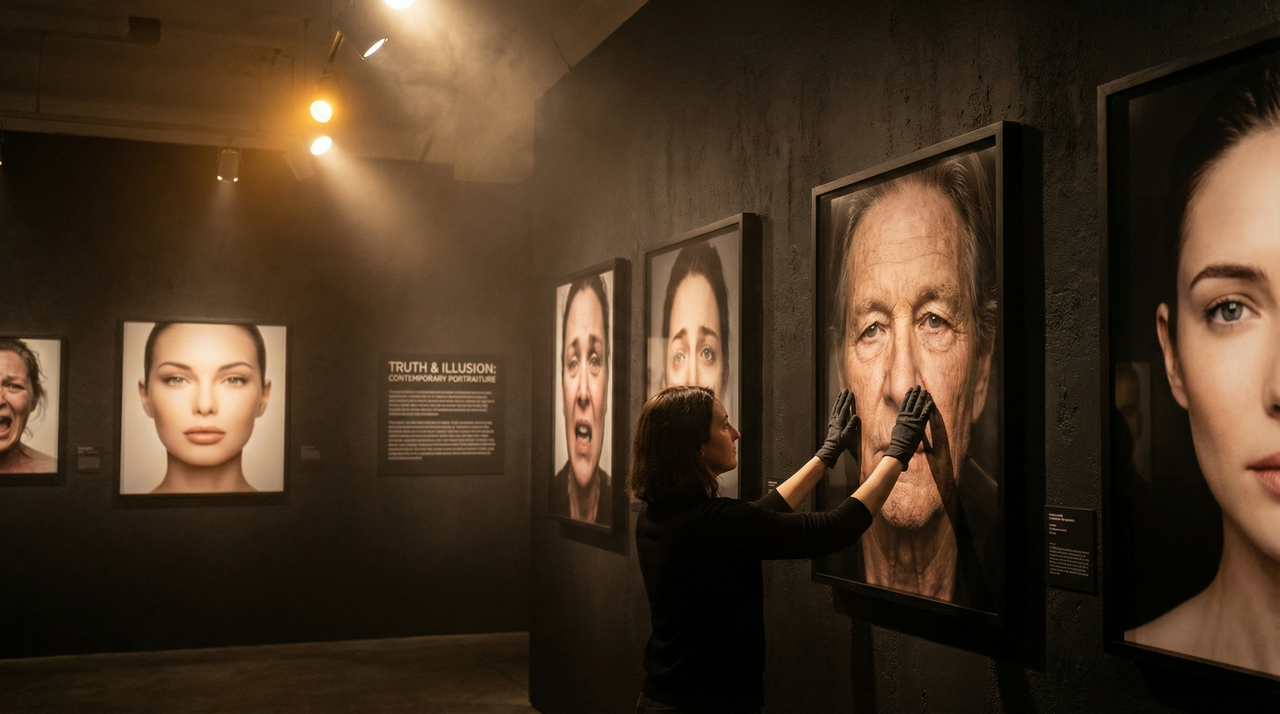
When you ask an AI image generator to show you a celebrity, something peculiar happens. Instead of retrieving an actual photograph, the system conjures a synthetic variant, a digital approximation that might look startlingly realistic yet never quite matches any real moment captured on camera. The technology doesn't remember faces the way humans do. It reconstructs them from statistical patterns learned across millions of images, creating what researchers describe as an “average” version that appears more trustworthy than the distinctive, imperfect reality of actual human features.
This isn't a bug. It's how the systems are designed to work. Yet the consequences ripple far beyond technical curiosity. In the first quarter of 2025 alone, celebrities were targeted by deepfakes 47 times, an 81% increase compared to the whole of 2024. Elon Musk accounted for 24% of celebrity-related incidents with 20 separate targeting events, whilst Taylor Swift suffered 11 such attacks. In 38% of cases, these celebrity deepfakes were weaponised for fraud.
The question isn't whether AI can generate convincing synthetic celebrity faces. It demonstrably can, and does so with alarming frequency and sophistication. The more pressing question is why these systems produce synthetic variants rather than authentic images, and what technical, legal, and policy frameworks might reduce the confusion and harm that follows.
The Architecture of Synthetic Celebrity Faces
To understand why conversational image systems generate celebrity variants instead of retrieving authentic photographs, one must grasp how generative adversarial networks (GANs) and diffusion models actually function. These aren't search engines trawling databases for matching images. They're statistical reconstruction engines that learn probabilistic patterns from training data.
GANs employ two neural networks locked in competitive feedback. The generator creates plausible synthetic images whilst the discriminator attempts distinguishing real photographs from fabricated ones. Through iterative cycles, the generator improves until it produces images the discriminator cannot reliably identify as synthetic. On each iteration, the discriminator learns to distinguish the synthesised face from a corpus of real faces. If the synthesised face is distinguishable from the real faces, then the discriminator penalises the generator. Over multiple iterations, the generator learns to synthesise increasingly more realistic faces until the discriminator is unable to distinguish it from real faces.
Crucially, GANs and diffusion models don't memorise specific images. They learn compressed representations of visual patterns. When prompted to generate a celebrity face, the model reconstructs features based on these learned patterns rather than retrieving a stored photograph. The output might appear photorealistic, yet it represents a novel synthesis, not a reproduction of any actual moment.
This technical architecture explains a counterintuitive research finding. Studies using ChatGPT and DALL-E to create images of both fictional and famous faces discovered that participants were unable to reliably distinguish synthetic celebrity images from authentic photographs, even when familiar with the person's appearance. Research published in the Proceedings of the National Academy of Sciences found that AI-synthesised faces are not only indistinguishable from real faces but are actually perceived as more trustworthy. Synthetic faces, being algorithmically averaged, lack the asymmetries and peculiarities that characterise real human features. Paradoxically, this very lack of distinguishing characteristics makes them appear more credible to human observers.
The implications extend beyond mere deception. Synthetic faces were rated as more real than photographs of actual faces, researchers found. This might be because these fake faces often look a little more average or typical than real ones, which tend to be a bit more distinctive, as a result of the generator learning that such faces are better at fooling the discriminator. Synthetically generated faces are consequently deemed more trustworthy precisely because they lack the imperfections that characterise actual human beings.
Dataset Curation and the Celebrity Image Problem
The training datasets that inform AI image generation systems pose their own complex challenges. LAION-5B, one of the largest publicly documented datasets used to train models like Stable Diffusion, contains billions of image-text pairs scraped from the internet. This dataset inevitably includes celebrity photographs, raising immediate questions about consent, copyright, and appropriate use.
The landmark German case of Kneschke v. LAION illuminates the legal tensions. Photographer Robert Kneschke sued LAION after the organisation automatically downloaded his copyrighted image in 2021 and incorporated it into the LAION-5B dataset. The Higher Regional Court of Hamburg ruled in 2025 that LAION's actions, whilst involving copyright-related copying, were permissible under Section 60d of the German Copyright Act for non-commercial scientific research purposes, specifically text and data mining. Critically, the court held that LAION's non-commercial status remained intact even though commercial entities later used the open-source dataset.
LAION itself acknowledges significant limitations in its dataset curation practices. According to the organisation's own statements, LAION does not consider the content, copyright, or privacy of images when collecting, evaluating, and sorting image links. This hands-off approach means celebrity photographs, private medical images, and copyrighted works flow freely into datasets that power commercial AI systems.
The “Have I Been Trained” database emerged as a response to these concerns, allowing artists and creators to check whether their images appear in major publicly documented AI training datasets like LAION-5B and LAION-400M. Users can search by uploading images, entering artist names, or providing URLs to discover if their work has been included in training data. This tool offers transparency but limited remediation, as removal mechanisms remain constrained once images have been incorporated into widely distributed datasets.
Regulatory developments in 2025 began addressing these dataset curation challenges more directly. The EU AI Code of Practice's “good faith” protection period ended in August 2025, meaning AI companies now face immediate regulatory enforcement for non-compliance. Companies can no longer rely on collaborative improvement periods with the AI Office and may face direct penalties for using prohibited training data.
California's AB 412, enacted in 2025, requires developers of generative AI models to document copyrighted materials used in training and provide a public mechanism for rights holders to request this information, with mandatory 30-day response requirements. This represents a significant shift toward transparency and rights holder empowerment, though enforcement mechanisms and practical effectiveness remain to be tested at scale.
Commercial AI platforms have responded by implementing content policy restrictions. ChatGPT refuses to generate images of named celebrities when explicitly requested, citing “content policy restrictions around realistic depictions of celebrities.” Yet these restrictions prove inconsistent and easily circumvented through descriptive prompts that avoid naming specific individuals whilst requesting their distinctive characteristics. MidJourney blocks celebrity names but allows workarounds using descriptive prompts like “50-year-old male actor in a tuxedo.” DALL-E maintains stricter celebrity likeness policies, though users attempt “celebrity lookalike” prompts with varying success.
These policy-based restrictions acknowledge that generating synthetic celebrity images poses legal and ethical risks, but they don't fundamentally address the underlying technical capability or dataset composition. The competitive advantage of commercial deepfake detection models, research suggests, derives primarily from training dataset curation rather than algorithmic innovation. This means detection systems trained on one type of celebrity deepfake may fail when confronted with different manipulation approaches or unfamiliar faces.
Provenance Metadata and Content Credentials
If the technical architecture of generative AI and the composition of training datasets create conditions for synthetic celebrity proliferation, provenance metadata represents the most ambitious technical remedy. The Coalition for Content Provenance and Authenticity (C2PA) emerged in 2021 as a collaborative effort bringing together major technology companies, media organisations, and camera manufacturers to develop what's been described as “a nutrition label for digital content.”
At the heart of the C2PA specification lies the Content Credential, a cryptographically bound structure that records an asset's provenance. Content Credentials contain assertions about the asset, such as its origin including when and where it was created, modifications detailing what happened using what tools, and use of AI documenting how it was authored. Each asset is cryptographically hashed and signed to capture a verifiable, tamper-evident record that enables exposure of any changes to the asset or its metadata.
Through the first half of 2025, Google collaborated on Content Credentials 2.1, offering enhanced security against a wider range of tampering attacks due to stricter technical requirements for validating the history of the content's provenance. The specification expects to achieve ISO international standard status by 2025 and is under examination by the W3C for browser-level adoption, developments that would significantly expand interoperability and adoption.
Major technology platforms have begun implementing C2PA support, though adoption remains far from universal. OpenAI began adding C2PA metadata to all images created and edited by DALL-E 3 in ChatGPT and the OpenAI API earlier in 2025. The company joined the Steering Committee of C2PA, signalling institutional commitment to provenance standards. Google announced plans bringing Content Credentials to several key products, including Search. If an image contains C2PA metadata, people using the “About this image” feature can see if content was created or edited with AI tools. This integration into discovery and distribution infrastructure represents crucial progress toward making provenance metadata actionable for ordinary users rather than merely technically available.
Adobe introduced Content Authenticity for Enterprise, bringing the power of Content Credentials to products and platforms that drive creative production and marketing at scale. The C2PA reached a new level of maturity with the launch of its Conformance Program in 2025, ensuring secure and interoperable implementations. For the first time, organisations can certify that their products meet the highest standards of authenticity and trust.
Hardware integration offers another promising frontier. Sony announced in June 2025 the release of its Camera Verify system for press photographers, embedding provenance data at the moment of capture. Google's Pixel 10 smartphone achieved the Conformance Program's top tier of security compliance, demonstrating that consumer devices can implement robust content credentials without compromising usability or performance.
Yet significant limitations temper this optimism. OpenAI itself acknowledged that metadata “is not a silver bullet” and can be easily removed either accidentally or intentionally. This candid admission undermines confidence in technical labelling solutions as comprehensive remedies. Security researchers have documented methods for bypassing C2PA safeguards by altering provenance metadata, removing or forging watermarks, and mimicking digital fingerprints.
Most fundamentally, adoption remains minimal as of 2025. Very little internet content currently employs C2PA markers, limiting practical utility. The methods proposed by C2PA do not allow for statements about whether content is “true.” Instead, C2PA-compliant metadata only offers reliable information about the origin of a piece of information, not its veracity. A synthetic celebrity image could carry perfect provenance metadata documenting its AI generation whilst still deceiving viewers who don't check or understand the credentials.
Privacy concerns add another layer of complexity. The World Privacy Forum's technical review of C2PA noted that the standard can compromise privacy through extensive metadata collection. Detailed provenance records might reveal information about creators, editing workflows, and tools used that individuals or organisations prefer to keep confidential. Balancing transparency about synthetic content against privacy rights for creators remains an unresolved tension within the C2PA framework.
User Controls and Transparency Features
Beyond provenance metadata embedded in content files, platforms have begun implementing user-facing controls and transparency features intended to help individuals identify and manage synthetic content. The European Union's AI Act, entering force on 1 August 2024 with full enforcement beginning 2 August 2026, mandates that providers of AI systems generating synthetic audio, image, video, or text ensure outputs are marked in machine-readable format and detectable as artificially generated.
Under the Act, where an AI system is used to create or manipulate images, audio, or video content that bears a perceptible resemblance to authentic content, it is mandatory to disclose that the content was created by automated means. Non-compliance can result in administrative fines up to €15 million or 3% of worldwide annual turnover, whichever is higher. The AI Act requires technical solutions be “effective, interoperable, robust and reliable as far as technically feasible,” whilst acknowledging “specificities and limitations of various content types, implementation costs and generally acknowledged state of the art.”
Meta announced in February 2024 plans to label AI-generated images on Facebook, Instagram, and Threads by detecting invisible markers using C2PA and IPTC standards. The company rolled out “Made with AI” labels in May 2024. During 1 to 29 October 2024, Facebook recorded over 380 billion user label views on AI-labelled organic content, whilst Instagram tallied over 1 trillion. The scale reveals both the prevalence of AI-generated content and the potential reach of transparency interventions.
Yet critics note significant gaps. Policies focus primarily on images and video, largely overlooking AI-generated text. Meta places substantial disclosure burden on users and AI tool creators rather than implementing comprehensive proactive detection. From July 2024, Meta shifted towards “more labels, less takedowns,” ceasing removal of AI-generated content solely based on manipulated video policy unless violating other standards.
YouTube implemented similar requirements on 18 March 2024, mandating creator disclosure when realistic content uses altered or synthetic media. The platform applies “Altered or synthetic content” labels to flagged material. Yet YouTube's system relies heavily on creator self-reporting, creating obvious enforcement gaps when creators have incentives to obscure synthetic origins.
Different platforms implement content moderation and user controls in varying ways. Some use classifier-based blocks that stop image generation at the model level, others filter outputs after generation, and some combine automated filters with human review for edge cases. Microsoft's Phi Silica moderation allows users to adjust sensitivity filters, ensuring that AI-generated content for applications adheres to ethical standards and avoids harmful or inappropriate outputs whilst keeping users in control.
User research reveals strong demand for these transparency features but significant scepticism about their reliability. Getty Images' 2024 research covering over 30,000 adults across 25 countries found almost 90% want to know whether images are AI-created. More troubling, whilst 98% agree authentic images and videos are pivotal for trust, 72% believe AI makes determining authenticity difficult. YouGov's UK survey of over 2,000 adults found nearly half, 48%, distrust AI-generated content labelling accuracy, compared to just one-fifth, 19%, trusting such labels.
A 2025 study by iProov found that only 0.1% of participants correctly identified all fake and real media shown, underscoring how poorly even motivated users perform at distinguishing synthetic from authentic content without reliable technical assistance. This research confirms that human perception alone cannot reliably identify AI-generated voices, with participants often perceiving synthetic voices as identical to real people.
Celebrity Rights and the Legal Patchwork
The proliferation of AI-generated celebrity images collides directly with publicity rights, a complex area of law that varies dramatically across jurisdictions. Personality rights, also known as the right of publicity, encompass the bundle of personal, reputational, and economic interests a person holds in their identity. The right of publicity can protect individuals from deepfakes and limit the posthumous use of their name, image, and likeness as digital versions.
In the United States, the answers to questions about the right of publicity vary significantly from one state to another, making it difficult to establish a uniform standard. Certain states limit the right of publicity to celebrities and the exploitation of the commercial value of their likeness, whilst others allow ordinary individuals to prove the commercial value of their image. In California, there is both a statutory and common law right of publicity where an individual must prove they have a commercially valuable identity. This fragmentation creates compliance challenges for platforms operating nationally or globally.
The year 2025 began with celebrities and digital creators increasingly knocking on courtroom doors to protect their identity. A Delhi High Court ruling in favour of entrepreneur and podcaster Raj Shamani became a watershed moment, underscoring how personality rights are no longer limited to film stars but extend firmly into the creator economy. The ruling represents a broader trend of courts recognising that publicity rights protect economic interests in one's identity regardless of traditional celebrity status.
Federal legislative efforts have attempted creating national standards. In July 2024, Senators Marsha Blackburn, Amy Klobuchar, and Thom Tillis introduced the “NO FAKES Act” to protect “voice and visual likeness of all individuals from unauthorised computer-generated recreations from generative artificial intelligence and other technologies.” The bill was reintroduced in April 2025, earning support from Google and the Recording Industry Association of America. The NO FAKES Act establishes a national digital replication right, with violations including public display, distribution, transmission, and communication of a person's digitally simulated identity.
State-level protections have proliferated in the absence of federal standards. SAG-AFTRA, the labour union representing actors and singers, advocated for stronger contractual protections to prevent AI-generated likenesses from being exploited. Two California laws, AB 2602 and AB 1836, codified SAG-AFTRA's demands by requiring explicit consent from artists before their digital likeness can be used and by mandating clear markings on work that includes AI-generated replicas.
Available legal remedies for celebrity deepfakes draw on multiple doctrinal sources. Publicity law, as applied to deepfakes, offers protections against unauthorised commercial exploitation, particularly when deepfakes are used in advertising or endorsements. Key precedents, such as Midler v. Ford and Carson v. Here's Johnny Portable Toilets, illustrate how courts have recognised the right to prevent the commercial use of an individual's identity. This framework appears well-suited to combat the rise of deepfake technology in commercial contexts.
Trademark claims for false endorsement may be utilised by celebrities if a deepfake could lead viewers to think that an individual endorses a certain product or service. Section 43(a)(1)(A) of the Lanham Act has been interpreted by courts to limit the nonconsensual use of one's “persona” and “voice” that leads consumers to mistakenly believe that an individual supports a certain service or good. These trademark-based remedies offer additional tools beyond publicity rights alone.
Courts must now adapt to these novel challenges. Judges are publicly acknowledging the risks posed by generative AI and pushing for changes to how courts evaluate evidence. The risk extends beyond civil disputes to criminal proceedings, where synthetic evidence might be introduced to mislead fact-finders or where authentic evidence might be dismissed as deepfakes. The global nature of AI-generated content complicates jurisdictional questions. A synthetic celebrity image might be generated in one country, shared via servers in another, and viewed globally, implicating multiple legal frameworks simultaneously.
Misinformation Vectors and Deepfake Harms
The capacity to generate convincing synthetic celebrity images creates multiple vectors for misinformation and harm. In the first quarter of 2025 alone, there were 179 deepfake incidents, surpassing the total for all of 2024 by 19%. Deepfake files surged from 500,000 in 2023 to a projected 8 million in 2025, representing a 680% rise in deepfake activity year-over-year. This exponential growth pattern suggests the challenge will intensify as tools become more accessible and sophisticated.
Celebrity targeting serves multiple malicious purposes. In 38% of documented cases, celebrity deepfakes were weaponised for fraud. Fraudsters create synthetic videos showing celebrities endorsing cryptocurrency schemes, investment opportunities, or fraudulent products. An 82-year-old retiree lost 690,000 euros to a deepfake video of Elon Musk promoting a cryptocurrency scheme, illustrating how even motivated individuals struggle to identify sophisticated deepfakes, particularly when targeting vulnerable populations.
Non-consensual synthetic intimate imagery represents another serious harm vector. In 2024, AI-generated explicit images of Taylor Swift appeared on X, Reddit, and other platforms, completely fabricated without consent. Some posts received millions of views before removal, sparking renewed debate about platform moderation responsibilities and stronger protections. The psychological harm to victims is substantial, whilst perpetrators often face minimal consequences given jurisdictional complexities and enforcement challenges.
Political manipulation through celebrity deepfakes poses democratic risks. Analysis of 187,778 posts from X, Bluesky, and Reddit during the 2025 Canadian federal election found that 5.86% of election-related images were deepfakes. Right-leaning accounts shared them more frequently, with 8.66% of their posted images flagged compared to 4.42% for left-leaning users. However, harmful deepfakes drew little attention, accounting for only 0.12% of all views on X, suggesting that whilst deepfakes proliferate, their actual influence varies significantly.
Research confirms that deepfakes present a new form of content creation for spreading misinformation that can potentially cause extensive issues, such as political intrusion, spreading propaganda, committing fraud, and reputational harm. Deepfake technology is reshaping the media and entertainment industry, posing serious risks to content authenticity, brand reputation, and audience trust. With deepfake-related losses projected to reach $40 billion globally by 2027, media companies face urgent pressure to develop and deploy countermeasures.
The “liar's dividend” compounds these direct harms. As deepfake prevalence increases, bad actors can dismiss authentic evidence as fabricated. This threatens not just media credibility but evidentiary foundations of democratic accountability. When genuine recordings of misconduct can be plausibly denied as deepfakes, accountability mechanisms erode.
Detection challenges intensify these risks. Advancements in AI image generation and real-time face-swapping tools have made manipulated videos almost indistinguishable from real footage. In 2025, AI-created images and deepfake videos blended so seamlessly into political debates and celebrity scandals that spotting what was fake often required forensic analysis, not intuition. Research confirms humans cannot consistently identify AI-generated voices, often perceiving them as identical to real people.
According to recent studies, existing detection methods may not accurately identify deepfakes in real-world scenarios. Accuracy may be reduced if lighting conditions, facial expressions, or video and audio quality differ from the data used to train the detection model. No commercial models evaluated had accuracy of 90% or above, suggesting that commercial detection systems still need substantial improvement to reach the accuracy of human deepfake forensic analysts.
The Arup deepfake fraud represents perhaps the most sophisticated financial crime leveraging this technology. A finance employee joined what appeared to be a routine video conference with the company's CFO and colleagues. Every participant except the victim was an AI-generated simulacrum, convincing enough to survive live video call scrutiny. The employee authorised 15 transfers totalling £25.6 million before discovering the fraud. This incident reveals traditional verification method inadequacy in the deepfake age.
Industry Responses and Technical Remedies
The technology industry's response to AI-generated celebrity image proliferation has been halting and uneven, characterised by reactive policy adjustments rather than proactive systemic design. Figures from the entertainment industry, including the late Fred Rogers, Tupac Shakur, and Robin Williams, have been digitally recreated using OpenAI's Sora technology, leaving many in the industry deeply concerned about the ease with which AI can resurrect deceased performers without estate consent.
OpenAI released new policies for its Sora 2 AI video tool in response to concerns from Hollywood studios, unions, and talent agencies. The company announced an “opt-in” policy allowing all artists, performers, and individuals the right to determine how and whether they can be simulated. OpenAI stated it will block the generation of well-known characters on its public feed and will take down any existing material not in compliance. The company agreed to take down fabricated videos of Martin Luther King Jr. after his estate complained about the “disrespectful depictions” of the late civil rights leader. These policy adjustments represent acknowledgement of potential harms, though enforcement mechanisms remain largely reactive.
Meta faced legal and regulatory backlash after reports revealed its AI chatbots impersonated celebrities like Taylor Swift and generated explicit deepfakes. In an attempt to capture market share from OpenAI, Meta reportedly rushed out chatbots with a poorly-thought-through set of celebrity personas. Internal reports suggested that Mark Zuckerberg personally scolded his team for being too cautious in chatbot rollout, with the team subsequently greenlighting content risk standards that critics characterised as dangerously permissive. This incident underscores the tension between competitive pressure to deploy AI capabilities quickly and responsible development requiring extensive safety testing and rights clearance.
Major media companies have responded with litigation. Disney accused Google of copyright infringement on a “massive scale” using AI models and services to “commercially exploit and distribute” infringing images and videos. Disney also sent cease-and-desist letters to Meta and Character.AI, and filed litigation together with NBCUniversal and Warner Bros. Discovery against AI companies MidJourney and Minimax alleging copyright infringement. These legal actions signal that major rights holders will not accept unauthorised use of protected content for AI training or generation.
SAG-AFTRA's national executive director Duncan Crabtree-Ireland stated that it wasn't feasible for rights holders to find every possible use of their material, calling the situation “a moment of real concern and danger for everyone in the entertainment industry, and it should be for all Americans, all of us, really.” The talent agencies and SAG-AFTRA announced they are supporting federal legislation called the “NO FAKES” Act, representing a united industry front seeking legal protections.
Technical remedies under development focus on multiple intervention points. Detection technologies aim to identify fake media without needing to compare it to the original, typically using forms of machine learning. Within the detection category, there are two basic approaches. Learning-based methods involve features that distinguish real from synthetic content being explicitly learned by machine-learning techniques. Artifact-based methods involve low-level to high-level features explicitly designed to distinguish between real and synthetic content.
Yet this creates an escalating technological arms race where detection and generation capabilities advance in tandem, with no guarantee detection will keep pace. Economic incentives largely favour generation over detection, as companies profit from selling generative AI tools and advertising on platforms hosting synthetic content, whilst detection tools generate limited revenue absent regulatory mandates or public sector support.
Industry collaboration through initiatives like C2PA represents a more promising approach than isolated platform policies. When major technology companies, media organisations, and hardware manufacturers align on common provenance standards, interoperability becomes possible. Content carrying C2PA credentials can be verified across multiple platforms and applications rather than requiring platform-specific solutions. Yet voluntary industry collaboration faces free-rider problems. Platforms that invest heavily in content authentication bear costs without excluding competitors who don't make similar investments, suggesting regulatory mandates may be necessary to ensure universal adoption of provenance standards and transparency measures.
Navigating the Synthetic Future
The challenge of AI-generated celebrity images illuminates broader tensions in the governance of generative AI. The same technical capabilities enabling creativity, education, and entertainment also facilitate fraud, harassment, and misinformation. Simple prohibition appears neither feasible nor desirable given legitimate uses, yet unrestricted deployment creates serious harms requiring intervention.
Dataset curation offers one intervention point. If training datasets excluded celebrity images entirely, models couldn't generate convincing celebrity likenesses. Yet comprehensive filtering would require reliable celebrity image identification at massive scale, potentially millions or billions of images. False positives might exclude legitimate content whilst false negatives allow prohibited material through. The Kneschke v. LAION ruling suggests that, at least in Germany, using copyrighted images including celebrity photographs for non-commercial research purposes in dataset creation may be permissible under text and data mining exceptions, though whether this precedent extends to commercial AI development or other jurisdictions remains contested.
Provenance metadata and content credentials represent complementary interventions. If synthetic celebrity images carry cryptographically signed metadata documenting their AI generation, informed users could verify authenticity before relying on questionable content. Yet adoption gaps, technical vulnerabilities, and user comprehension challenges limit effectiveness. Metadata can be stripped, forged, or simply ignored by viewers who lack technical literacy or awareness.
User controls and transparency features address information asymmetries, giving individuals tools to identify and manage synthetic content. Platform-level labelling, sensitivity filters, and disclosure requirements shift the default from opaque to transparent. But implementation varies widely, enforcement proves difficult, and sophisticated users can circumvent restrictions designed for general audiences.
Celebrity rights frameworks offer legal recourse after harms occur but struggle with prevention. Publicity rights, trademark claims, and copyright protections can produce civil damages and injunctive relief, yet enforcement requires identifying violations, establishing jurisdiction, and litigating against potentially judgement-proof defendants. Deterrent effects remain uncertain, particularly for international actors beyond domestic legal reach.
Misinformation harms call for societal resilience-building beyond technical and legal fixes. Media literacy education teaching critical evaluation of digital content, verification techniques, and healthy scepticism can reduce vulnerability to synthetic deception. Investments in quality journalism with robust fact-checking capabilities maintain authoritative information sources that counterbalance misinformation proliferation.
The path forward likely involves layered interventions across multiple domains. Dataset curation practices that respect publicity rights and implement opt-out mechanisms. Mandatory provenance metadata for AI-generated content with cryptographic verification. Platform transparency requirements with proactive detection and labelling. Legal frameworks balancing innovation against personality rights protection. Public investment in media literacy and quality journalism. Industry collaboration on interoperable standards and best practices.
No single intervention suffices because the challenge operates across technical, legal, economic, and social dimensions simultaneously. The urgency intensifies as capabilities advance. Multimodal AI systems generating coordinated synthetic video, audio, and text create more convincing fabrications than single-modality deepfakes. Real-time generation capabilities enable live deepfakes rather than pre-recorded content, complicating detection and response. Adversarial techniques designed to evade detection algorithms ensure that synthetic media creation and detection remain locked in perpetual competition.
Yet pessimism isn't warranted. The same AI capabilities creating synthetic celebrity images might, if properly governed and deployed, help verify authenticity. Provenance standards, detection algorithms, and verification tools offer partial technical solutions. Legal frameworks establishing transparency obligations and accountability mechanisms provide structural incentives. Professional standards and ethical commitments offer normative guidance. Educational initiatives build societal capacity for critical evaluation.
What's required is collective recognition that ungovernanced synthetic media proliferation threatens foundations of trust on which democratic discourse depends. When anyone can generate convincing synthetic media depicting anyone saying anything, evidence loses its power to persuade. Accountability mechanisms erode. Information environments become toxic with uncertainty.
The alternative is a world where transparency, verification, and accountability become embedded expectations rather than afterthoughts. Where synthetic content carries clear provenance markers and platforms proactively detect and label AI-generated material. Where publicity rights are respected and enforced. Where media literacy enables critical evaluation. Where journalism maintains verification standards. Where technology serves human flourishing rather than undermining epistemic foundations of collective self-governance.
The challenge of AI-generated celebrity images isn't primarily about technology. It's about whether society can develop institutions, norms, and practices preserving the possibility of shared reality in an age of synthetic abundance. The answer will emerge not from any single intervention but from sustained commitment across multiple domains to transparency, accountability, and truth.
References and Sources
Research Studies and Academic Publications
“AI-generated images of familiar faces are indistinguishable from real photographs.” Cognitive Research: Principles and Implications (2025). https://link.springer.com/article/10.1186/s41235-025-00683-w
“AI-synthesized faces are indistinguishable from real faces and more trustworthy.” Proceedings of the National Academy of Sciences (2022). https://www.pnas.org/doi/10.1073/pnas.2120481119
“Deepfakes in the 2025 Canadian Election: Prevalence, Partisanship, and Platform Dynamics.” arXiv (2025). https://arxiv.org/html/2512.13915
“Copyright in AI Pre-Training Data Filtering: Regulatory Landscape and Mitigation Strategies.” arXiv (2025). https://arxiv.org/html/2512.02047
“Fair human-centric image dataset for ethical AI benchmarking.” Nature (2025). https://www.nature.com/articles/s41586-025-09716-2
“Detection of AI generated images using combined uncertainty measures.” Scientific Reports (2025). https://www.nature.com/articles/s41598-025-28572-8
Legal Cases and Regulatory Frameworks
“Higher Regional Court Hamburg Confirms AI Training was Permitted (Kneschke v. LAION).” Bird & Bird (2025). https://www.twobirds.com/en/insights/2025/germany/higher-regional-court-hamburg-confirms-ai-training-was-permitted-(kneschke-v,-d-,-laion)
“A landmark copyright case with implications for AI and text and data mining: Kneschke v. LAION.” Trademark Lawyer Magazine (2025). https://trademarklawyermagazine.com/a-landmark-copyright-case-with-implications-for-ai-and-text-and-data-mining-kneschke-v-laion/
“Breaking Down the Intersection of Right-of-Publicity Law, AI.” Blank Rome LLP. https://www.blankrome.com/publications/breaking-down-intersection-right-publicity-law-ai
“Rethinking the Right of Publicity in Deepfake Age.” Michigan Technology Law Review (2025). https://mttlr.org/2025/09/rethinking-the-right-of-publicity-in-deepfake-age/
“From Deepfakes to Deepfame: The Complexities of the Right of Publicity in an AI World.” American Bar Association. https://www.americanbar.org/groups/intellectual_property_law/resources/landslide/archive/deepfakes-deepfame-complexities-right-publicity-ai-world/
Technical Standards and Industry Initiatives
“C2PA and Content Credentials Explainer 2.2, 2025-04-22: Release.” Coalition for Content Provenance and Authenticity. https://spec.c2pa.org/specifications/specifications/2.2/explainer/_attachments/Explainer.pdf
“C2PA in ChatGPT Images.” OpenAI Help Centre. https://help.openai.com/en/articles/8912793-c2pa-in-chatgpt-images
“How Google and the C2PA are increasing transparency for gen AI content.” Google Official Blog (2025). https://blog.google/technology/ai/google-gen-ai-content-transparency-c2pa/
“Understanding the source of what we see and hear online.” OpenAI (2024). https://openai.com/index/understanding-the-source-of-what-we-see-and-hear-online/
“Privacy, Identity and Trust in C2PA: A Technical Review and Analysis.” World Privacy Forum (2025). https://worldprivacyforum.org/posts/privacy-identity-and-trust-in-c2pa/
Industry Reports and Statistics
“State of Deepfakes 2025: Key Insights.” Mirage. https://mirage.app/blog/state-of-deepfakes-2025
“Deepfake Statistics & Trends 2025: Key Data & Insights.” Keepnet (2025). https://keepnetlabs.com/blog/deepfake-statistics-and-trends
“How AI made deepfakes harder to detect in 2025.” FactCheckHub (2025). https://factcheckhub.com/how-ai-made-deepfakes-harder-to-detect-in-2025/
“Why Media and Entertainment Companies Need Deepfake Detection in 2025.” Deep Media (2025). https://deepmedia.ai/blog/media-2025
Platform Policies and Corporate Responses
“Hollywood pushes OpenAI for consent.” NPR (2025). https://www.houstonpublicmedia.org/npr/2025/10/20/nx-s1-5567119/hollywood-pushes-openai-for-consent/
“Meta Under Fire for Unauthorised AI Celebrity Chatbots Generating Explicit Images.” WinBuzzer (2025). https://winbuzzer.com/2025/08/31/meta-under-fire-for-unauthorized-ai-celebrity-chatbots-generating-explicit-images-xcxwbn/
“Disney Accuses Google of Using AI to Engage in Copyright Infringement on 'Massive Scale'.” Variety (2025). https://variety.com/2025/digital/news/disney-google-ai-copyright-infringement-cease-and-desist-letter-1236606429/
“Experts React to Reuters Reports on Meta's AI Chatbot Policies.” TechPolicy.Press (2025). https://www.techpolicy.press/experts-react-to-reuters-reports-on-metas-ai-chatbot-policies/
Transparency and Content Moderation
“Content Moderation in a New Era for AI and Automation.” Oversight Board (2025). https://www.oversightboard.com/news/content-moderation-in-a-new-era-for-ai-and-automation/
“Transparency & content moderation.” OpenAI. https://openai.com/transparency-and-content-moderation/
“AI Moderation Needs Transparency & Context.” Medium (2025). https://medium.com/@rahulmitra3485/ai-moderation-needs-transparency-context-7c0a534ff27a
Detection and Verification
“Deepfakes and the crisis of knowing.” UNESCO. https://www.unesco.org/en/articles/deepfakes-and-crisis-knowing
“Science & Tech Spotlight: Combating Deepfakes.” U.S. Government Accountability Office (2024). https://www.gao.gov/products/gao-24-107292
“Mitigating the harms of manipulated media: Confronting deepfakes and digital deception.” PMC (2025). https://pmc.ncbi.nlm.nih.gov/articles/PMC12305536/
Dataset and Training Data Issues
“LAION-5B: A NEW ERA OF OPEN LARGE-SCALE MULTI-MODAL DATASETS.” LAION. https://laion.ai/blog/laion-5b/
“FAQ.” LAION. https://laion.ai/faq/
“Patient images in LAION datasets are only a sample of a larger issue.” The Decoder. https://the-decoder.com/patient-images-in-laion-datasets-are-only-a-sample-of-a-larger-issue/
Consumer Research and Public Opinion
“Nearly 90% of Consumers Want Transparency on AI Images finds Getty Images Report.” Getty Images (2024). https://newsroom.gettyimages.com/en/getty-images/nearly-90-of-consumers-want-transparency-on-ai-images-finds-getty-images-report
“Can you trust your social media feed? UK public concerned about AI content and misinformation.” YouGov (2024). https://business.yougov.com/content/49550-labelling-ai-generated-digitally-altered-content-misinformation-2024-research

Tim Green UK-based Systems Theorist & Independent Technology Writer
Tim explores the intersections of artificial intelligence, decentralised cognition, and posthuman ethics. His work, published at smarterarticles.co.uk, challenges dominant narratives of technological progress while proposing interdisciplinary frameworks for collective intelligence and digital stewardship.
His writing has been featured on Ground News and shared by independent researchers across both academic and technological communities.
ORCID: 0009-0002-0156-9795 Email: tim@smarterarticles.co.uk