Fake Songs, Real Theft: How AI Streaming Fraud Drains Musician Royalties
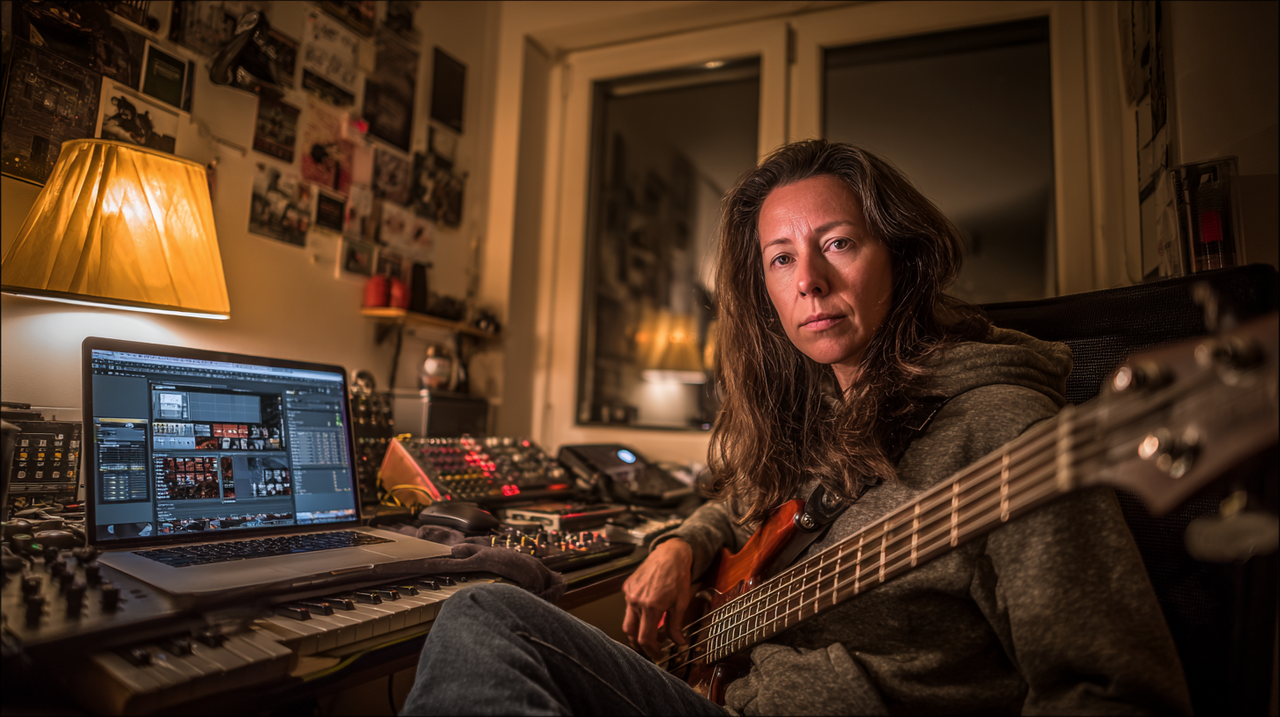
In a lakeside house outside Charlotte, North Carolina, a middle-aged man sat reading aloud to his wife. The words he recited were not from a novel or a letter. They were YouTube comments, praise heaped on songs by artists with names nobody had ever heard of, performing tracks nobody had ever consciously chosen to play. The comments, like the songs, like the listeners who supposedly loved them, were fake. The man reading them was Michael Smith, and over the course of seven years he would extract more than ten million dollars from the global music economy using a method so mundane in execution and so devastating in arithmetic that it has forced the industry to confront an uncomfortable question: what happens when the systems built to pay artists become easier to rob than the artists are to support?
Smith pleaded guilty in March 2026 to conspiracy to commit wire fraud, in what prosecutors described as the first criminal streaming-fraud case of its kind. He is one man. The problem he embodies is now measured in the billions. By the spring of 2026, the scale of AI-assisted streaming fraud had grown so large that it had become, in the framing of much of the trade press, a self-sustaining machine: hundreds of thousands of synthetic tracks, armies of bots, and a royalty pool that distributes real money to fake art at the direct expense of real musicians. The victims are not the major labels, who can absorb the loss in a rounding error. The victims are the session players, the independent songwriters, the bedroom producers and the touring journeymen for whom a few hundred pounds of streaming income each quarter is the difference between a viable career and a relinquished one.
This is the story of how generative AI turned a long-running nuisance into an industrial enterprise, why the people getting hurt are the ones least able to afford it, and why the question of who should fix it has no comfortable answer.
The Wannabe Rock Star Who Cracked the Code
Michael Smith was not, by the account assembled in Rolling Stone's investigation, an obvious criminal mastermind. He was a suburban father and former urgent-care clinic owner who had been born in Philadelphia, raised in northern New Jersey, and had picked up a guitar at the age of four before teaching himself bass, drums and piano. He studied finance at the University of North Carolina at Greensboro. He had built genuine wealth across a string of ventures, from a Y2K remediation company to medical practices in two states. He claimed to have five thousand of his own songs stored on his phone. In 2016 he turned up on a reality television show, positioning himself among judges including RZA, T.I. and DJ Khaled.
What he wanted, by the testimony of those who worked with him, was recognition. One former collaborator, the producer Othr Bestlasson, recalled his first impression with brutal economy: “From the first moment I met him, I was like, 'Oh, my God, this guy's fake as fuck.'” Another, the creative director Sabrina Kelly, compared him to Michael Scott from the American version of The Office, noting what she described as a “childlike yearning for acceptance”. He was, in other words, exactly the sort of person the modern music economy is supposed to crush: an ageing hopeful with more ambition than audience.
Instead, he found a loophole. As early as October 2017, according to the indictment, Smith documented a system generating 661,440 streams per day across 1,040 fake accounts, and projected that this would yield roughly 1.2 million dollars a year in royalties. The maths was simple and merciless. Each individual stream was worth a fraction of a penny. But streams, unlike songs, scale infinitely if you automate the listening. Smith built up a network of bot accounts that at its peak reached as many as ten thousand active at once, registered using fake email addresses bought in bulk and set up partly through outsourced labour. He routed the traffic through virtual private networks to mimic geographically dispersed human listeners, and he spread his streams thinly across an enormous catalogue of tracks so that no single song spiked high enough to trip the platforms' fraud detection.
For a while, the catalogue was the bottleneck. A few thousand original songs could only be streamed so many times before the pattern looked suspicious. Smith needed volume, an effectively bottomless supply of plausible-sounding tracks to spread his fake listening across. That is where artificial intelligence entered the picture, and where a private hustle became a preview of an industry-wide crisis.
When the Music Became Free to Make
According to prosecutors, Smith struck an arrangement with the chief executive of an AI music company to obtain a vast catalogue of computer-generated songs. Court documents identified this figure as a co-conspirator without charging him; reporting by Rolling Stone named him as Alex Mitchell of Boomy, an AI-music startup, who later said he had been unaware of Smith's intentions and that “Michael Smith consistently represented himself as legit.” Whatever the precise understanding between the two men, the mechanism it unlocked is the heart of the matter. Smith was reportedly receiving thousands of tracks a month, paying for them and metadata, then uploading them under a sprawling roster of invented artist names. The bots did the rest.
This is the pivot on which the entire modern fraud turns. For most of recorded history, the cost and effort of producing music functioned as a natural brake on this kind of scheme. You could fake the listeners, but you still had to come up with the songs, and songs were expensive, slow and human. Generative AI removed that brake entirely. Tools such as Suno and Udio can now produce a finished, fully mixed, vocally complete track from a short text prompt in under a minute, at a marginal cost approaching zero. The constraint that once made large-scale streaming fraud impractical has simply evaporated.
The consequences are visible in the upload statistics, and they are staggering. By April 2026, the streaming service Deezer reported that AI-generated tracks accounted for 44 per cent of all newly uploaded music on its platform, with the service receiving almost 75,000 fully AI-generated tracks every single day. That figure had climbed steeply over a matter of months; in January 2026 the daily total had stood at around 60,000, then roughly 39 per cent of deliveries. Crucially, Deezer found that consumption of this material remained tiny, between 1 and 3 per cent of total streams, which tells you something important: this is not a flood of music that people want to hear. It is a flood of music that exists to be streamed by something other than people.
Deezer's data made the fraudulent intent explicit. The company found that up to 85 per cent of the streams generated by fully AI-produced tracks were themselves fraudulent. In other words, the vast majority of AI music on the platform is not merely synthetic; it is synthetic content being played by synthetic listeners, a closed loop of machines manufacturing the appearance of cultural activity in order to siphon real money out of a shared pot. The songs are fake. The streams are fake. Only the royalties are real, and they have to come from somewhere.
The Pool Everyone Drinks From
To understand who pays for that, you have to understand the single most consequential and least understood feature of how streaming money moves: the pro-rata royalty pool.
When you pay your monthly subscription to Spotify or Apple Music, your individual money does not follow your individual listening. It is poured into a single enormous pot, alongside the subscription fees and advertising revenue of every other user in your market. At the end of the accounting period, the platform takes its cut and then divides the remaining pot among rights holders in proportion to their share of total streams. If a given artist accounts for one in every thousand streams on the service that month, they receive one-thousandth of the payable pool. This is the pro-rata or market-centric model, and it is how the overwhelming majority of streaming revenue is distributed worldwide.
The design has a property that is easy to miss and impossible to overstate. Because the pool is finite and shared, every stream dilutes every other stream. A fraudulent play is not a victimless act of theft from the platform's own reserves. It is a withdrawal from a communal account that every legitimate musician on Earth is also drawing from. When Michael Smith's bots generated billions of streams across his catalogue of phantom songs, they did not conjure new money into existence. They enlarged the denominator. They increased the total number of streams the pool had to be divided across, which means every real artist's slice of that pool became fractionally thinner, quarter after quarter, year after year, without any of them ever knowing it was happening.
This is why the framing matters so much. A casual observer might assume that streaming fraud is a crime against Spotify, or against the major labels, or against the platform's bottom line. It is not. The platforms pay out a contractually fixed percentage of revenue regardless of how the streams are distributed; the size of the pool does not change because some of the streams inside it are fraudulent. What changes is who gets the money. Every pound that a bot farm extracts is a pound that would otherwise have been shared among the artists whose work real human beings actually chose to play. The pro-rata pool, in effect, socialises the cost of fraud across the entire community of working musicians while privatising the proceeds to the fraudster.
The data-tracking firm Beatdapp, which specialises in detecting this activity, has estimated that streaming fraud removes around two billion dollars a year from the global music economy, with some estimates running as high as three billion. Beatdapp reckons that at least 10 per cent of all music streaming activity is fraudulent. As the firm's leadership has put it, the genius of the scheme is its granularity: “No one notices that a few pennies are going to this song and a few pennies are going to that song but, in aggregate, they can steal billions of dollars.” The dilution is invisible precisely because it is distributed. No single artist can point to the specific royalty that was taken from them, because it was never assigned to them in the first place. It simply never arrived.
There is a further wrinkle that compounds the harm, and it concerns the different kinds of royalty a single piece of music generates. One stream does not pay a single fee; it triggers several. There is the recording royalty, paid to whoever owns the master recording, which is the slice the platforms talk about most. But there is also a separate stream of songwriting royalties, split between the mechanical right, which compensates the reproduction of the composition, and the performance right, which compensates its public communication and is typically administered by the performing-rights organisations and collection societies that sit between the platforms and the people who actually wrote the songs. A fraudulent stream is not a single act of theft. It is a multiplier that propagates through every one of these layers at once, diluting the recording pool, the mechanical pool and the performance pool simultaneously. The session bassist, the topline writer and the producer who took points on the back end are all skimmed in the same fractional, untraceable motion. The plumbing that was built to make sure everyone who touched a song gets paid becomes, under fraud, the plumbing that makes sure everyone who touched a song gets quietly shortchanged.
The Already-Precarious Economics of Being a Musician
To grasp why this matters in human rather than abstract terms, you have to look at how little working musicians were earning before any of this began.
The figures are sobering. Spotify pays approximately 0.003 dollars per stream. Apple Music pays around 0.0075, and Tidal around 0.0125. At Spotify's rate, an artist needs roughly a thousand streams to earn three dollars. A survey of musicians' income found a median annual figure of just over 13,000 dollars, with one widely cited survey reporting a median income of 1,450 dollars from the activity it measured. Virtually every musician surveyed listed streaming royalties as one of their income streams, but only one in twenty full-time musicians listed streaming as their top source of income. The streaming royalty, for the working artist, is not a salary. It is a supplement, a trickle, a few hundred pounds here and there that nonetheless adds up to something meaningful when every income stream is thin.
Layered on top of this is one of the starkest inequalities in any creative industry. By common estimate, the top 1 per cent of artists capture something approaching 90 per cent of all streaming revenue, leaving the remaining 99 per cent to share what is left. The independent musician is therefore competing for a sliver of a sliver, and it is precisely that sliver that fraud erodes. The mega-star whose catalogue generates billions of legitimate streams will not notice that the per-stream rate has crept downward by a fraction of a penny. The session violinist on a niche jazz release, or the electronic producer with a devoted but small following, absolutely will. For them, the dilution caused by industrial fraud is a regressive tax, falling hardest on those least able to bear it.
The cruelty of the arrangement is that the people most exposed to the dilution are also the people least equipped to absorb it. A signed artist on a major label has tour support, sync licensing and an advance to fall back on. The independent musician without that infrastructure is the one for whom streaming income, however meagre, is closest to load-bearing, and the one with no recourse when it shrinks for reasons they cannot see. They will simply notice, if they notice at all, that the numbers never quite add up to what the play counts seemed to promise, and conclude, wrongly, that the fault is theirs for failing to find an audience.
This precarity has not gone unnoticed by lawmakers. In the United States, Representative Rashida Tlaib introduced the Living Wage for Musicians Act, designed to create a new streaming royalty that would guarantee artists a minimum of one penny per stream, an amount calculated to provide a working-class artist with a living wage. The bill, backed by the United Musicians and Allied Workers organisation, reflects a growing recognition that the current model leaves the people who actually make the music at the very bottom of a long queue. When fraud at industrial scale is allowed to sit on top of a structure this fragile, it does not merely steal money. It accelerates the hollowing-out of an entire tier of professional musicianship, the working middle class of the art form.
The Platforms Wake Up
The streaming services have not been idle, though their response has been uneven, belated, and in places quietly self-serving.
The most dramatic single statistic came from Spotify, which announced in 2025 that it had removed more than 75 million tracks it classed as spam from its platform over the preceding twelve months. The figure is so large it is almost difficult to parse: 75 million tracks is more music than most people could listen to in several lifetimes, deleted in a single year because it existed only to game the system. Alongside the purge, Spotify rolled out a suite of new policies: a spam filter designed to stop recommending mass-uploaded duplicates and tracks with manipulated metadata, and, from April 2026, a beta feature allowing artists to disclose how AI had been used in their work, with those credits appearing in the song's metadata.
Spotify's most consequential intervention, however, predated the AI panic and remains the most controversial. In its 2024 royalty overhaul, the company introduced a rule that a track must accumulate at least 1,000 streams in a rolling twelve-month period before it earns any royalties at all. It also began charging distributors a fee, set at the equivalent of around ten euros per track, when flagrant artificial streaming was detected on their content. The logic was straightforward: remove the economic incentive for low-volume fraud by making thousands of barely-streamed tracks worthless, and impose a financial cost on the intermediaries who deliver fraudulent material.
The trouble is that the 1,000-stream threshold does not only disqualify fraudsters. It disqualifies the genuine long tail, the real artists whose songs are streamed a few hundred times by a few hundred real listeners and who, under the new rule, now earn nothing from them. By one estimate, the policy removed roughly 40 million dollars a year from the smallest artists and redistributed it upward, toward artists above the threshold and toward the major-label pools. This is the recurring pattern in the industry's anti-fraud measures: the blunt instruments designed to deter the criminals also catch the most vulnerable legitimate participants in their teeth. A fix aimed at the bots ends up taking money from precisely the people the fraud was already hurting.
The Detection Arms Race
Underpinning every one of these policies is a technical problem that gets harder by the month: how do you tell a fraudulent stream from a real one, or a synthetic track from a human one, when both are designed specifically to be indistinguishable?
The fraud side has every advantage of asymmetry. A bot operator can route traffic through residential proxies and virtual private networks so that the streams appear to originate from thousands of ordinary homes in dozens of countries. They can vary the timing and duration of plays to mimic human listening rhythms, skipping some tracks, replaying others, pausing convincingly. They can spread activity across enough accounts and enough songs that no individual signal rises above the statistical floor. This is precisely the playbook Smith ran, and the reason it survived for seven years is that, executed with discipline, it produces a pattern almost identical to the messy, dispersed, low-engagement listening of a real long tail of obscure music.
The detection side has had to become correspondingly sophisticated. Specialist firms such as Beatdapp analyse streaming data at enormous scale, looking for the faint correlations that betray automation: clusters of accounts that were created together, that listen in suspiciously similar patterns, that share infrastructure fingerprints, that play catalogues no human would ever assemble. Detecting AI-generated audio is a separate and equally fraught challenge. Deezer built a system capable of identifying output from the most prolific generative models, including Suno and Udio, and by its own account had detected and tagged more than 13.4 million AI tracks across 2025. In early 2026 it began offering that detection capability to other companies, an implicit acknowledgement that no single platform can solve the problem alone and that detection is becoming a shared utility, almost an industry-wide immune system.
But detection is a moving target, and the asymmetry favours the attacker permanently. Each new generative model produces audio with slightly different statistical fingerprints, and each improvement in realism narrows the gap the detectors are looking for. A research finding cited by Deezer, drawn from a study it conducted with the polling firm Ipsos, captured the stakes starkly: in blind listening, AI-generated music fooled 97 per cent of listeners, who could not reliably tell it from human work. If human ears are that easily deceived, the burden falls entirely on machine detection, and machine detection is locked in exactly the kind of adversarial escalation that has no stable equilibrium. Every detector that works becomes, the moment it is deployed, a training signal the next generation of fraudsters can optimise against.
Deezer's Different Bet
If Spotify's approach has been to police the pool while leaving its basic structure intact, the French service Deezer has made a more radical set of choices, and in doing so has become the closest thing the industry has to a working laboratory for the alternatives.
Deezer became, in mid-2025, the first and for a long time only major platform to explicitly tag AI-generated music, labelling tracks so that listeners can see what they are being served. Critically, Deezer pairs detection with demonetisation: it has reported demonetising up to 85 per cent of AI-generated music streams flagged as fraudulent, cutting off the financial oxygen rather than merely flagging the content. This distinction matters more than it first appears. A label that says “AI-generated” informs the listener but does nothing to stop a bot, which neither reads labels nor cares. Demonetisation, by contrast, attacks the only thing the fraudster actually wants, which is the money, and removes it from the equation regardless of how convincingly the streams have been disguised.
Deezer has also been the most committed adopter of an alternative to the pro-rata pool itself. Under the user-centric, or fan-centric, model, your subscription fee is not poured into a communal pot. Instead, after the platform takes its cut, your money is divided only among the artists you personally listened to. If you pay ten pounds a month and play nothing but a single independent band, that band receives your money, rather than a thousandth of a penny filtered through a pool dominated by global superstars and, potentially, bot farms.
The appeal of this model in the context of fraud is structural rather than cosmetic. Under a true user-centric system, a bot farm streaming phantom tracks can only ever redistribute the subscription fees of the fake accounts it controls. It cannot reach into the subscription of a real listener who never played its songs. The fraud is quarantined to the fraudster's own accounts rather than diluting the entire pool. Studies suggest user-centric distribution would shift somewhere between 1 and 5 per cent of total payouts away from the major-label-dominated top and toward independent and niche artists. Deezer's own data from its first year on the fan-centric model showed that professional artists with active, engaged fanbases saw their payouts rise by up to 20 per cent.
No model is a panacea, and the user-centric approach has its own complications around accounting, fan behaviour and the disproportionate power it hands to a listener's single most-played artist. A determined fraudster could still pay for genuine subscriptions and stream their own catalogue within those accounts, recovering some portion of the fee they paid in. But the crucial difference is that under user-centric distribution the fraud can no longer be a profit centre, because the most a fraudster can recoup is a fraction of money they themselves put in. The incentive that powers the entire enterprise, the ability to extract value created by everyone else's listening, simply disappears. Deezer's experiment demonstrates something the rest of the industry has been reluctant to admit: that the vulnerability to industrial fraud is not an unfortunate accident of streaming. It is a direct consequence of a specific design decision, the communal pool, that could be changed.
So Who Is Actually Responsible?
This is the question that the Michael Smith case, and the broader phenomenon it represents, forces into the open. When AI enables fraud at industrial scale inside the very systems artists depend on to be paid, the responsibility does not sit neatly with any single party. It is smeared across the whole chain, and each link has a credible claim that the problem belongs to someone else.
Consider the generative AI companies first. Tools like Suno and Udio did not invent streaming fraud, and the overwhelming majority of their users are not criminals. But the marginal cost of music production they have driven to near zero is the single factor that turned a niche hustle into an industrial pipeline. A company that makes it trivially cheap to manufacture unlimited plausible tracks has, at minimum, a duty to consider what those tracks will be used for, and to support the detection and labelling efforts that would let platforms distinguish synthetic mass-uploads from human work. The case of Smith's alleged supplier, who provided thousands of tracks a month while reportedly believing his customer was legitimate, illustrates exactly how easily that duty can be sidestepped through plausible deniability.
The platforms bear a different kind of responsibility. They own the pool, they set the rules, they take their percentage, and they alone possess the data to detect the fraud at scale. Their recent measures, the 75 million takedowns, the stream thresholds, the AI labelling, are real and substantial. But the fact that these defences arrived only after the fraud had reached billions of dollars suggests an institution that tolerated the problem while it was profitable to do so, since fraudulent streams still count toward the engagement metrics and subscriber numbers that platforms tout to investors. And the persistent tendency of their fixes to penalise small legitimate artists alongside the criminals raises the suspicion that the cheapest solutions, rather than the fairest ones, are the ones being chosen.
The collection societies and performing-rights organisations that administer royalties have a role too, as the gatekeepers who validate which rights holders get paid and who pass the songwriting royalties through to composers. So do the distributors who deliver tracks to platforms, now increasingly being made to bear a financial cost for the fraud they pass along. And then there is the structure of the pro-rata pool itself, which is less a responsible party than a responsible design, a system whose central feature is that it makes everyone's earnings hostage to everyone else's honesty. Regulators and lawmakers, who have so far engaged with the precarity of musicians' incomes through measures like the Living Wage for Musicians Act but have barely begun to grapple with synthetic fraud, complete the picture of a problem that is everyone's concern and therefore, conveniently, no one's mandate.
What is striking is how much of the cost of this distributed irresponsibility lands on the people with the least power to assign blame. The independent musician cannot audit the pool. They cannot see whose phantom streams diluted their quarterly payment, or by how much, or demand redress. The Beatdapp principle holds in reverse: just as no one notices the few pennies being skimmed from each song, no artist can ever prove the few pennies that were skimmed from theirs. The harm is real, measurable in aggregate, and individually invisible. That combination, real damage with no traceable victim, is precisely what makes the fraud so durable and so corrosive.
What a Real Fix Would Require
The genuinely difficult truth is that no single intervention solves this, and the most effective interventions are the ones the industry has been slowest to embrace because they redistribute power rather than merely policing the edges.
Detection and labelling, of the kind Deezer has pioneered and Spotify has begun to adopt, are necessary but insufficient. They make the synthetic visible, which matters, but tagging a track as AI-generated does nothing on its own to stop a bot from streaming it. Detection becomes meaningful only when it is paired with demonetisation, the cutting-off of fraudulent streams from the pool, which is the harder and more contentious step because it requires the platform to make confident judgements about which streams are real, and to accept the legal and reputational risk of occasionally getting it wrong.
The criminal route, exemplified by the prosecution of Michael Smith, is a genuine deterrent but a limited one. Smith faces up to five years in prison, with sentencing scheduled for July 2026, and agreed to forfeit more than eight million dollars. His case sends a message that the largest, most brazen schemes can attract the attention of the FBI. But a single prosecution, however historic, cannot scale to meet a phenomenon producing 75,000 synthetic tracks a day on one platform alone. The fraud is automated; the enforcement is artisanal. It took years of investigation to build one case against one unusually visible operator, and there is no version of that process that keeps pace with an adversary who can spin up a new catalogue in an afternoon.
That leaves the structural option, the one that Deezer's experiment keeps pointing toward: changing how the money is divided in the first place. A move toward user-centric or fan-centric distribution would not eliminate fraud, but it would fundamentally change its mathematics, confining a fraudster's gains to the accounts they actually control rather than letting them tax the entire community. Combined with credible disclosure requirements for AI-generated content, robust demonetisation of detected fraud, and policies that protect rather than penalise the genuine long tail, it represents the only approach that addresses the disease rather than the symptom.
What all of these have in common is that they require the most powerful players, the platforms and the major labels who benefit most from the status quo, to accept structural changes that would shift money toward the independent artists currently absorbing the losses. That, more than any technical obstacle, is the real barrier. The pro-rata pool is not a law of nature. It is a choice, made decades ago for administrative convenience, that has turned out to carry a catastrophic flaw in an age when both the music and the listeners can be manufactured for free.
Smith read fake comments aloud at his lakeside home because he wanted to feel like the star the market had never let him become. He found a way to extract the rewards of an audience without the inconvenience of earning one, and for seven years the architecture of the streaming economy let him. The architecture is the story. The bots and the AI songs are merely what happens when you build a shared pool, fill it with everyone's livelihood, and then make it cheaper to fake the water than to actually swim. The working musicians draining their slice of that pool, penny by invisible penny, never agreed to share it with the phantoms. They simply have no way to prove the phantoms were ever there.
References
- United States Department of Justice, Southern District of New York, “North Carolina Man Pleads Guilty To Music Streaming Fraud Aided By Artificial Intelligence”, March 2026. https://www.justice.gov/usao-sdny/pr/north-carolina-man-pleads-guilty-music-streaming-fraud-aided-artificial-intelligence-0
- Rolling Stone, “'Fake as F-ck': The Wannabe Rock Star Accused of Scamming Streamers”, 2024. https://www.rollingstone.com/music/music-features/streaming-fraud-fake-streams-mike-smith-1235500686/
- Rolling Stone, “Mike Smith Pleads Guilty to AI-Assisted Music-Streaming Fraud”, March 2026. https://www.rollingstone.com/music/music-news/mike-smith-guilty-ai-generated-music-streaming-fraud-1235534089/
- The Hollywood Reporter, “North Carolina Man to Pay $8 Million After Pleading Guilty In First-Ever Streaming Fraud Case”, March 2026. https://www.hollywoodreporter.com/music/music-news/north-carolina-pleads-guilty-in-first-streaming-fraud-case-1236541593/
- Billboard, “Feds Score Guilty Plea in First-Ever U.S. Streaming Fraud Case, An $8M Scheme Aided by AI Music”, March 2026. https://www.billboard.com/pro/ai-song-streaming-fraud-musician-pleads-guilty-stealing/
- Fortune, “A musician siphoned $10 million in royalties after using AI to create hundreds of thousands of songs, streaming them billions of times”, 5 September 2024. https://fortune.com/2024/09/05/ai-artificial-intelligence-music-fraud-conspiracy-michael-smith-royalties/
- Music Business Worldwide, “Streaming fraud man who pocketed $8m using hundreds of thousands of AI songs streamed billions of times by bots pleads guilty”, March 2026. https://www.musicbusinessworldwide.com/streaming-fraud-man-who-pocketed-8m-using-hundreds-of-thousands-of-ai-songs-streamed-billions-of-times-by-bots-pleads-guilty/
- Deezer Newsroom, “AI-generated tracks now represent 44% of all new uploaded music”, April 2026. https://newsroom-deezer.com/2026/04/ai-generated-tracks-represent-44-of-new-uploaded-music/
- Mixmag, “Deezer says it has demonetised 85% of all AI-generated music due to fraud”, 2026. https://mixmag.net/read/deezer-says-demonetised-85-percent-ai-generated-music-fraud-news
- Music Week, “Inside the industry's streaming fraud response as Deezer now logs 75,000 AI-based tracks per day”, 2026. https://www.musicweek.com/digital/read/inside-the-industry-s-streaming-fraud-response-as-deezer-now-logs-75-000-ai-based-tracks-per-day/093982
- Deezer Newsroom, “Deezer and Ipsos study: AI fools 97% of listeners”, November 2025. https://newsroom-deezer.com/2025/11/deezer-ipsos-survey-ai-music/
- Music Business Worldwide, “Spotify has deleted 75m+ tracks in 'spammy' AI music crackdown”, September 2025. https://www.musicbusinessworldwide.com/spotify-has-deleted-75m-spammy-tracks-as-it-unveils-new-ai-music-policies/
- The Hollywood Reporter, “Spotify Removes 75 Million Spam Songs, Cracks Down on AI 'Bad Actors'”, September 2025. https://www.hollywoodreporter.com/business/business-news/spotify-new-ai-policies-spam-filter-enforcement-1236379926/
- Spotify Newsroom, “Spotify Strengthens AI Protections for Artists, Songwriters, and Producers”, 25 September 2025. https://newsroom.spotify.com/2025-09-25/spotify-strengthens-ai-protections/
- Music Business Worldwide, “Streaming fraud costs the global music industry $2bn a year, according to Beatdapp”, 2024. https://www.musicbusinessworldwide.com/streaming-fraud-costs-the-global-music-industry-2bn-a-year-according-to-beatdapp-now-its-partnering-with-beatport-to-combat-the-trend/
- EDM.com, “Beatport and Beatdapp Partner to Combat Annual Streaming Fraud of Up to $3 Billion”, 2024. https://edm.com/industry/beatport-beatdapp-partnership-combat-3-billion-annual-streaming-fraud/
- Curve Royalty Systems, “Pro Rata Vs User Centric Streaming Model: The Streaming Royalty Debate”. https://www.curveroyaltysystems.com/news/pro-rata-vs-user-centric-streaming-model
- Music Business Worldwide, “Spotify is changing its royalty model to crush streaming fraud and introduce a minimum threshold for payment”, 2023. https://www.musicbusinessworldwide.com/spotify-is-changing-its-royalty-model-to-crush-streaming-fraud/
- Digital Music News, “Rashida Tlaib Introduces New Bill to Fix Streaming Royalties”, 6 March 2024. https://www.digitalmusicnews.com/2024/03/06/rashida-tlaib-streaming-royalties-bill-umaw/
- United Musicians and Allied Workers, “Make Streaming Pay”. https://weareumaw.org/make-streaming-pay
- Two Story Media, “The Average Musician Made $13,327 in 2024”. https://twostorymedia.com/musician-income-report/
- The Wash, “Playing for pennies: How streaming royalties leave independent artists struggling”, 6 December 2024. https://thewash.org/2024/12/06/playing-for-pennies-how-streaming-royalties-leave-independent-artists-struggling/
- Help Net Security, “Fake AI songs streamed billions of times, netting fraudster $10 million”, 20 March 2026. https://www.helpnetsecurity.com/2026/03/20/ai-music-streaming-fraud-guilty-plea/

Tim Green UK-based Systems Theorist & Independent Technology Writer
Tim explores the intersections of artificial intelligence, decentralised cognition, and posthuman ethics. His work, published at smarterarticles.co.uk, challenges dominant narratives of technological progress while proposing interdisciplinary frameworks for collective intelligence and digital stewardship.
His writing has been featured on Ground News and shared by independent researchers across both academic and technological communities.
ORCID: 0009-0002-0156-9795 Email: tim@smarterarticles.co.uk
Listen to the free weekly SmarterArticles Podcast