Pixels Are Easier Than Surgery: The AI Face Problem
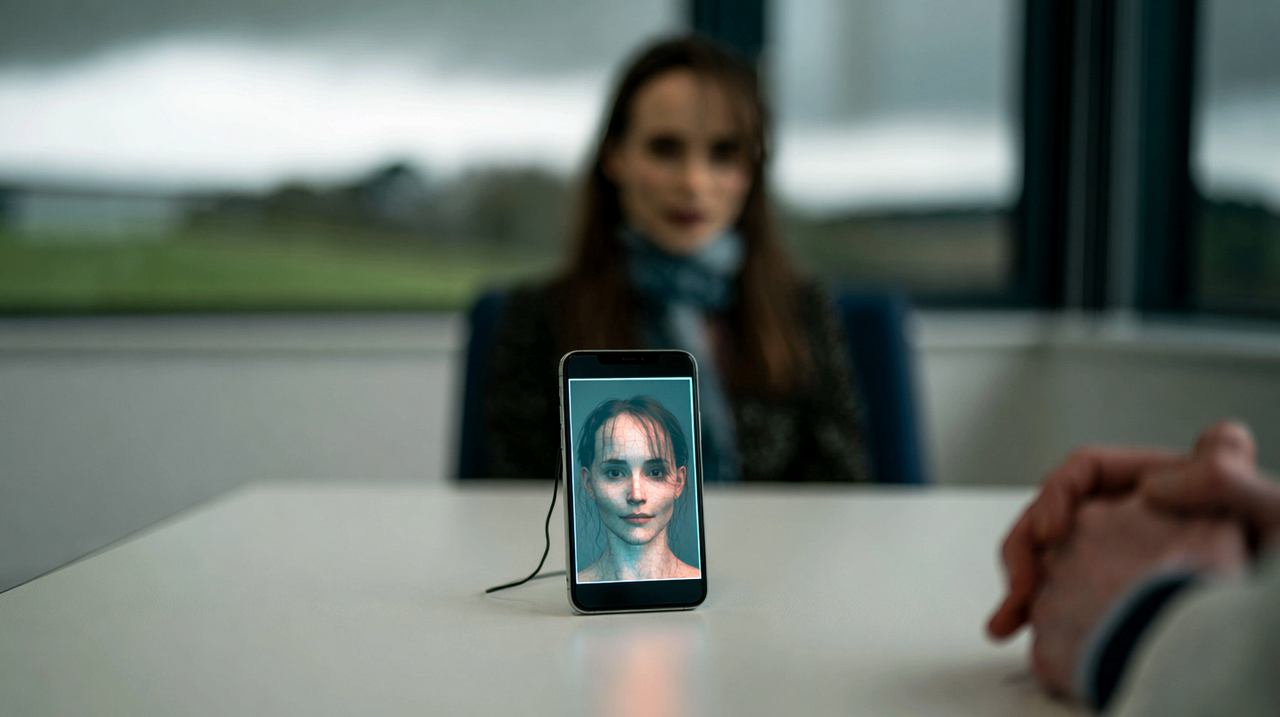
There is a particular kind of silence that now falls in a cosmetic surgeon's consulting room, and it arrives at the moment a patient turns a phone screen around. For most of the modern history of aesthetic medicine, the image on that screen was someone else. A celebrity's jawline. A model's nose. A friend's cheekbones, or a stranger's lips harvested from a social feed. The surgeon could meet that image on familiar ground, because the gap between the patient and the picture was obvious and could be named. You are not that person. Your bone structure is not theirs. We can move towards an idea, but we cannot transplant a face.
Something changed in the spring of 2026, and the change was reported, almost simultaneously, on three continents. The image on the screen was no longer someone else. It was the patient. Or rather, it was a machine's idea of the patient, generated by a chatbot or an image tool, a version of their own face rendered with flawless symmetry, poreless skin, enlarged eyes and a sculpted jaw that the underlying anatomy could never produce. The patient was not asking to look like a star. They were asking to look like themselves, as a piece of software had decided they could be. That request was far harder to refuse, because the gap it asked the surgeon to close was no longer between two different people. It was between a person and a fabrication wearing their own name.
This is a story about a new pressure entering one of the most psychologically fraught corners of medicine, and about a question the technology industry has declined to answer. If an image generator can now function as an unregulated first consultation, producing a personalised outcome that no surgeon can reliably deliver, who carries the responsibility when a patient pursues that fabrication into an operating theatre?
A phenomenon reported into existence
On 23 May 2026, The Guardian reported that plastic surgeons were increasingly alarmed by the rise of what some practitioners had begun calling the “AI face”. The pattern its reporting described was consistent: patients arriving with AI-generated visions of how they wished to look, briefs demanding flawless skin, sharply sculpted cheekbones, refined noses and a near-perfect symmetry that surgeons described as time-consuming, prohibitively expensive and, in many cases, simply physically unattainable. The hyper-symmetry was the tell. A machine can render a perfectly mirrored face in a fraction of a second. A scalpel and a living skull cannot follow it there, because real faces are not symmetrical, and the small asymmetries are part of what makes a face read as human rather than synthetic.
The surgeons the paper spoke to were precise about the mechanism. Alex Karidis, a plastic surgeon based in west London, located the problem in the difference between a rendering and a body. AI, he observed, “can control every single pixel”, whereas “surgery certainly doesn't work on that microscopic detailed level”. He described the images as being “seared” into patients' minds, and said colleagues had recently been inundated with them. Nora Nugent, a cosmetic surgeon practising in Tunbridge Wells and the president of the British Association of Aesthetic Plastic Surgeons, described the same effect in language a psychiatrist would recognise. Her clients were arriving with AI-beautified photographs of themselves and a settled conviction that surgery could reproduce them exactly. “Once you see an image,” she told the paper, “it's wired into you.” That phrase is worth holding on to, and it will return, because the organisation Nugent heads is also the one that has built a formal instrument for screening patients before surgery.
Days earlier, on 18 May 2026, Futurism reported the same phenomenon, drawing on Business Insider's reporting and framing it as a clinical experience rather than a marketing curiosity. Rachel Westbay, a cosmetic dermatologist practising in New York, recounted a patient who arrived with a caricature-like image generated by ChatGPT, a face with huge, doll-like eyes, a “Bratz doll” aesthetic of vast lips and a chiselled jaw. Sachin Shridharani, a Manhattan plastic surgeon, described a woman in her seventies who presented an AI-generated photograph and asked to be made into a kind of surgical time machine, a younger version of herself the software had conjured for her.
The most compact summary of the problem came from the top of the profession. Steven Williams, a plastic surgeon practising in the Bay Area and president of the American Society of Plastic Surgeons, the largest professional body in the field, told Business Insider that patients had brought him AI-generated images for breast augmentation, body contouring and rhinoplasty. His verdict on the distance between what the software offers and what an operating theatre can deliver ran to five words. “Pixels are easier than surgery.”
The whole of this story is folded inside that sentence. A pixel has no blood supply. It does not scar, swell, heal unevenly or age. Williams put the constraint plainly: bodies, he said, “aren't clay”, and there are “physiological and organ systems that we have to protect when we're doing these surgeries”. An image generator is under no such obligation, and, crucially, it does not disclose that it is under no such obligation. It simply produces the picture. When the president of the largest professional body in aesthetic medicine finds himself explaining that a human face is not a rendering surface, the gap between the two media has become a clinical problem.
The third report came from South Korea, the country with arguably the most developed cosmetic surgery market in the world. Seoul Economic Daily, alongside reporting carried by The Korea Herald, documented a parallel development on the supply side. AI-generated imagery was being used as fabricated before-and-after evidence in the marketing of cosmetic surgery clinics, hair-loss treatments and aesthetic medicine, with creators on freelance platforms offering such advertising photographs for as little as ten thousand to thirty thousand won an image, roughly seven to twenty-two US dollars. The Korea Fair Trade Commission was reported to be moving to revise its advertising guidelines to require disclosure when AI-generated virtual figures appear in adverts.
Put the three reports together and the shape of the problem becomes clear. On one side, patients are pre-convinced by fabricated outcomes in advertising. On the other, they are generating personalised hallucinations of their own faces and bringing them in as briefs. The patient arrives already persuaded, twice over, by images that were never constrained by anatomy, healing or the stubborn particularity of a living body.
Why the personalised image is the dangerous part
To understand why this is more than a novelty, it helps to be precise about what an AI-generated self-image is and is not. A beauty filter, ubiquitous on social platforms for the better part of a decade, augments a live image. It smooths, enlarges and reshapes in real time, but it remains tethered to the moving, three-dimensional face beneath it. Most people, on some level, understand the filter as a costume. A heavily edited photograph of a celebrity is a different thing again: an idealised image of another person, retouched towards an impossible standard, but still legibly someone else.
None of this is hypothetical, and the profession is not meeting the pattern for the first time. It has already lived through one version of this story, and that version has a name. In 2018 the British cosmetic doctor Tijion Esho coined the term “Snapchat dysmorphia” to describe a shift he was seeing in his own consulting room: patients who had once arrived holding a photograph of a celebrity were now arriving holding a filtered photograph of themselves. Later that year the phenomenon received a clinical framing in JAMA Facial Plastic Surgery, where Susruthi Rajanala, Mayra Maymone and Neelam Vashi of Boston University described patients seeking procedures in order to resemble their own edited selfies, and warned that a technology which had put an idealised self in every pocket was blurring the boundary between reality and fantasy in a way capable of triggering or aggravating body dysmorphic disorder.
The numbers that accompanied that warning are the best calibration anyone has for what is happening now. The American Academy of Facial Plastic and Reconstructive Surgery has asked its members, year after year, whether patients are seeking cosmetic procedures in order to look better in their own photographs. In the survey that first identified the trend, in 2016, forty-two per cent of surgeons said yes. The following year the figure was fifty-five per cent. By the survey covering 2019, seventy-two per cent of members were reporting it, and by the academy's results for 2021 the proportion had reached seventy-seven per cent. Whatever else the filtered selfie was, it was not a marginal preoccupation confined to a handful of unusual patients. Within five years it had become the most commonly reported driver of demand across an entire surgical speciality. The empirical literature has continued to accumulate, with recent work by Garg and colleagues in the Journal of Consumer Behaviour examining the relationships between AI beauty filters, appearance self-esteem and social comparison, and finding the associations clinicians had been describing anecdotally for a decade.
Hold that trajectory in mind, because the filtered selfie was the milder case. The AI-generated self-image collapses the filter and the retouched celebrity photograph into something more potent. It is not tethered to a live face, so it is free to violate anatomy entirely. It is not someone else, so it cannot be dismissed as aspiration. It occupies a uniquely persuasive middle ground: photographic in texture, specific in its claim, personal in its subject. It looks like a photograph of a result rather than a drawing of a wish. Because the human visual system is built to trust photographs, it arrives carrying an authority it has done nothing to earn.
The escalation is the point. The filter was tethered to a live face, and it was legible as a costume, something the patient could take off. The AI self-image removes both constraints at once. If a tethered, removable costume was enough to move surgeon-reported demand from forty-two per cent to more than three-quarters of a profession inside five years, the question nobody has yet asked seriously is what an untethered, photographic, personalised generator does next.
This is the mechanism the surgeons kept circling. The patient is not asking to be made into a stranger. They are asking to be made into themselves, and they are holding what appears to be proof that this self exists. The ordinary tools of the consultation, the gentle reality test, the explanation of what bone and soft tissue will and will not allow, run into a counter-argument that feels incontrovertible to the person holding the phone.
There is a deeper problem still. The image generator has no model of the patient's anatomy. It has no scan of their skull, no map of their soft tissue, no knowledge of how their skin will scar or how their face will age. It is a statistical engine producing the most plausible pretty face given a prompt and a reference. It is not predicting a surgical outcome. It is averaging towards a learned ideal and stitching that ideal onto a recognisable identity. The result can look astonishingly specific while being, in the only sense that matters clinically, completely uninformed.
The psychiatry the technology ignores
None of this would matter quite so much if cosmetic surgery were a low-stakes consumer transaction. It is not, and the reason has been documented in the psychiatric literature for decades, well before any chatbot could render a face.
Body dysmorphic disorder, BDD, is a recognised psychiatric condition characterised by a preoccupation with a perceived defect in appearance that is either imagined or, where some basis exists, grossly exaggerated in the sufferer's perception. The defining feature, from the perspective of this story, is that the distress lives in perception rather than in the body. The reference point against which the sufferer measures themselves is internal and distorted, and it does not move when the body does.
The clinical consequence is stark and consistent across the evidence base. Cosmetic surgery does not resolve BDD, and frequently makes it worse. Research reviewing outcomes of cosmetic treatment in people with the disorder has found that the substantial majority experience no improvement or an active worsening of symptoms, with one body of work reporting that around two-thirds of cosmetic treatments led to no change or deterioration. Because the distress originates in a distorted perception of the self rather than in any feature a scalpel can reach, altering the feature does not touch the source. The preoccupation does not dissolve. It migrates, fixing on a new flaw, and the patient returns seeking the next intervention, often angrier than before, moving from procedure to procedure in pursuit of a settled feeling that never arrives, and occasionally turning to self-administered surgery when clinicians decline to continue.
How many such patients are in the waiting room is a question the literature has answered several times, and the striking thing is that successive meta-analyses have revised the figure upward rather than down. A 2017 systematic review with meta-analysis by Ribeiro, published in Aesthetic Plastic Surgery, pooled the plastic surgery and dermatology evidence and arrived at just over fifteen per cent. A 2022 meta-analysis by Salari and colleagues in the Journal of Plastic, Reconstructive and Aesthetic Surgery, drawing on forty-eight studies and almost fifteen thousand participants, put it at a fraction over nineteen per cent, with a confidence interval running from roughly sixteen to twenty-three per cent. The most recent work, a 2025 systematic review and meta-analysis by Pérez-Buenfil and colleagues in the Journal of Cosmetic Dermatology, found a prevalence of around twenty-four per cent among plastic surgery patients. Set any of those against a general population figure of roughly one to two per cent and the concentration in the cosmetic consulting room is somewhere between ten and twenty times higher. The trend line matters as much as the number. The estimate has moved from about a seventh of patients, to around a fifth, to very nearly a quarter, and it has moved in that direction over precisely the years in which the filtered selfie became the profession's most commonly reported driver of demand.
The professional consensus has accordingly long held that BDD is, broadly, a contraindication to cosmetic surgery, and that the appropriate response is psychological care rather than the knife. It is why responsible screening probes motivation and insight rather than cataloguing what a patient would like changed, and why a patient who shifts their dissatisfaction the instant one concern is addressed is treated as a clinical warning rather than a customer to be satisfied.
Now consider what the AI-generated self-image does to a patient whose perception is already distorted. The defining clinical problem in BDD is an internal reference point that is unreal and immovable. The personalised AI image takes that distortion and externalises it into something that looks photographic, specific and achievable. Where the sufferer once had a vague and shifting sense that they ought to look different, they now have a high-resolution artefact that appears to prove it, an image they can hold up, return to, and present as a brief. The hallucination has been laundered into evidence.
The surgeon in the impossible position
Set this in the room and the bind facing the conscientious surgeon comes into focus. They are trained to assess feasibility, to manage expectations and to screen for psychological risk, and they are now being handed reference images engineered, however unintentionally, to defeat all three.
A skilled practitioner will look at an AI self-image and see immediately what is wrong with it as a surgical brief: the symmetry that cannot be built, the eye size no procedure produces, the skin texture that belongs to a render rather than to living tissue. But the explanation runs against a patient who has effectively already had a consultation, conducted by a machine that told them, in the most persuasive medium available, that the outcome is theirs. The surgeon is no longer the first voice in the conversation. They are the second, and they are contradicting an image the patient experiences as authoritative.
There is a commercial gradient running through this too, and it would be naive to ignore it. Cosmetic surgery is, in large part, a private market. A surgeon who repeatedly tells patients that what they want is impossible is turning away business a competitor down the road may be willing to take. The ethical literature in aesthetic surgery has begun to grapple explicitly with the difficulty of saying no, precisely because the structural incentives push against refusal. The AI image sharpens that pressure, widening the gap between the practitioner who holds the line on anatomical reality and the one prepared to chase a render for a fee.
There is also the matter of consultation time. Surgeons describing the trend report that appointments now run longer, because so much of the visit is spent dismantling an expectation that arrived fully formed. The clinician is cast from the outset as the bearer of bad news rather than as a guide, and the patient who walks out unconvinced does not necessarily abandon the goal. They take the same image to the next clinic, and the one after that, until they find someone willing to attempt it. The image, in other words, does not stay in one room. It shops.
A vacuum where the rules should be
If the machine is now performing a first consultation, it is worth asking what standards govern that consultation. The answer, at present, is effectively none.
The contrast with the regulated parts of the field is instructive. In the United Kingdom, a surgeon who advertises cosmetic procedures operates under the Advertising Standards Authority and the committees that write the advertising codes, whose guidance on the marketing of surgical and non-surgical cosmetic procedures specifically addresses misleading claims, including exaggerated or unrealistic before-and-after imagery. Any such image used in an advert is expected to reflect a genuine result, and marketers are warned against using post-production techniques to enhance the very areas the procedure is meant to address. The General Medical Council sets standards of consent and probity for doctors who offer cosmetic interventions, and the Royal College of Surgeons of England has issued professional standards for cosmetic practice. In the United States, the Federal Trade Commission finalised a rule in 2024, in force from that October, banning fake and AI-generated consumer reviews and testimonials, with penalties running to tens of thousands of dollars per violation.
The most pointed instrument belongs to the British Association of Aesthetic Plastic Surgeons, which has developed structured psychological screening, including a tool intended to help surgeons assess a patient's underlying motivations and identify those who should not be offered treatment at all. The body that built that instrument is the one whose president, Nora Nugent, is the surgeon describing AI images as being wired into patients. The profession that constructed a formal defence against distorted self-perception is now watching a technology arrive that is, in effect, engineered to defeat it. Work published in the Aesthetic Surgery Journal on piloting a Cosmetic Readiness Questionnaire points the same way, towards validated preoperative psychological assessment rather than the clinician's unaided judgement. The instruments exist. What they were not designed for is a patient who arrives already holding photographic-seeming proof.
Every one of these instruments shares an assumption: that the dangerous content is something a clinic or a business publishes, and that responsibility can be pinned to a regulated actor with a name and a duty of care. A clinic that fabricates a before-and-after photograph is liable. A doctor who misleads a patient about a likely outcome has breached their professional duty. An advertiser who exaggerates results can be made to take the advert down.
The AI self-image slips through every one of these nets, because it is generated by the patient, on a general-purpose consumer tool, outside any clinical or commercial relationship. No clinic published it. No doctor endorsed it. No advertiser claimed it as a result. It is, in regulatory terms, a private act of imagination, except that it was performed by a system marketed and operated by one of the largest companies on earth, a system that produced a photographic-seeming medical-adjacent prediction with no competence to do so and no warning attached. The Korean response, requiring disclosure when AI figures appear in advertising, addresses the supply side. It does nothing about the demand side, the patient generating a personalised impossible face at home and carrying it into a clinic as a brief. We have built elaborate rules for the people who sell cosmetic procedures and rather fewer for the tools that shape what people walk in asking for. The most consequential image in the entire transaction is produced in the one place no regulator is looking.
The argument the platforms will make, and why it is not enough
It is worth steel-manning the position of the companies whose tools produce these images, because they will make their case and parts of it are not unreasonable.
They will say, first, that they did not ask anyone to use an image generator as a surgical planning tool, and that no reasonable person should treat a chatbot's output as a clinical prediction. The tools are general-purpose. People use them to draft emails, write code and make birthday cards. That some users repurpose a flattering self-portrait as a brief for irreversible surgery is, on this view, a misuse no more foreseeable than a thousand others.
They will say, second, that the alternative, building anatomical guardrails into image generation so that it refuses to produce idealised faces, would be both technically fraught and a form of paternalism users would reject. Where, exactly, would the line sit? A smoothed complexion is harmless. A subtly slimmed jaw is harmless. At what point does an aesthetic preference become a dangerous medical fabrication, and who is the platform to decide?
These arguments have force, and a serious response has to concede it. But they are not sufficient. The harm here is not incidental to what the tool does well. It is a direct expression of it. The same capability that makes these systems delightful, their ability to produce a confident, fluent, photographic-seeming answer to almost any prompt, is exactly what makes them dangerous here. The tool is not malfunctioning when it renders an impossible version of a patient's face. It is doing what it was built to do, which is to give the user the most appealing plausible output, unburdened by any obligation to say whether that output corresponds to anything achievable.
Foreseeability, too, is doing less work for the platforms than they would like. Once the phenomenon has been reported in The Guardian, in the American business press and in the South Korean papers, once the president of the American Society of Plastic Surgeons is publicly explaining that pixels are easier than surgery, the use is no longer unforeseeable. It is documented. And the line-drawing objection, while real, is an argument for difficulty, not for inaction. Platforms draw exactly these sorts of contested lines constantly, around violence, around medical misinformation, around self-harm content. The claim that aesthetic body modification is uniquely impossible to handle is not credible from companies that have built elaborate apparatus for every other category of sensitive content. What is missing is not the capability. It is the incentive.
So who is responsible
Strip the question to its core. A patient undergoes an irreversible procedure in pursuit of a result that was always a fabrication. Who bears responsibility?
The honest answer is that it is distributed, and that the distribution is currently arranged so that the party with the most power to prevent the harm carries the least exposure to its consequences.
The surgeon who operates carries responsibility, and the existing framework is right to hold them to it. The duty to assess feasibility, to obtain genuinely informed consent, to screen for psychological vulnerability and to decline when a request is anatomically impossible or psychologically driven does not evaporate because the patient arrived holding an AI image. If anything, the image makes that duty more demanding. A surgeon who proceeds knowing the brief is impossible, or who fails to screen a patient whose attachment to an AI rendering of their own face should itself be a warning sign, is not absolved by the technology. They are tested by it.
The clinics and marketers who deploy fabricated AI before-and-after imagery carry a clearer responsibility, and this is the part the existing rules already reach. Presenting a generated outcome as a genuine result is deception, whether the tool that produced it is a paintbrush, Photoshop or a diffusion model, and the regulatory machinery, the advertising codes, the Federal Trade Commission's rule on AI-generated testimonials, the Korean move towards mandatory disclosure, is correctly aimed here. The task is enforcement at the pace the technology now allows.
But the party that has escaped the conversation almost entirely is the one whose tool performs the unregulated first consultation. The platforms producing these personalised impossible faces have constructed, without intending to, a new actor in the cosmetic-medicine pathway: a system that shapes patient expectation before any clinician is involved, that anchors distorted self-perception in photographic-seeming evidence, and that does so with no duty of care, no warning and no competence in the domain it is effectively practising. To say this carries no responsibility because the tool is general-purpose is to mistake the absence of a rule for the absence of a harm.
What responsibility would look like is not mysterious, and it does not require resolving the hard philosophical question of where aesthetic preference ends and dangerous fabrication begins. It begins with the modest steps the industry takes seriously in every other sensitive domain. Clear disclosure that a generated image is not a prediction of any achievable outcome, surfaced at the point of generation rather than buried in terms of service. Friction or refusal when a tool is asked to produce idealised surgical transformations of a real person's uploaded face. Honest communication of uncertainty, the thing these systems are worst at. None of this is beyond companies that can render a photorealistic face from a sentence. It is a question of whether they are made to, and so far nothing has made them.
The shape of the thing to come
It would be a mistake to read this as a narrow story about vanity, or about a handful of patients with outlandish requests. The cosmetic surgery consulting room is simply where a much larger pattern has become legible early, because the stakes there are physical, irreversible and easy to see.
The pattern is this. Generative AI produces confident, fluent, plausible-seeming output across every domain it touches, without any reliable internal model of whether that output is true, achievable or safe. In most contexts the cost of a confident fabrication is an embarrassing error, a wrong fact, a broken line of code, a citation to a paper that does not exist. In cosmetic medicine, the cost is written onto a human body that cannot be returned to its previous state, and it is written most heavily onto the patients least equipped to resist it, the ones whose perception of themselves was already distorted before the machine handed them a photograph of the distortion.
The patients arriving with AI images of their own impossible faces are early indicators of what happens when a technology optimised for plausibility meets a human vulnerability optimised, by disorder, to believe a flattering lie about the self. The reporting that surfaced this in May 2026 deserves to be read not as a curiosity from the frontier of beauty, but as a warning about what emerges when we deploy systems extraordinarily good at producing what we want to see and entirely indifferent to whether it is real.
The face is just where it showed up first. The patient turns the phone around, and the silence falls, and on the screen is a version of a person that the most powerful image-generation systems ever built have declared to be possible. Pixels, as the president of the American Society of Plastic Surgeons put it, are easier than surgery. Those systems were never in a position to make that promise. The question, still unanswered, is what we are going to do about the fact that they made it anyway, and that someone, somewhere, is already booked in to have it carved into their living face.
References
- The Guardian, “'You can't control everything': the rise in plastic surgeons asked to create 'AI face'“, 23 May 2026. https://www.theguardian.com/technology/2026/may/23/rise-in-plastic-surgeons-asked-to-create-ai-face-cosmetic-surgery
- Futurism, “People Are Getting Plastic Surgery to Look More AI-Generated”, 18 May 2026. https://futurism.com/artificial-intelligence/plastic-surgery-ai
- Business Insider, reporting on AI-generated images and plastic surgery expectations, May 2026. https://www.businessinsider.com/ai-generated-images-chatgpt-reshape-plastic-surgery-beauty-expectations-2026-5
- Seoul Economic Daily / The Korea Herald, “Not even Photoshopped: Plastic surgery clinics turn to AI for ads”, 2026. https://www.koreaherald.com/article/10739405
- Veale D. et al., “Outcome of cosmetic surgery and 'DIY' surgery in patients with body dysmorphic disorder”, Psychiatric Bulletin. https://www.cambridge.org/core/journals/psychiatric-bulletin/article/outcome-of-cosmetic-surgery-and-diy-surgery-in-patients-with-body-dysmorphic-disorder/75A00DFB8CA8A0312BD0BD5E87DBA53C
- “Body Dysmorphic Disorder in Patients With Cosmetic Surgery”, PMC. https://pmc.ncbi.nlm.nih.gov/articles/PMC11916269/
- International OCD Foundation, “Cosmetic Treatments and Body Dysmorphic Disorder”. https://bdd.iocdf.org/expert-opinions/cosmetic-treatments-and-bdd/
- Crerand C. E. and Franklin M. E., “Body Dysmorphic Disorder and Cosmetic Surgery”, University of Pennsylvania. https://www.med.upenn.edu/ctsa/assets/user-content/documents/CrerandFranklin_BDD_2006.pdf
- “Saying No in Aesthetic Surgery: Ethical Framework for Declining High-Stakes Requests”, Aesthetic Plastic Surgery. https://link.springer.com/article/10.1007/s00266-026-05682-w
- Ribeiro R. V. E., “Prevalence of Body Dysmorphic Disorder in Plastic Surgery and Dermatology Patients: A Systematic Review with Meta-Analysis”, Aesthetic Plastic Surgery, 2017. https://link.springer.com/article/10.1007/s00266-017-0869-0
- Salari N. et al., “Body dysmorphic disorder in individuals requesting cosmetic surgery: A systematic review and meta-analysis”, Journal of Plastic, Reconstructive and Aesthetic Surgery, vol. 75, 2022, pp. 2325-2336. https://doi.org/10.1016/j.bjps.2022.04.098
- Pérez-Buenfil A. and Morales-Sánchez M. A., “Prevalence of Body Dysmorphic Disorder: A Systematic Review and Meta-Analysis”, Journal of Cosmetic Dermatology, April 2025. https://doi.org/10.1111/jocd.70121
- Rajanala S., Maymone M. B. C. and Vashi N. A., “Selfies: Living in the Era of Filtered Photographs”, JAMA Facial Plastic Surgery, November 2018. https://doi.org/10.1001/jamafacial.2018.0486
- Cosmetics Business, “'Snapchat dysmorphia' is the beauty social media trend of 2018 that has doctors worried”, 2018. https://cosmeticsbusiness.com/-snapchat-dysmorphia-is-the-beauty-social-media-trend-of-2018-that-has-doctors-worried--145860
- American Academy of Facial Plastic and Reconstructive Surgery, “AAFPRS Survey Says the Selfie Endures and Is Stronger Than Ever”, 27 February 2020. https://www.aafprs.org/Media/Press_Releases/Selfies%20Endure%20February%2027,%202020.aspx
- American Academy of Facial Plastic and Reconstructive Surgery, “2021 Statistics and Trends Released: Demand for Facial Plastic Surgery Skyrockets”. https://www.aafprs.org/Media/Press_Releases/2021%20Survey%20Results.aspx
- Garg S., Goel P., Rana N. P. and Mishra A., “AI, Beauty Filters, and Appearance Self-Esteem: An Empirical Investigation”, Journal of Consumer Behaviour, 2026. https://doi.org/10.1002/cb.70141
- Pikoos T. D., Buchanan B., Hegarty S. and Rossell S. L., “Development of a Preoperative Psychological Screening Tool: Piloting the Cosmetic Readiness Questionnaire (Pilot-CRQ)“, Aesthetic Surgery Journal, 2024. https://doi.org/10.1093/asj/sjae187
- Advertising Standards Authority and Committees of Advertising Practice, “Guidance on the marketing of surgical and non-surgical cosmetic procedures”. https://www.asa.org.uk/resource/cosmetic-interventions.html
- Advertising Standards Authority and Committees of Advertising Practice, “Before and after photos”. https://www.asa.org.uk/advice-online/before-and-after-photos.html
- British Association of Aesthetic Plastic Surgeons, pre-operative psychological screening tool. https://www.laingbuissonnews.com/imtj/news-imtj/uk-baaps-launches-pre-op-psychological-screening-tool/
- General Medical Council, “Guidance for doctors who offer cosmetic interventions”.
- Royal College of Surgeons of England, “Professional Standards for Cosmetic Surgery”. https://www.rcseng.ac.uk/standards-and-research/standards-and-guidance/service-standards/cosmetic-surgery/
- Federal Trade Commission, “Federal Trade Commission Announces Final Rule Banning Fake Reviews and Testimonials”, 14 August 2024. https://www.ftc.gov/news-events/news/press-releases/2024/08/federal-trade-commission-announces-final-rule-banning-fake-reviews-testimonials
- Korea Fair Trade Commission, revisions to advertising review guidelines requiring disclosure of AI-generated virtual figures, as reported 2026.

Tim Green UK-based Systems Theorist & Independent Technology Writer
Tim explores the intersections of artificial intelligence, decentralised cognition, and posthuman ethics. His work, published at smarterarticles.co.uk, challenges dominant narratives of technological progress while proposing interdisciplinary frameworks for collective intelligence and digital stewardship.
His writing has been featured on Ground News and shared by independent researchers across both academic and technological communities.
ORCID: 0009-0002-0156-9795 Email: tim@smarterarticles.co.uk
Listen to the free weekly SmarterArticles Podcast