Streaming Broke Musicians First: AI Just Made It Obvious
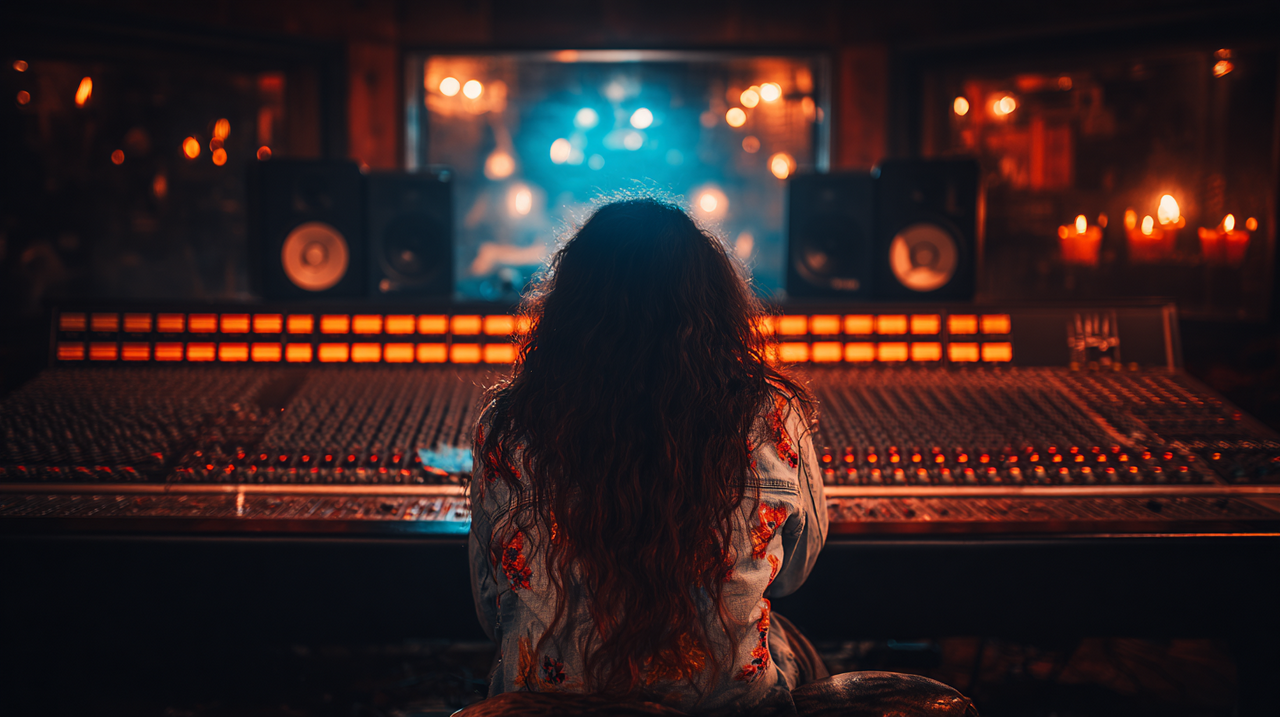
In September 2025, a 31-year-old poet from Olive Branch, Mississippi named Telisha “Nikki” Jones watched her AI-generated R&B project, Xania Monet, debut at number one on Billboard's R&B Digital Song Sales chart. Jones had never considered herself a singer. She had spent years writing deeply personal poetry, running a printing company, and singing quietly in church. Then she discovered Suno, a generative AI music platform, and began feeding her poems into it. Within four months, record labels were locked in a bidding war that reached three million dollars. Hallwood Media, led by former Geffen Records president Neil Jacobson, won.
The reaction from the music industry was swift and visceral. R&B singer Kehlani took to TikTok, declaring: “There is an AI R&B artist who just signed a multi-million-dollar deal, and the person is doing none of the work. I don't respect it.” Victoria Monet told Vanity Fair that it was “hard to comprehend that, within a prompt, my name was not used for this artist to capitalise on,” pointing to the uncanny resemblance between herself and the AI avatar. SZA posted a screenshot questioning why anyone would “devalue our music.” Producer Jermaine Dupri compared the acceptance of AI artists to the Milli Vanilli scandal. The public narrative crystallised quickly: AI music was inauthentic, parasitic, and threatening to real artistry.
These responses are understandable. They are also, in a fundamental sense, aimed at the wrong target. The anxieties surfacing around AI-generated music are real, but the debate as currently framed obscures something far more consequential than questions of authenticity or artistic merit. What is actually at stake is a systems-level crisis about how musicians sustain themselves economically, how listeners discover music, and how the infrastructure of a multibillion-dollar industry distributes value. The moral framing of this argument, with its emphasis on “real” versus “fake” artistry, has become a convenient distraction from structural failures that predate generative AI by at least a decade.
When the Charts Tell Half the Story
Consider what it actually took for Breaking Rust, an AI-generated country music project created by Aubierre Rivaldo Taylor, to top Billboard's Country Digital Song Sales chart in late 2025. According to Luminate data, roughly 2,500 digital downloads were sufficient for its track “Walk My Walk” to claim the number one position. As Andrew Chow noted in TIME magazine, the digital music sales charts have long been vulnerable to manipulation, and the significance of the achievement was questionable. Country radio stations flatly refused to add Breaking Rust to their rotations. Radio consultant Joel Raab told Billboard that listeners “react negatively to the idea of AI voices on their stations.” Leslie Fram, founder of FEMco, called it “a notable wake-up call but not yet an existential threat,” adding that “in country, where authenticity and storytelling are core, this could erode trust if fans feel manipulated.”
Yet the headlines read as though something seismic had occurred. By mid-November, one third of the top ten on Billboard's Country Digital Song Sales chart was composed of AI-assisted artists. The framing invited a binary debate: should AI music be permitted on the charts or not? What went unexamined was why the charts themselves had become so easy to game, and why a few thousand downloads could generate the appearance of mainstream success on platforms that were never designed to handle the current volume of content.
That volume is staggering. According to Luminate data published in January 2026, an average of 106,000 new tracks were delivered to streaming services each day throughout 2025, a seven per cent increase from 99,000 daily in 2024. There were 253 million music tracks sitting on audio streaming platforms by the close of 2025. Nearly half of those tracks, some 120.5 million, received fewer than ten streams. Three quarters received fewer than 100 annual streams. A full 88 per cent received fewer than 1,000 streams.
These are not primarily AI numbers. The content flood was already well underway before tools like Suno and Udio made it trivially easy for anyone with a text prompt to generate a passable song. Spotify was already receiving roughly 60,000 uploads per day before the AI surge. The oversaturation problem, in other words, is structural. AI has accelerated it enormously, but it did not create it.
The Royalty Pool Nobody Talks About
The streaming economy operates on a pro-rata model. All subscription revenue is pooled together, then distributed based on total platform streams. If a track accounts for one per cent of all streams on Spotify in a given month, it receives one per cent of the royalty pool. This system mechanically advantages artists with massive audiences and punishes everyone else. Per-stream payouts on Spotify hover between $0.003 and $0.005. Only 1.4 per cent of Spotify's artists earn more than $1,000 per year from the platform.
When Spotify announced in January 2026 that it had paid out more than $11 billion to the music industry in 2025, the largest annual payment to music from any retailer in history, the figure sounded extraordinary. But as industry analysts have consistently pointed out, the distribution of that money is radically unequal. According to Luminate, just 541,000 tracks, representing barely 0.2 per cent of all available music, accounted for 49.4 per cent of total global audio streaming consumption. The vast majority of working musicians compete for scraps from the remaining half.
The platform's own policies have compounded the problem for smaller artists. In April 2024, Spotify introduced a minimum threshold requiring tracks to accumulate at least 1,000 streams in the previous twelve months before they could generate any royalties at all. The company framed this as fraud prevention, arguing that processing micropayments for low-stream tracks cost more than the payouts themselves. But the effects have been severe. According to Digital Music News, roughly 87 per cent of songs on the platform fall below this threshold. An estimated $47 million in annual royalties that previously trickled to independent artists was effectively redirected to the platform's top performers and the three major labels that represent them. A survey reported by Digital Music News found that 85 per cent of independent respondents experienced revenue reductions, with 65 per cent reporting “significant negative impact.” The European independent music body Impala criticised the policy for “stripping revenue from independent labels and niche genres, disproportionately impacting classical, jazz, regional and non-English repertoire.”
Mark Mulligan, the analyst behind MIDiA Research's annual reports, has characterised the broader situation as an approaching pivot point. “Industries arrive at pivot points when an accumulation of fissures coalesce into one big crack,” he wrote. “Streaming is approaching such a point.” The challenges, Mulligan argued, come from multiple directions: major rightsholders feeling investor pressure, artists struggling to cut through clutter, royalties failing to add up for professional artists, and music becoming commodified.
AI did not cause this royalty crisis. But it has weaponised the existing vulnerabilities. According to the IMS Business Report 2025, compiled by Mulligan and MIDiA Research, 60 million people used AI software to create music in 2024. Suno alone attracted 46.9 million monthly visits, according to Semrush, a remarkable surge for a platform that only launched in March 2024. Each of these users can generate finished tracks in seconds. Many of those tracks end up on streaming platforms, where they enter the same royalty pool as music made by human professionals who spent years honing their craft.
The result is a dilution problem. More tracks in the pool means each individual track receives a smaller share of finite revenue. And much of the AI-generated content flooding platforms is not even the product of genuine creative ambition. According to data released by Deezer in late 2025, the proportion of AI-generated uploads to their platform rose from 10 per cent of all deliveries in January to 34 per cent by November, reaching 50,000 fully AI-generated tracks per day. Of those, up to 70 per cent of streams were fraudulent, driven by bot networks designed to siphon royalties.
Spotify responded in September 2025 by announcing the removal of over 75 million “spammy” tracks from its platform. The company also introduced new policies targeting impersonation, spam uploads, and AI voice cloning. But these measures, while necessary, address symptoms rather than the underlying architecture of a system that was already buckling under its own weight.
Authenticity as a Red Herring
The discourse around AI music has gravitated toward aesthetics and authenticity. Can AI produce music that genuinely moves people? Does an AI-generated track carry the same emotional weight as one born from lived human experience? These are interesting philosophical questions, but they function primarily as displacement mechanisms, channelling structural economic anxieties into debates about artistic quality that are ultimately unresolvable.
Consider the case of Telisha Jones. Her poetry is her own. Her lyrics draw from the death of her father when she was eight years old. The emotional content is real, even if the voice delivering it was generated by an algorithm. “There's real emotions and soul put into those lyrics,” Jones told CBS Mornings. When critics accused her of “doing none of the work,” as Kehlani put it, they were making an aesthetic and labour argument simultaneously, conflating the question of whether the music was good with whether its creation involved sufficient human effort.
But this framing, real versus artificial, obscures a more uncomfortable truth. The recorded music industry was already failing most of its human artists long before generative AI entered the picture. A 2023 survey found that 46 per cent of respondents earned no money at all from their music-related activities. Only 13.3 per cent of musicians reported earning a living solely through music in 2025. These are not people being displaced by AI. They were already struggling under a system that concentrates revenue among a tiny elite while platforming the illusion of democratic access.
The “artist-centric” payment models being trialled by various platforms have done little to address this imbalance. Deezer piloted an artist-centric system in France in collaboration with Universal Music Group, promising to reward “professional artists” with consistent streams and to double payouts for songs actively chosen by listeners rather than served by algorithms. A peer-reviewed study published on ScienceDirect found, however, that the model “does not significantly improve remuneration to professional artists.” The fastest-growing segment of the music business, the study suggested, risked becoming “a permanent funding mechanism for the biggest labels and stars.” Passive listening through background playlists, algorithmic radio, and mood-based streams has long inflated play counts without necessarily reflecting artist loyalty. Under pro-rata systems, these passive plays carry the same financial weight as intentional, engaged listening. The “artist-centric” label promises reform while the underlying mechanics of attention and revenue concentration remain essentially unchanged.
The Fraud Economy Beneath the Surface
If the authenticity debate is a distraction, what lies beneath it is arguably worse. The economics of AI-generated music have created a fraud economy of genuinely alarming proportions. Deezer's data tells the most detailed story. By January 2026, roughly 60,000 AI-generated tracks were being delivered to the platform daily, accounting for 39 per cent of all deliveries. In total, Deezer detected more than 13.4 million AI-generated tracks on its platform in 2025 alone. A joint study with Ipsos found that 97 per cent of listeners in blind tests could not distinguish AI-generated tracks from human ones. Yet while AI-generated tracks accounted for only about 3 per cent of total streams on the platform, up to 85 per cent of those streams were fraudulent.
This is not a minor technical problem. It is a structural feature of a system in which generating and uploading music costs virtually nothing, streaming fraud is difficult to detect at scale, and the royalty pool is finite. Every fraudulent AI stream diverts money from a human musician who played by the rules. The incentive structure is perverse: the easier it becomes to create music, the greater the reward for gaming the system. In response, Deezer became the first streaming platform to explicitly tag AI-generated music in June 2025, automatically removing fully AI-generated songs from algorithmic recommendations and editorial playlists. By early 2026, the company announced it would begin selling its AI-detection technology to other companies across the music ecosystem.
Spotify's new spam filter, announced alongside the 75-million-track purge, targets uploaders engaging in mass uploads, duplicates, SEO manipulation, and artificially short tracks designed to boost streaming numbers. But the whack-a-mole nature of the problem is evident. As Spotify acknowledged, the new protections are necessary because “AI can be used by bad actors and content farms to confuse or deceive listeners, push slop into the ecosystem, and interfere with authentic artists working to build their careers.”
The word “slop” is revealing. It borrows from the vocabulary of AI-generated text content that floods the internet: undifferentiated material produced at zero marginal cost to capture advertising revenue or, in this case, streaming royalties. The parallel to the broader AI content crisis is exact. Music streaming platforms are experiencing their own version of the information pollution problem, with the same structural dynamics at play: near-zero production costs, algorithmic amplification, inadequate detection mechanisms, and shared financial pools that reward volume over quality.
The Settlement Paradox
The legal landscape offers its own contradictions. In June 2024, the RIAA filed suit against Suno and Udio on behalf of Universal, Warner, and Sony, alleging mass copyright infringement. The labels claimed these AI platforms had used “stream-ripping,” illegally downloading music from YouTube, to build their training databases. The potential damages were enormous: up to $150,000 per infringed song, potentially amounting to billions.
Then something unexpected happened. In November 2025, Warner Music Group settled with both Suno and Udio, dropping its lawsuits and signing licensing deals for AI music platforms set to launch in 2026. Universal followed suit, settling with Udio and signing its own deal. Sony, notably, has not settled, and litigation continues. Independent artists, including country musician Anthony Justice and a class led by David Woulard, have filed their own lawsuits against both companies, though motions to dismiss are pending.
The settlements reveal a pragmatic calculation by the major labels. Rather than fighting AI music generation, they have chosen to own a piece of it. Hallwood Media, the company that signed Xania Monet to her multimillion-dollar deal, is also an investor in Suno's $250 million Series C funding round, which valued the AI platform at $2.45 billion. The people funding AI music and the people signing AI artists are, in some cases, literally the same people. Hallwood had previously signed imoliver, another top-streaming Suno creator, with Jacobson declaring that the artist “represents the future of our medium.”
This creates a peculiar dynamic. The same labels whose artists are protesting AI music are simultaneously licensing their catalogues to train the next generation of AI music tools. When Kehlani said “nothing and no one on Earth will ever be able to justify AI to me,” she was expressing a position that her own industry's power brokers had already abandoned in private negotiations. The authenticity debate, in this light, begins to look less like a genuine moral reckoning and more like a public-facing narrative that obscures the private deal-making happening behind closed doors.
The Discovery Collapse
Even setting aside fraud, the sheer volume of content on streaming platforms has created a discovery crisis that harms human musicians independent of any AI-specific threat. With 253 million tracks available and 106,000 more arriving daily, the problem of being heard has become mathematically overwhelming. According to Spotify's own data, 53.3 per cent of artists on the platform have fewer than 500 monthly listeners. Two thirds have fewer than 1,000. In 2024 alone, 1.7 million new artists joined Spotify, averaging roughly 4,600 sign-ups per day.
Algorithmic recommendation systems, which were supposed to democratise discovery, have instead reinforced concentration. The algorithms are optimised for engagement, which means they tend to promote content that already has momentum. This creates feedback loops: popular tracks get recommended, which makes them more popular, which gets them recommended more. The result is a power-law distribution in which a minuscule fraction of content captures a majority of attention and revenue, while the long tail grows ever longer and ever more silent.
For an independent musician uploading a track in 2026, the competitive landscape is not merely other human musicians. It is also a flood of AI-generated content, algorithmically optimised playlists curated for maximum engagement metrics, and a discovery architecture that structurally favours incumbents. As MIDiA Research has documented, AI creators already represented 10 per cent of all music creators in 2025, and the number paying to create with AI doubled over the year. Meanwhile, the number of people buying traditional music software fell in both 2024 and 2025. Established creators are not merely watching AI from the sidelines. They are shifting activity and spend toward it, further blurring the boundary between human and machine production. The moral question of whether AI music is “authentic” becomes almost irrelevant when the practical question is whether any new human artist can break through the noise at all.
Responses That Miss the Point
Industry responses to the AI music crisis have tended to focus on labelling, banning, or regulating AI content rather than addressing the structural economics that make the crisis possible. iHeartRadio's “Guaranteed Human” programme, launched in November 2025, pledges that the radio company will not “use AI-generated personalities” or “play AI music that features synthetic vocalists pretending to be human.” Tom Poleman, iHeartRadio's chief programming officer, sent a letter to staff characterising the initiative as “not a tagline but a promise.” All on-air DJs and podcasts across the network were required to include the phrase “Guaranteed Human” in their hourly legal identifications.
The initiative reflects genuine consumer sentiment. Internal research shared by iHeartRadio found that 90 per cent of listeners prefer their media to come from real humans, and 96 per cent found the “Guaranteed Human” concept appealing. An additional finding showed that 82 per cent of consumers worry about AI's societal impact. But iHeartRadio continues to employ AI behind the scenes for scheduling, audience analysis, and workflow management. The distinction between AI as invisible infrastructure and AI as visible content producer is a boundary that may prove difficult to maintain as the technology becomes more deeply embedded in every stage of music production, from mastering to composition to distribution.
Around 60 per cent of musicians already use AI tools for mastering, composing, or creating artwork, according to industry surveys. Yet 65 per cent feel the risks of AI outweigh the benefits, and 82 per cent worry it could threaten their ability to earn a living. These numbers suggest a workforce that has already been forced to adopt the tools that threaten its existence, a dynamic familiar from every previous wave of technological disruption but no less painful for its historical precedent.
The US Copyright Office issued a ruling in January 2025 declaring that works created entirely by artificial intelligence cannot be copyrighted. This means that the music Suno generates in isolation has no copyright protection, which in theory should limit its commercial viability. In practice, however, the distinction is muddied. If a human writes the lyrics and uses AI to generate the instrumental and vocal performance, as Telisha Jones does with Xania Monet, the copyright status becomes ambiguous. The legal frameworks are trailing the technology by years, and the settlements between major labels and AI companies suggest the industry intends to resolve these ambiguities through commerce rather than precedent.
What a Systemic Response Would Require
If the debate around AI music were to shift from moral framing to structural analysis, several uncomfortable realities would need to be confronted. The pro-rata royalty model, which pools all revenue and distributes it by volume, mechanically ensures that the addition of billions of AI-generated streams will dilute payments to human artists. No amount of labelling or content moderation can fix this without changing the underlying payment architecture.
A genuine systemic response would need to address at least three interconnected problems. First, the compensation model itself would require reform. User-centric payment systems, where a subscriber's fee goes only to the artists they actually listen to, would insulate individual listeners' contributions from being diluted by AI-generated content farms. Several proposals along these lines have been circulated, but major labels, which benefit from the current concentration of revenue, have shown limited enthusiasm. Tidal, which pays per-stream rates averaging $0.0125, nearly four times Spotify's rate, demonstrates that alternative economic models are technically feasible, even if they remain commercially marginal.
Second, platform accountability for the content they host would need to extend beyond reactive takedowns of spam. If streaming services are receiving 60,000 AI-generated tracks daily, as Deezer's data suggests, and up to 85 per cent of the resulting streams are fraudulent, the platforms are effectively operating as conduits for royalty theft. The costs of this fraud are currently externalised onto the artists whose revenue share is diluted. Deezer's decision to sell its AI-detection technology is one step, but without industry-wide adoption, bad actors will simply migrate to less vigilant platforms.
Third, the discovery architecture of streaming platforms would need to be redesigned to ensure that human artists are not systematically buried under algorithmically promoted content. This is perhaps the most technically difficult challenge, as it requires balancing competing interests: platform engagement metrics, label promotion budgets, algorithmic efficiency, and the long-term health of a musical ecosystem that depends on new human talent being able to find audiences.
None of these reforms is currently on track to happen. The major labels are busy signing licensing deals with AI companies. The streaming platforms are focused on fraud mitigation rather than structural reform. And the public debate remains fixated on whether AI music is “real” enough to deserve its place on the charts.
The Quiet Emergency
The numbers tell a story that the authenticity debate cannot contain. In 2025, the global streaming market generated $25.12 billion in revenue, representing 67 per cent of total recorded music industry income. US streaming revenue alone reached $4.68 billion, capturing 84 per cent of the domestic market. Yet growth had slowed to just 0.9 per cent year over year in the first half of 2025, according to RIAA data. The industry is approaching a ceiling at precisely the moment when the demands on its revenue pool are expanding exponentially.
Meanwhile, fans are being squeezed from multiple directions. As Mulligan has noted, consumers face higher prices from streaming platforms, increased merchandise and vinyl costs from labels, and rising concert ticket prices from live entertainment companies, all while dealing with broader cost-of-living pressures. The willingness of listeners to pay more for music cannot be assumed to be infinite, yet the system depends on continuous revenue growth to accommodate an ever-expanding catalogue. Over 42 per cent of independent artists report they do not fully understand their own earnings breakdown, a transparency deficit that further compounds the power imbalance between creators and the infrastructure that distributes their work.
The 60 million people who used AI to create music in 2024 are not villains. Many of them are hobbyists, experimenters, or, like Telisha Jones, creative individuals who found a new way to express ideas they had always carried. The problem is not their existence but the system into which their creations are funnelled: a system that was already failing to sustain professional musicians, already rewarding volume over quality, already concentrating revenue among a tiny elite, and already proving unable to help listeners find music they would genuinely love.
When Victoria Monet told Vanity Fair that AI “puts creators in a dangerous spot because our time is more finite,” she identified something real but misdiagnosed its source. “We have to rest at night,” she said. “So, the eight hours, nine hours that we're resting, an AI artist could potentially still be running, studying, and creating songs like a machine.” The danger to creators, however, is not primarily that AI can produce music faster. It is that the entire infrastructure of recorded music distribution was built for a world in which creating and distributing a song required meaningful investment of time, money, and labour. That world no longer exists. The infrastructure has not adapted, and the people paying the price are the musicians who depend on it for their livelihoods.
The question is not whether AI music is authentic. The question is whether the music industry can build systems that sustain human musicians in a world where the marginal cost of creating a song has collapsed to near zero. That is an economic and infrastructural challenge, not a moral one. And until the debate is reframed accordingly, the artists doing the loudest protesting will continue to be the ones with the least power to change the structures that are actually harming them.
References and Sources
Billboard. “AI Music Artist Xania Monet Signs Multimillion-Dollar Record Deal.” Billboard, 2025. https://www.billboard.com/pro/ai-music-artist-xania-monet-multimillion-dollar-record-deal/
CNN. “Xania Monet is the first AI-powered artist to debut on a Billboard airplay chart.” CNN, 1 November 2025. https://www.cnn.com/2025/11/01/entertainment/xania-monet-billboard-ai
Billboard. “AI Artist Xania Monet Debuts on Adult R&B Airplay.” Billboard, 2025. https://www.billboard.com/music/chart-beat/ai-artist-xania-monet-debut-adult-rb-airplay-chart-1236102665/
NPR. “Breaking Rust is a hot new country act on the Billboard charts. It's powered by AI.” NPR, 10 November 2025. https://www.npr.org/2025/11/10/nx-s1-5604320/breaking-rust-is-a-hot-new-country-act-on-the-billboard-charts-its-powered-by-ai
Newsweek. “The No. 1 Country Song in America Is AI-Generated.” Newsweek, 2025. https://www.newsweek.com/breaking-rust-ai-music-country-digital-sales-11022040
DJ Mag. “60 million people used AI to create music in 2024, IMS Business Report 2025 finds.” DJ Mag, 2025. https://djmag.com/news/60-million-people-used-ai-create-music-2024-ims-business-report-2025-finds
Music Business Worldwide. “Over 60,000 tracks are now uploaded to Spotify every day.” Music Business Worldwide, 2025. https://www.musicbusinessworldwide.com/over-60000-tracks-are-now-uploaded-to-spotify-daily-thats-nearly-one-per-second/
Billboard. “How Much Music Is Added to Spotify & Other Streaming Services Daily?” Billboard, 2025. https://www.billboard.com/pro/how-much-music-added-spotify-streaming-services-daily/
Music Business Worldwide. “Music streaming platforms now host quarter of a BILLION tracks.” Music Business Worldwide, 2025. https://www.musicbusinessworldwide.com/quarter-of-a-billion-tracks-now-sit-on-music-streaming-services-where-does-it-end/
Deezer Newsroom. “Deezer: 28% of all delivered music is now fully AI-generated.” Deezer, September 2025. https://newsroom-deezer.com/2025/09/28-fully-ai-generated-music/
Hypebot. “Deezer's 50,000 Daily AI Song Uploads: How Fraud Hides Behind Invisibility.” Hypebot, November 2025. https://www.hypebot.com/hypebot/2025/11/deezers-50000-daily-ai-song-uploads-how-fraud-hides-behind-invisibility.html
Music Ally. “Deezer says up to 85% of its AI-music streams are now fraudulent.” Music Ally, 29 January 2026. https://musically.com/2026/01/29/deezer-says-up-to-85-of-its-ai-music-streams-are-now-fraudulent/
Deezer Newsroom. “Deezer and Ipsos study: AI fools 97% of listeners.” Deezer, November 2025. https://newsroom-deezer.com/2025/11/deezer-ipsos-survey-ai-music/
Spotify Newsroom. “Spotify Strengthens AI Protections for Artists, Songwriters, and Producers.” Spotify, 25 September 2025. https://newsroom.spotify.com/2025-09-25/spotify-strengthens-ai-protections/
Variety. “Spotify Announces New AI Safeguards, Says It's Removed 75 Million 'Spammy' Tracks.” Variety, 2025. https://variety.com/2025/digital/news/spotify-new-ai-safeguards-1236528493/
Spotify Newsroom. “From $11B in 2025 Payouts to What We're Building for Artists in 2026.” Spotify, 28 January 2026. https://newsroom.spotify.com/2026-01-28/2025-music-industry-payouts-whats-next-for-artists/
RIAA. “Growth in Paid Subscription Streaming Drives Mid-Year 2025 US Recorded Music Revenues to New High.” RIAA, 2025. https://www.riaa.com/growth-in-paid-subscription-streaming-drives-mid-year-2025-us-recorded-music-revenues-to-new-high-reports-riaa/
Billboard. “Kehlani Slams AI Artist Xania Monet Over $3 Million Record Deal Offer.” Billboard, 2025. https://www.billboard.com/music/music-news/kehlani-slams-ai-artist-xania-monet-million-record-deal-1236071158/
TheGrio. “Victoria Monet sounds the alarm on Xania Monet.” TheGrio, November 2025. https://thegrio.com/2025/11/18/victoria-monet-reacts-to-xania-monet/
CBS News. “Meet the woman behind chart-topping AI artist Xania Monet.” CBS News, 2025. https://www.cbsnews.com/news/meet-the-woman-behind-chart-topping-ai-artist-xania-monet-i-look-at-her-as-a-real-person/
Billboard. “iHeartRadio Bans AI Music, Podcasts & Radio DJs With New Program.” Billboard, 2025. https://www.billboard.com/pro/iheartradio-bans-ai-music-podcasts-radio-djs-new-program/
TechCrunch. “Warner Music signs deal with AI music startup Suno, settles lawsuit.” TechCrunch, 25 November 2025. https://techcrunch.com/2025/11/25/warner-music-signs-deal-with-ai-music-startup-suno-settles-lawsuit/
TechCrunch. “Warner Music settles copyright lawsuit with Udio, signs deal for AI music platform.” TechCrunch, 19 November 2025. https://techcrunch.com/2025/11/19/warner-music-settles-copyright-lawsuit-with-udio-signs-deal-for-ai-music-platform/
MIDiA Research. “AI is reshaping the music creator economy.” MIDiA Research, 2025. https://www.midiaresearch.com/blog/ai-is-reshaping-the-music-creator-economy-and-that-change-will-reshape-the-music-business
MIDiA Research. “The unflattening of streaming.” MIDiA Research, 2025. https://www.midiaresearch.com/blog/the-unflattening-of-streaming
Billboard. “AI Artists Breaking Rust & More Hit Country Music Chart: Reactions.” Billboard, 2025. https://www.billboard.com/pro/ai-artists-breaking-rust-country-music-chart-reactions/
ScienceDirect. “Alternative payment models in the music streaming market: A comparative approach based on stream-level data.” ScienceDirect, 2024. https://www.sciencedirect.com/science/article/pii/S0167624524000258
AMW Group. “Music Streaming Statistics 2026.” AMW Group, 2026. https://amworldgroup.com/statistics/music-streaming-statistics
Digital Music News. “85% of Indies Face 'Negative Impact' from Spotify Stream Minimum.” Digital Music News, December 2025. https://www.digitalmusicnews.com/2025/12/16/spotify-stream-minimum/
Hypebot. “Spotify Responds: Did the 1000 Stream Rule cost Artists $47M?” Hypebot, April 2025. https://www.hypebot.com/hypebot/2025/04/did-the-spotify-1000-stream-rule-cost-indie-artists-47-million-spotify-responds.html
Music Business Worldwide. “One of Suno's latest investors will be of particular interest to the music industry.” Music Business Worldwide, 2025. https://www.musicbusinessworldwide.com/one-of-sunos-latest-investors-will-be-of-particular-interest-to-the-music-industry/
Music Ally. “Hallwood Media sees chart success with AI artist Xania Monet.” Music Ally, 18 September 2025. https://musically.com/2025/09/18/hallwood-media-sees-chart-success-with-ai-artist-xania-monet/
Deezer Newsroom. “How to Detect AI Music: Deezer Sells Its Detection Tool.” Deezer, January 2026. https://newsroom-deezer.com/2026/01/ai-generated-music-deezer-selling-detection-tool/
Copyright Alliance. “AI Copyright Lawsuit Developments in 2025: A Year in Review.” Copyright Alliance, 2025. https://copyrightalliance.org/ai-copyright-lawsuit-developments-2025/

Tim Green UK-based Systems Theorist & Independent Technology Writer
Tim explores the intersections of artificial intelligence, decentralised cognition, and posthuman ethics. His work, published at smarterarticles.co.uk, challenges dominant narratives of technological progress while proposing interdisciplinary frameworks for collective intelligence and digital stewardship.
His writing has been featured on Ground News and shared by independent researchers across both academic and technological communities.
ORCID: 0009-0002-0156-9795 Email: tim@smarterarticles.co.uk