SmarterArticles

digitalauthenticity

The line between reality and simulation has never been more precarious. In 2024, an 82-year-old retiree lost 690,000 euros to a deepfake video of Elon Musk promoting a cryptocurrency scheme. That same year, a finance employee at Arup, a global engineering firm, transferred £25.6 million to fraudsters after a video conference where every participant except the victim was an AI-generated deepfake. Voters in New Hampshire received robocalls featuring President Joe Biden's voice urging them not to vote, a synthetic fabrication designed to suppress turnout.

These incidents signal a fundamental shift in how information is created, distributed, and consumed. As deepfakes online increased tenfold from 2022 to 2023, society faces an urgent question: how do we balance AI's innovative potential and free expression with the public's right to know what's real?

The answer involves complex negotiation between technology companies, regulators, media organisations, and civil society, each grappling with preserving authenticity when the concept itself is under siege. At stake is the foundation of informed democratic participation and the integrity of the information ecosystem underpinning it.

The Synthetic Media Explosion

Creating convincing synthetic media now takes minutes with consumer-grade applications. Deloitte's 2024 survey found 25.9% of executives reported deepfake incidents targeting their organisations' financial data in the preceding year. The first quarter of 2025 alone saw 179 recorded deepfake incidents, surpassing all of 2024 by 19%.

The advertising industry has embraced generative AI enthusiastically. Research in the Journal of Advertising identifies deepfakes as “controversial and emerging AI-facilitated advertising tools,” with studies showing high-quality deepfake advertisements appraised similarly to originals. When properly disclosed, these synthetic creations trigger an “emotion-value appraisal process” that doesn't necessarily diminish effectiveness.

Yet the same technology erodes media trust. Getty Images' 2024 report covering over 30,000 adults across 25 countries found almost 90% want to know whether images are AI-created. More troubling, whilst 98% agree authentic images and videos are pivotal for trust, 72% believe AI makes determining authenticity difficult.

For journalism, synthetic content poses existential challenges. Agence France-Presse and other major news organisations deployed AI-supported verification tools, including Vera.ai and WeVerify, to detect manipulated content. But these solutions are locked in an escalating arms race with the AI systems creating the synthetic media they're designed to detect.

The Blurring Boundaries

AI-generated content scrambles the distinction between journalism and advertising in novel ways. Native advertising, already controversial for mimicking editorial content whilst serving commercial interests, becomes more problematic when content itself may be synthetically generated without clear disclosure.

Consider “pink slime” websites, AI-generated news sites that exploded across the digital landscape in 2024. Identified by Virginia Tech researchers and others, these platforms deploy AI to mass-produce articles mimicking legitimate journalism whilst serving partisan or commercial agendas. Unlike traditional news organisations with editorial standards and transparency about ownership, these synthetic newsrooms operate in shadows, obscured by automation layers.

The European Union's AI Act, entering force on 1 August 2024 with full enforcement beginning 2 August 2026, addresses this through comprehensive transparency requirements. Article 50 mandates that providers of AI systems generating synthetic audio, image, video, or text ensure outputs are marked in machine-readable format and detectable as artificially generated. Deployers creating deepfakes must clearly disclose artificial creation, with limited exemptions for artistic works and law enforcement.

Yet implementation remains fraught. The AI Act requires technical solutions be “effective, interoperable, robust and reliable as far as technically feasible,” whilst acknowledging “specificities and limitations of various content types, implementation costs and generally acknowledged state of the art.” This reveals fundamental tension: the law demands technical safeguards that don't yet exist at scale or may prove economically prohibitive.

The Paris Charter on AI and Journalism, unveiled by Reporters Without Borders and 16 partner organisations, represents journalism's attempt to establish ethical guardrails. The charter, drafted by a 32-person commission chaired by Nobel laureate Maria Ressa, comprises 10 principles emphasising transparency, human agency, and accountability. As Ressa observed, “Artificial intelligence could provide remarkable services to humanity but clearly has potential to amplify manipulation of minds to proportions unprecedented in history.”

Free Speech in the Algorithmic Age

AI content regulation collides with fundamental free expression principles. In the United States, First Amendment jurisprudence generally extends speech protections to AI-generated content on grounds it's created or adopted by human speakers. As legal scholars at the Foundation for Individual Rights and Expression note, “AI-generated content is generally treated similarly to human-generated content under First Amendment law.”

This raises complex questions about agency and attribution. Yale Law School professor Jack Balkin, a leading AI and constitutional law authority, observes courts must determine “where responsibility lies, because the AI program itself lacks human intentions.” In 2024 research, Balkin and economist Ian Ayres characterise AI as creating “risky agents without intentions,” challenging traditional legal frameworks built around human agency.

The tension becomes acute in political advertising. The Federal Communications Commission proposed 2024 rules requiring AI-generated content disclosure in political advertisements, arguing transparency furthers rather than abridges First Amendment goals. Yet at least 25 states enacted laws restricting AI in political advertisements since 2019, with courts blocking some on First Amendment grounds, including a California statute targeting election deepfakes.

Commercial speech receives less robust First Amendment protection, creating greater regulatory latitude. The Federal Trade Commission moved aggressively, announcing its final rule 14 August 2024 prohibiting fake AI-generated consumer reviews, testimonials, and celebrity endorsements. The rule, effective 21 October 2024, subjects violators to civil penalties up to $51,744 per violation. Through “Operation AI Comply,” launched September 2024, the FTC pursued enforcement against companies making unsubstantiated AI claims, targeting DoNotPay, Rytr, and Evolv Technologies.

The FTC's approach treats disclosure requirements as permissible commercial speech regulation rather than unconstitutional content restrictions, framing transparency as necessary consumer protection context. Yet the American Legislative Exchange Council warns overly broad AI regulations may “chill protected speech and innovation,” particularly when disclosure requirements are vague.

Platform Responsibilities and Technical Realities

Technology platforms find themselves central to the authenticity crisis: simultaneously AI tool creators, user-generated content hosts, and intermediaries responsible for labelling synthetic media. Their response has been halting and incomplete.

Meta announced February 2024 plans to label AI-generated images on Facebook, Instagram, and Threads by detecting invisible markers using Coalition for Content Provenance and Authenticity (C2PA) and IPTC standards. The company rolled out “Made with AI” labels May 2024, applying them to content with industry standard AI indicators or identified as AI by creators. From July, Meta shifted towards “more labels, less takedowns,” ceasing removal of AI-generated content solely based on manipulated video policy unless violating other standards.

Meta's scale is staggering. During 1-29 October 2024, Facebook recorded over 380 billion user label views on AI-labelled organic content; Instagram tallied over 1 trillion. Yet critics note significant limitations: policies focus primarily on images and video, largely overlooking AI-generated text, whilst Meta places disclosure burden on users and AI tool creators.

YouTube implemented similar requirements 18 March 2024, mandating creator disclosure when realistic content uses altered or synthetic media. The platform applies “Altered or synthetic content” labels to flagged material, visible on the October 2024 GOP advertisement featuring AI-generated Chuck Schumer footage. Yet YouTube's system, like Meta's, relies heavily on creator self-reporting.

OpenAI announced February 2024 it would label DALL-E 3 images using C2PA standard, with metadata embedded to verify origins. However, OpenAI acknowledged metadata “is not a silver bullet” and can be easily removed accidentally or intentionally, a candid admission undermining confidence in technical labelling solutions.

C2PA represents the industry's most ambitious comprehensive technical standard for content provenance. Formed 2021, the coalition brings together major technology companies, media organisations, and camera manufacturers to develop “a nutrition label for digital content,” using cryptographic hashing and signing to create tamper-evident records of content creation and editing history.

Through early 2024, Google and other C2PA members collaborated on version 2.1, including stricter technical requirements resisting tampering. Google announced plans integrating Content Credentials into Search, Google Images, Lens, Circle to Search, and advertising systems. The specification expects ISO international standard status by 2025 and W3C examination for browser-level adoption.

Yet C2PA faces significant challenges. Critics note the standard can compromise privacy through extensive metadata collection. Security researchers documented methods bypassing C2PA safeguards by altering provenance metadata, removing or forging watermarks, and mimicking digital fingerprints. Most fundamentally, adoption remains minimal: very little internet content employs C2PA markers, limiting practical utility.

Research published early 2025 examining fact-checking practices across Brazil, Germany, and the United Kingdom found whilst AI shows promise detecting manipulated media, “inability to grasp context and nuance can lead to false negatives or positives.” The study concluded journalists must remain vigilant, ensuring AI complements rather than replaces human expertise.

The Public's Right to Know

Against these technical and commercial realities stands a fundamental democratic governance question: do citizens have a right to know when content is synthetically generated? This transcends individual privacy or consumer protection, touching conditions necessary for informed public discourse.

Survey data reveals overwhelming transparency support. Getty Images' research found 77% want to know if content is AI-created, with only 12% indifferent. Trusting News found 94% want journalists to disclose AI use.

Yet surveys reveal a troubling trust deficit. YouGov's UK survey of over 2,000 adults found nearly half (48%) distrust AI-generated content labelling accuracy, compared to just a fifth (19%) trusting such labels. This scepticism appears well-founded given current labelling system limitations and metadata manipulation ease.

Trust erosion consequences extend beyond individual deception. Deloitte's 2024 Connected Consumer Study found half of respondents more sceptical of online information than a year prior, with 68% concerned synthetic content could deceive or scam them. A 2024 Gallup survey found only 31% of Americans had “fair amount” or “great deal” of media confidence, a historic low partially attributable to AI-generated misinformation concerns.

Experts warn of the “liar's dividend,” where deepfake prevalence allows bad actors to dismiss authentic evidence as fabricated. As AI-generated content becomes more convincing, the public will doubt genuine audio and video evidence, particularly when politically inconvenient. This threatens not just media credibility but evidentiary foundations of democratic accountability.

The challenge is acute during electoral periods. 2024 saw record national elections globally, with approximately 1.5 billion people voting amidst AI-generated political content floods. The Biden robocall in New Hampshire represented one example of synthetic media weaponised for voter suppression. Research on generative AI's impact on disinformation documents how AI tools lower barriers to creating and distributing political misinformation at scale.

Some jurisdictions responded with specific electoral safeguards. Texas and California enacted laws prohibiting malicious election deepfakes, whilst Arizona requires “clear and conspicuous” disclosures alongside synthetic media within 90 days of elections. Yet these state-level interventions create patchwork regulatory landscapes potentially inadequate for digital content crossing jurisdictional boundaries instantly.

Ethical Frameworks and Professional Standards

Without comprehensive legal frameworks, professional and ethical standards offer provisional guidance. Major news organisations developed internal AI policies attempting to preserve journalistic integrity whilst leveraging AI capabilities. The BBC, RTVE, and The Guardian published guidelines emphasising transparency, human oversight, and editorial accountability.

Research in Journalism Studies examining AI ethics across newsrooms identified transparency as core principle, involving disclosure of “how algorithms operate, data sources, criteria used for information gathering, news curation and personalisation, and labelling AI-generated content.” The study found whilst AI offers efficiency benefits, “maintaining journalistic standards of accuracy, transparency, and human oversight remains critical for preserving trust.”

The International Center for Journalists, through its JournalismAI initiative, facilitated collaborative tool development. Team CheckMate, a partnership involving journalists and technologists from News UK, DPA, Data Crítica, and the BBC, developed a web application for real-time fact-checking of live or recorded broadcasts. Similarly, Full Fact AI offers tools transcribing audio and video with real-time misinformation detection, flagging potentially false claims.

These initiatives reflect “defensive AI,” deploying algorithmic tools to detect and counter AI-generated misinformation. Yet this creates an escalating technological arms race where detection and generation capabilities advance in tandem, with no guarantee detection will keep pace.

The advertising industry faces its own reckoning. New York became the first state passing the Synthetic Performer Disclosure Bill, requiring clear disclosures when advertisements include AI-generated talent, responding to concerns AI could enable unauthorised likeness use whilst displacing human workers. The Screen Actors Guild negotiated contract provisions addressing AI-generated performances, establishing consent and compensation precedents.

Case Studies in Deception and Detection

The Arup deepfake fraud represents perhaps the most sophisticated AI-enabled deception to date. The finance employee joined what appeared to be a routine video conference with the company's CFO and colleagues. Every participant except the victim was an AI-generated simulacrum, convincing enough to survive live video call scrutiny. The employee authorised 15 transfers totalling £25.6 million before discovering the fraud.

The incident reveals traditional verification method inadequacy in the deepfake age. Video conferencing had been promoted as superior to email or phone for identity verification, yet Arup demonstrates even real-time video interaction can be compromised. Fraudsters likely used publicly available footage combined with voice cloning technology to generate convincing deepfakes of multiple executives simultaneously.

Similar techniques targeted WPP when scammers attempted deceiving an executive using a voice clone of CEO Mark Read during a Microsoft Teams meeting. Unlike Arup, the targeted executive grew suspicious and avoided the scam, but the incident underscores sophisticated professionals struggle distinguishing synthetic from authentic media under pressure.

The Taylor Swift deepfake case highlights different dynamics. In 2024, AI-generated explicit images of the singer appeared on X, Reddit, and other platforms, completely fabricated without consent. Some posts received millions of views before removal, sparking renewed debate about platform moderation responsibilities and stronger protections against non-consensual synthetic intimate imagery.

The robocall featuring Biden's voice urging New Hampshire voters to skip the primary demonstrated how easily voice cloning technology can be weaponised for electoral manipulation. Detection efforts have shown mixed results: in 2024, experts were fooled by some AI-generated videos despite sophisticated analysis tools. Research examining deepfake detection found whilst machine learning models can identify many synthetic media examples, they struggle with high-quality deepfakes and can be evaded through adversarial techniques.

The case of “pink slime” websites illustrates how AI enables misinformation at industrial scale. These platforms deploy AI to generate thousands of articles mimicking legitimate journalism whilst serving partisan or commercial interests. Unlike individual deepfakes sometimes identified through technical analysis, AI-generated text often lacks clear synthetic origin markers, making detection substantially more difficult.

The Regulatory Landscape

The European Union emerged as global AI regulation leader through the AI Act, a comprehensive framework addressing transparency, safety, and fundamental rights. The Act categorises AI systems by risk level, with synthetic media generation falling into “limited risk” category subject to specific transparency obligations.

Under Article 50, providers of AI systems generating synthetic content must implement technical solutions ensuring outputs are machine-readable and detectable as artificially generated. The requirement acknowledges technical limitations, mandating effectiveness “as far as technically feasible,” but establishes clear legal expectation of provenance marking. Non-compliance can result in administrative fines up to €15 million or 3% of worldwide annual turnover, whichever is higher.

The AI Act includes carve-outs for artistic and creative works, where transparency obligations are limited to disclosure “in an appropriate manner that does not hamper display or enjoyment.” This attempts balancing authenticity concerns against expressive freedom, though “artistic” versus “commercial” content boundaries remain contested.

In the United States, regulatory authority is fragmented across agencies and government levels. The FCC's proposed political advertising disclosure rules represent one strand; the FTC's fake AI-generated review prohibition constitutes another. State legislatures enacted diverse requirements from political deepfakes to synthetic performer disclosures, creating complex patchworks digital platforms must navigate.

The AI Labeling Act of 2023, introduced in the Senate, would establish comprehensive federal disclosure requirements for AI-generated content. The bill mandates generative AI systems producing image, video, audio, or multimedia content include clear and conspicuous disclosures, with text-based AI content requiring permanent or difficult-to-remove disclosures. As of early 2025, legislation remains under consideration, reflecting ongoing congressional debate about appropriate AI regulation scope and stringency.

The COPIED Act directs the National Institute of Standards and Technology to develop watermarking, provenance, and synthetic content detection standards, effectively tasking a federal agency with solving technical challenges that have vexed the technology industry. California positioned itself as regulatory innovator through multiple AI-related statutes. The AI Transparency Act requires covered providers with over one million monthly users to make AI detection tools available at no cost, effectively mandating platforms creating AI content also provide users with identification means.

Internationally, other jurisdictions are developing frameworks. The United Kingdom published AI governance guidance emphasising transparency and accountability, whilst China implemented synthetic media labelling requirements in certain contexts. This emerging global regulatory landscape creates compliance challenges for platforms operating across borders.

Future Implications and Emerging Challenges

The trajectory of AI capabilities suggests synthetic content will become simultaneously more sophisticated and accessible. Deloitte's 2025 predictions note “videos will be produced quickly and cheaply, with more people having access to high-definition deepfakes.” This democratisation of synthetic media creation, whilst enabling creative expression, also multiplies vectors for deception.

Several technological developments merit attention. Multimodal AI systems generating coordinated synthetic video, audio, and text create more convincing fabrications than single-modality deepfakes. Real-time generation capabilities enable live deepfakes rather than pre-recorded content, complicating detection and response. Adversarial techniques designed to evade detection algorithms ensure synthetic media creation and detection remain locked in perpetual competition.

Economic incentives driving AI development largely favour generation over detection. Companies profit from selling generative AI tools and advertising on platforms hosting synthetic content, creating structural disincentives for robust authenticity verification. Detection tools generate limited revenue, making sustained investment challenging absent regulatory mandates or public sector support.

Implications for journalism appear particularly stark. As AI-generated “news” content proliferates, legitimate journalism faces heightened scepticism alongside increased verification and fact-checking costs. Media organisations with shrinking resources must invest in expensive authentication tools whilst competing against synthetic content created at minimal cost. This threatens to accelerate the crisis in sustainable journalism precisely when accurate information is most critical.

Employment and creative industries face their own disruptions. If advertising agencies can generate synthetic models and performers at negligible cost, what becomes of human talent? New York's Synthetic Performer Disclosure Bill represents an early attempt addressing this tension, but comprehensive frameworks balancing innovation against worker protection remain undeveloped.

Democratic governance itself may be undermined if citizens lose confidence distinguishing authentic from synthetic content. The “liar's dividend” allows political actors to dismiss inconvenient evidence as deepfakes whilst deploying actual deepfakes to manipulate opinion. During electoral periods, synthetic content can spread faster than debunking efforts, particularly given social media viral dynamics.

International security dimensions add complexity. Nation-states have deployed synthetic media in information warfare and influence operations. Attribution challenges posed by AI-generated content create deniability for state actors whilst complicating diplomatic and military responses. As synthesis technology advances, the line between peacetime information operations and acts of war becomes harder to discern.

Towards Workable Solutions

Addressing the authenticity crisis requires coordinated action across technical, legal, and institutional domains. No single intervention will suffice; instead, a layered approach offering multiple verification methods and accountability mechanisms offers the most promising path.

On the technical front, continuing investment in detection capabilities remains essential despite inherent limitations. Ensemble approaches combining multiple detection methods, regular updates to counter adversarial evasion, and human-in-the-loop verification can improve reliability. Provenance standards like C2PA require broader adoption and integration into content creation tools, distribution platforms, and end-user interfaces, potentially demanding regulatory incentives or mandates.

Platforms must move beyond user self-reporting towards proactive detection and labelling. Meta's “more labels, less takedowns” philosophy offers a model, though implementation must extend beyond images and video to encompass text and audio. Transparency about labelling accuracy, including false positive and negative rates, would enable users to calibrate trust appropriately.

Legal frameworks should establish baseline transparency requirements whilst preserving innovation and expression space. Mandatory disclosure for political and commercial AI content, modelled on the EU AI Act, creates accountability without prohibiting synthetic media outright. Penalties for non-compliance must incentivise good-faith efforts whilst avoiding severity chilling legitimate speech.

Educational initiatives deserve greater emphasis and resources. Media literacy programmes teaching citizens to critically evaluate digital content, recognise manipulation techniques, and verify sources can build societal resilience against synthetic deception. These efforts must extend beyond schools to reach all age groups, with particular attention to populations most vulnerable to misinformation.

Journalism organisations require verification capability support. Public funding for fact-checking infrastructure, collaborative verification networks, and investigative reporting can help sustain quality journalism amidst economic pressures. The Paris Charter's emphasis on transparency and human oversight offers a professional framework, but resources must follow principles to enable implementation.

Professional liability frameworks may help align incentives. If platforms, AI tool creators, and synthetic content deployers face legal consequences for harms caused by undisclosed deepfakes, market mechanisms may drive more robust authentication practices. This parallels product liability law, treating deceptive synthetic content as defective products with allocable supply chain responsibility.

International cooperation on standards and enforcement will prove critical given digital content's borderless nature. Whilst comprehensive global agreement appears unlikely given divergent national interests and values, narrow accords on technical standards, attribution methodologies, and cross-border enforcement mechanisms could provide partial solutions.

The Authenticity Imperative

The challenge posed by AI-generated content reflects deeper questions about technology, truth, and trust in democratic societies. Creating convincing synthetic media isn't inherently destructive; the same tools enabling deception also facilitate creativity, education, and entertainment. What matters is whether society can develop norms, institutions, and technologies preserving the possibility of distinguishing real from simulated when distinctions carry consequence.

Stakes extend beyond individual fraud victims to encompass epistemic foundations of collective self-governance. Democracy presupposes citizens can access reliable information, evaluate competing claims, and hold power accountable. If synthetic content erodes confidence in perception itself, these democratic prerequisites crumble.

Yet solutions cannot be outright prohibition or heavy-handed censorship. The same First Amendment principles protecting journalism and artistic expression shield much AI-generated content. Overly restrictive regulations risk chilling innovation whilst proving unenforceable given AI development's global and decentralised nature.

The path forward requires embracing transparency as fundamental value, implemented through technical standards, legal requirements, platform policies, and professional ethics. Labels indicating AI generation or manipulation must become ubiquitous, reliable, and actionable. When content is synthetic, users deserve to know. When authenticity matters, provenance must be verifiable.

This transparency imperative places obligations on all information ecosystem participants. AI tool creators must embed provenance markers in outputs. Platforms must detect and label synthetic content. Advertisers and publishers must disclose AI usage. Regulators must establish clear requirements and enforce compliance. Journalists must maintain rigorous verification standards. Citizens must cultivate critical media literacy.

The alternative is a world where scepticism corrodes all information. Where seeing is no longer believing, and evidence loses its power to convince. Where bad actors exploit uncertainty to escape accountability whilst honest actors struggle to establish credibility. Where synthetic content volume drowns out authentic voices, and verification cost becomes prohibitive.

Technology has destabilised markers we once used to distinguish real from fake, genuine from fabricated, true from false. Yet the same technological capacities creating this crisis might, if properly governed and deployed, help resolve it. Provenance standards, detection algorithms, and verification tools offer at least partial technical solutions. Legal frameworks establishing transparency obligations and accountability mechanisms provide structural incentives. Professional standards and ethical commitments offer normative guidance. Educational initiatives build societal capacity for critical evaluation.

None of these interventions alone will suffice. The challenge is too complex, too dynamic, and too fundamental for any single solution. But together, these overlapping and mutually reinforcing approaches might preserve the possibility of authentic shared reality in an age of synthetic abundance.

The question is whether society can summon collective will to implement these measures before trust erodes beyond recovery. The answer will determine not just advertising and journalism's future, but truth-based discourse's viability in democratic governance. In an era where anyone can generate convincing synthetic media depicting anyone saying anything, the right to know what's real isn't a luxury. It's a prerequisite for freedom itself.


Sources and References

European Union. (2024). “Regulation (EU) 2024/1689 on Artificial Intelligence (AI Act).” Official Journal of the European Union. https://eur-lex.europa.eu/legal-content/EN/TXT/?uri=CELEX:32024R1689

Federal Trade Commission. (2024). “Rule on Fake Reviews and Testimonials.” 16 CFR Part 465. Final rule announced August 14, 2024, effective October 21, 2024. https://www.ftc.gov/news-events/news/press-releases/2024/08/ftc-announces-final-rule-banning-fake-reviews-testimonials

Federal Communications Commission. (2024). “FCC Makes AI-Generated Voices in Robocalls Illegal.” Declaratory Ruling, February 8, 2024. https://www.fcc.gov/document/fcc-makes-ai-generated-voices-robocalls-illegal

U.S. Congress. “Content Origin Protection and Integrity from Edited and Deepfaked Media Act (COPIED Act).” Introduced by Senators Maria Cantwell, Marsha Blackburn, and Martin Heinrich. https://www.commerce.senate.gov/2024/7/cantwell-blackburn-heinrich-introduce-legislation-to-combat-ai-deepfakes-put-journalists-artists-songwriters-back-in-control-of-their-content

New York State Legislature. “Synthetic Performer Disclosure Bill” (A.8887-B/S.8420-A). Passed 2024. https://www.nysenate.gov/legislation/bills/2023/S6859/amendment/A

Primary Research Studies

Ayres, I., & Balkin, J. M. (2024). “The Law of AI is the Law of Risky Agents without Intentions.” Yale Law School. Forthcoming in University of Chicago Law Review Online. https://papers.ssrn.com/sol3/papers.cfm?abstract_id=4862025

Cazzamatta, R., & Sarısakaloğlu, A. (2025). “AI-Generated Misinformation: A Case Study on Emerging Trends in Fact-Checking Practices Across Brazil, Germany, and the United Kingdom.” Emerging Media, Vol. 2, No. 3. https://journals.sagepub.com/doi/10.1177/27523543251344971

Porlezza, C., & Schapals, A. K. (2024). “AI Ethics in Journalism (Studies): An Evolving Field Between Research and Practice.” Emerging Media, Vol. 2, No. 3, September 2024, pp. 356-370. https://journals.sagepub.com/doi/full/10.1177/27523543241288818

Journal of Advertising. “Examining Consumer Appraisals of Deepfake Advertising and Disclosure” (2025). https://www.tandfonline.com/doi/full/10.1080/00218499.2025.2498830

Aljebreen, A., Meng, W., & Dragut, E. C. (2024). “Analysis and Detection of 'Pink Slime' Websites in Social Media Posts.” Proceedings of the ACM Web Conference 2024. https://dl.acm.org/doi/10.1145/3589334.3645588

Industry Reports and Consumer Research

Getty Images. (2024). “Nearly 90% of Consumers Want Transparency on AI Images finds Getty Images Report.” Building Trust in the Age of AI. Survey of over 30,000 adults across 25 countries. https://newsroom.gettyimages.com/en/getty-images/nearly-90-of-consumers-want-transparency-on-ai-images-finds-getty-images-report

Deloitte. (2024). “Half of Executives Expect More Deepfake Attacks on Financial and Accounting Data in Year Ahead.” Survey of 1,100+ C-suite executives, May 21, 2024. https://www2.deloitte.com/us/en/pages/about-deloitte/articles/press-releases/deepfake-attacks-on-financial-and-accounting-data-rising.html

Deloitte. (2025). “Technology, Media and Telecom Predictions 2025: Deepfake Disruption.” https://www.deloitte.com/us/en/insights/industry/technology/technology-media-and-telecom-predictions/2025/gen-ai-trust-standards.html

YouGov. (2024). “Can you trust your social media feed? UK public concerned about AI content and misinformation.” Survey of 2,128 UK adults, May 1-2, 2024. https://business.yougov.com/content/49550-labelling-ai-generated-digitally-altered-content-misinformation-2024-research

Gallup. (2024). “Americans' Trust in Media Remains at Trend Low.” Poll conducted September 3-15, 2024. https://news.gallup.com/poll/651977/americans-trust-media-remains-trend-low.aspx

Trusting News. (2024). “New research: Journalists should disclose their use of AI. Here's how.” Survey of 6,000+ news audience members, July-August 2024. https://trustingnews.org/trusting-news-artificial-intelligence-ai-research-newsroom-cohort/

Technical Standards and Platform Policies

Coalition for Content Provenance and Authenticity (C2PA). (2024). “C2PA Technical Specification Version 2.1.” https://c2pa.org/

Meta. (2024). “Labeling AI-Generated Images on Facebook, Instagram and Threads.” Announced February 6, 2024. https://about.fb.com/news/2024/02/labeling-ai-generated-images-on-facebook-instagram-and-threads/

OpenAI. (2024). “C2PA in ChatGPT Images.” Announced February 2024 for DALL-E 3 generated images. https://help.openai.com/en/articles/8912793-c2pa-in-dall-e-3

Journalism and Professional Standards

Reporters Without Borders. (2023). “Paris Charter on AI and Journalism.” Unveiled November 10, 2023. Commission chaired by Nobel laureate Maria Ressa. https://rsf.org/en/rsf-and-16-partners-unveil-paris-charter-ai-and-journalism

International Center for Journalists – JournalismAI. https://www.journalismai.info/

Case Studies (Primary Documentation)

Arup Deepfake Fraud (£25.6 million, Hong Kong, 2024): CNN: “Arup revealed as victim of $25 million deepfake scam involving Hong Kong employee” (May 16, 2024) https://edition.cnn.com/2024/05/16/tech/arup-deepfake-scam-loss-hong-kong-intl-hnk

Biden Robocall New Hampshire Primary (January 2024): NPR: “A political consultant faces charges and fines for Biden deepfake robocalls” (May 23, 2024) https://www.npr.org/2024/05/23/nx-s1-4977582/fcc-ai-deepfake-robocall-biden-new-hampshire-political-operative

Taylor Swift Deepfake Images (January 2024): CBS News: “X blocks searches for 'Taylor Swift' after explicit deepfakes go viral” (January 27, 2024) https://www.cbsnews.com/news/taylor-swift-deepfakes-x-search-block-twitter/

Elon Musk Deepfake Crypto Scam (2024): CBS Texas: “Deepfakes of Elon Musk are contributing to billions of dollars in fraud losses in the U.S.” https://www.cbsnews.com/texas/news/deepfakes-ai-fraud-elon-musk/


Tim Green

Tim Green UK-based Systems Theorist & Independent Technology Writer

Tim explores the intersections of artificial intelligence, decentralised cognition, and posthuman ethics. His work, published at smarterarticles.co.uk, challenges dominant narratives of technological progress while proposing interdisciplinary frameworks for collective intelligence and digital stewardship.

His writing has been featured on Ground News and shared by independent researchers across both academic and technological communities.

ORCID: 0009-0002-0156-9795 Email: tim@smarterarticles.co.uk

Discuss...

#HumanInTheLoop #SyntheticMediaHoldings #MediaTrust #DigitalAuthenticity
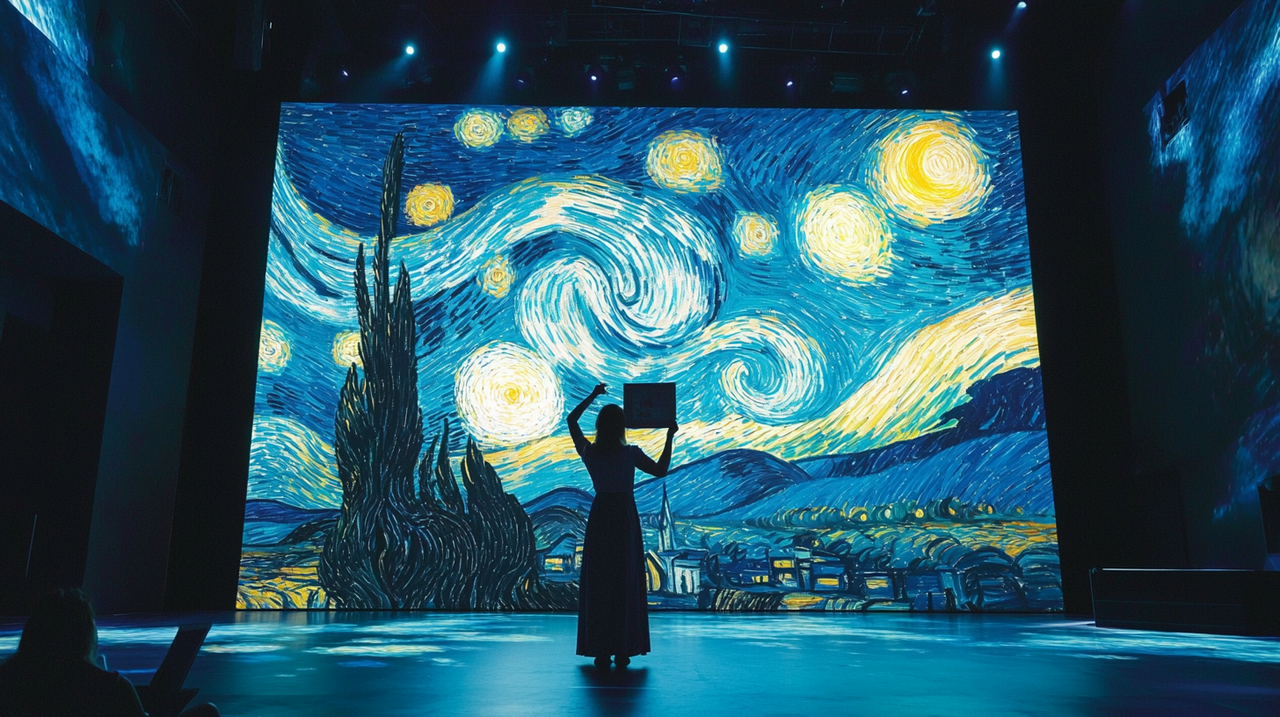
In December 2024, Fei-Fei Li held up a weathered postcard to a packed Stanford auditorium—Van Gogh's The Starry Night, faded and creased from age. She fed it to a scanner. Seconds ticked by. Then, on the massive screen behind her, the painting bloomed into three dimensions. The audience gasped as World Labs' artificial intelligence transformed that single image into a fully navigable environment. Attendees watched, mesmerised, as the swirling blues and yellows of Van Gogh's masterpiece became a world they could walk through, the painted cypresses casting shadows that shifted with virtual sunlight, the village below suddenly explorable from angles the artist never imagined.

This wasn't merely another technical demonstration. It marked a threshold moment in humanity's relationship with reality itself. For the first time in our species' history, the barrier between image and world, between representation and experience, had become permeable. A photograph—that most basic unit of captured reality—could now birth entire universes.

The implications rippled far beyond Silicon Valley's conference halls. Within weeks, estate agents were transforming single property photos into virtual walkthroughs. Film studios began generating entire sets from concept art. Game developers watched years of world-building compress into minutes. But beneath the excitement lurked a more profound question: if any image can become a world, and any world can be synthesised from imagination, how do we distinguish the authentic from the artificial? When reality becomes infinitely reproducible and modifiable, does the concept of “real” experience retain any meaning at all?

The Architecture of Artificial Worlds

The journey from Li's demonstration to understanding how such magic becomes possible requires peering into the sophisticated machinery of modern AI. The technology transforming pixels into places represents a convergence of multiple AI breakthroughs, each building upon decades of computer vision and machine learning research. At the heart of this revolution lies a new class of models that researchers call Large World Models (LWMs)—neural networks that don't just recognise objects in images but understand the spatial relationships, physics, and implicit rules that govern three-dimensional space.

NVIDIA's Edify platform, unveiled at SIGGRAPH 2024, exemplifies this new paradigm. The system can generate complete 3D meshes from text descriptions or single images, producing not just static environments but spaces with consistent lighting, realistic physics, and navigable geometry. During a live demonstration, NVIDIA researchers constructed and edited a detailed desert landscape in under five minutes—complete with weathered rock formations, shifting sand dunes, and atmospheric haze that responded appropriately to virtual wind patterns.

The technical sophistication behind these instant worlds involves multiple AI systems working in concert. First, depth estimation algorithms analyse the input image to infer three-dimensional structure from two-dimensional pixels. These systems, trained on millions of real-world scenes, have learnt to recognise subtle cues humans use unconsciously—how shadows fall, how perspective shifts, how textures change with distance. Next, generative models fill in the unseen portions of the scene, extrapolating what must exist beyond the frame's edges based on contextual understanding developed through exposure to countless similar environments.

But perhaps most remarkably, these systems don't simply create static dioramas. Google DeepMind's Genie 2, revealed in late 2024, generates interactive worlds that respond to user input in real-time. Feed it a single image, and it produces not just a space but a responsive environment where objects obey physics, materials behave according to their properties, and actions have consequences. The model understands that wooden crates should splinter when struck, that water should ripple when disturbed, that shadows should shift as objects move.

The underlying technology orchestrates multiple AI architectures in sophisticated harmony. Think of Generative Adversarial Networks (GANs) as a forger and an art critic locked in perpetual competition—one creating increasingly convincing synthetic content while the other hones its ability to detect fakery. This evolutionary arms race drives both networks toward perfection. Variational Autoencoders (VAEs) learn to compress complex scenes into mathematical representations that can be manipulated and reconstructed. Diffusion models, the technology behind many recent AI breakthroughs, start with random noise and iteratively refine it into coherent three-dimensional structures.

World Labs, valued at £1 billion after raising $230 million in funding from investors including Andreessen Horowitz and NEA, represents the commercial vanguard of this technology. The company's founders—including AI pioneer Fei-Fei Li, often called the “godmother of AI” for her role in creating ImageNet—bring together expertise in computer vision, graphics, and machine learning. Their stated goal transcends mere technical achievement: they aim to create “spatially intelligent AI” that understands three-dimensional space as intuitively as humans do.

The speed of progress has stunned even industry insiders. In early 2024, generating a simple 3D model from an image required hours of processing and often produced distorted, unrealistic results. By year's end, systems like Luma's Genie could transform written descriptions into three-dimensional models in under a minute. Meshy AI reduced this further, creating detailed 3D assets from images in seconds. The exponential improvement curve shows no signs of plateauing.

This revolution isn't confined to Silicon Valley. China, which accounts for over 70% of Asia's £13 billion AI investment in 2024, has emerged as a formidable force in generative AI. The country boasts 55 AI unicorns and has closed the performance gap with Western models through innovations like DeepSeek's efficient large language model architectures. Japan and South Korea pursue different strategies—SoftBank's £3 billion joint venture with OpenAI and Kakao's partnership agreements signal a hybrid approach of domestic development coupled with international collaboration. The concept of “sovereign AI,” articulated by NVIDIA CEO Jensen Huang, has become a rallying cry for nations seeking to ensure their cultural values and histories are encoded in the virtual worlds their citizens will inhabit.

The Philosophy of Synthetic Experience

Beyond the technical marvels lies a deeper challenge to our fundamental assumptions about existence. When we step into a world generated from a single photograph, we confront questions that have haunted philosophers since Plato's allegory of the cave. What constitutes authentic experience? If our senses cannot distinguish between the real and the synthetic, does the distinction matter? These aren't merely academic exercises—they strike at the heart of how we understand consciousness, identity, and the nature of reality itself.

Recent philosophical work by researchers exploring simulation theory has taken on new urgency as AI-generated worlds become indistinguishable from captured reality. The central argument, articulated in recent papers examining consciousness and subjective experience, suggests that while metaphysical differences between simulation and reality certainly exist, from the standpoint of lived experience, the distinction may be fundamentally inconsequential. If a simulated sunset triggers the same neurochemical responses as a real one, if a virtual conversation provides the same emotional satisfaction as a physical encounter, what grounds do we have for privileging one over the other?

David Chalmers, the philosopher who coined the term “hard problem of consciousness,” has argued extensively that virtual worlds need not be considered less real than physical ones. In his framework, experiences in virtual reality can be as authentic—as meaningful, as formative, as valuable—as those in consensus reality. The pixels on a screen, the polygons in a game engine, the voxels in a virtual world—these are simply different substrates for experience, no more or less valid than the atoms and molecules that constitute physical matter.

This philosophical position, known as virtual realism, gains compelling support from our growing understanding of how the brain processes reality. Neuroscience reveals that our experience of the physical world is itself a construction—a model built by our brains from electrical signals transmitted by sensory organs. We never experience reality directly; we experience our brain's interpretation of sensory data. In this light, the distinction between “real” sensory data from physical objects and “synthetic” sensory data from virtual environments begins to blur.

The concept of hyperreality, extensively theorised by philosopher Jean Baudrillard and now manifesting in our daily digital experiences, describes a condition where representations of reality become so intertwined with reality itself that distinguishing between them becomes impossible. Social media already demonstrates this phenomenon—the curated, filtered, optimised versions of life presented online often feel more real, more significant, than mundane physical existence. As AI can now generate entire worlds from these already-mediated images, we enter what might be called second-order hyperreality: simulations of simulations, copies without originals.

The implications extend beyond individual experience to collective reality. When a community shares experiences in an AI-generated world—collaborating, creating, forming relationships—they create what phenomenologists call intersubjective reality. These shared synthetic experiences generate real memories, real emotions, real social bonds. A couple who met in a virtual world, friends who bonded over adventures in AI-generated landscapes, colleagues who collaborated in synthetic spaces—their relationships are no less real for having formed in artificial environments.

Yet this philosophical framework collides with deeply held intuitions about authenticity and value. We prize “natural” diamonds over laboratory-created ones, despite their identical molecular structure. We value original artworks over perfect reproductions. We seek “authentic” experiences in travel, cuisine, and culture. This preference for the authentic appears to be more than mere prejudice—it reflects something fundamental about how humans create meaning and value.

History offers parallels to our current moment. The invention of photography in the 19th century sparked similar existential questions about the nature of representation and reality. Critics worried that mechanical reproduction would devalue human artistry and memory. The telephone's introduction prompted concerns about the authenticity of disembodied communication. Television brought fears of a society lost in mediated experiences rather than direct engagement with the world. Each technology that interposed itself between human consciousness and raw experience triggered philosophical crises that, in retrospect, seem quaint. Yet the current transformation differs in a crucial respect: previous technologies augmented or replaced specific sensory channels, while AI-generated worlds can synthesise complete, coherent realities indistinguishable from the original.

The notion of substrate independence—the idea that consciousness and experience can exist on any sufficiently complex computational platform—suggests that the medium matters less than the pattern. If our minds are essentially information-processing systems, then whether that processing occurs in biological neurons or silicon circuits may be irrelevant to the quality of experience. This view, known as computationalism, underpins much of the current thinking about artificial intelligence and consciousness.

Critics counter with a fundamental objection: something irreplaceable vanishes when experience floats free from physical anchoring. Hubert Dreyfus, the philosopher who spent decades challenging AI's claims, insisted that embodied experience—the weight of gravity on our bones, the resistance of matter against our muscles, the irreversible arrow of time marking our mortality—shapes consciousness in ways no simulation can capture. The weight of gravity, the resistance of matter, the irreversibility of time—these aren't just features of physical experience but fundamental to how consciousness evolved and operates.

The Detection Arms Race

The philosophical questions become urgently practical when we consider the need to distinguish synthetic from authentic. As AI-generated worlds become increasingly sophisticated, the ability to distinguish synthetic from authentic content has evolved into a technological arms race with stakes that extend far beyond academic curiosity. The challenge isn't merely identifying overtly fake content—it's detecting sophisticated synthetics designed to be indistinguishable from reality.

Current detection methodologies operate on multiple levels, each targeting different aspects of synthetic content. At the pixel level, forensic algorithms search for telltale artifacts: impossible shadows, inconsistent lighting, texture patterns that repeat too perfectly. These systems analyse statistical properties of images and videos, looking for the mathematical fingerprints left by generative models. Yet as Sensity AI—a leading detection platform that has identified over 35,000 malicious deepfakes in the past year alone—reports, each improvement in detection capability is quickly matched by more sophisticated generation techniques.

The multi-modal analysis approach represents the current state of the art in synthetic content detection. Rather than relying on a single method, these systems combine multiple detection strategies. Reality Defender, which secured £15 million in Series A funding and was named a top finalist at the RSAC 2024 Innovation Sandbox competition, employs real-time screening tools that analyse facial inconsistencies, biometric patterns, metadata, and behavioural anomalies simultaneously. The system examines unnatural eye movements, lip-sync mismatches, and skin texture anomalies while also analysing blood flow patterns, voice tone variations, and speech cadence irregularities that might escape human notice.

The technical sophistication of modern detection systems is remarkable. They employ deep learning models trained on millions of authentic and synthetic samples, learning to recognise subtle patterns that distinguish AI-generated content. Some systems analyse the physical plausibility of scenes—checking whether shadows align correctly with light sources, whether reflections match their sources, whether materials behave according to real-world physics. Others focus on temporal consistency, tracking whether objects maintain consistent properties across video frames.

Yet the challenge grows exponentially more complex with each generation of AI models. Early detection methods focused on obvious artifacts—unnatural facial expressions, impossible body positions, glitchy backgrounds. But modern generative systems have learnt to avoid these tells. Google's Veo 2 can generate 4K video with consistent lighting, realistic physics, and smooth camera movements. OpenAI's Sora maintains character consistency across multiple shots within a single generated video. The technical barriers that once made synthetic content easily identifiable are rapidly disappearing.

The response has been a shift toward cryptographic authentication rather than post-hoc detection. The Coalition for Content Provenance and Authenticity (C2PA), founded by Adobe, ARM, Intel, Microsoft, and Truepic, has developed an internet protocol that functions like a “nutrition label” for digital content. The system embeds cryptographically signed metadata into media files, creating an immutable record of origin, creation method, and modification history. Over 1,500 companies have joined the initiative, including major players like Nikon, the BBC, and Sony.

But C2PA faces a fundamental limitation: it requires voluntary adoption. Bad actors intent on deception have no incentive to label their synthetic content. The protocol can verify that authenticated content is genuine, but it cannot identify unlabelled synthetic content. This creates what security experts call the “attribution gap”—the space between what can be technically detected and what can be legally proven.

The European Union's AI Act, which came into effect in May 2024, attempts to address this gap through regulation. Article 50(4) mandates that creators of deepfakes must disclose the artificial nature of their content, with non-compliance triggering fines up to €15 million or 3% of global annual turnover. Yet enforcement remains challenging. How do you identify and prosecute creators of synthetic content that may originate from any jurisdiction, distributed through decentralised networks, using open-source tools?

The detection challenge extends beyond technical capabilities to human psychology. Research shows that people consistently overestimate their ability to identify synthetic content. A sobering study from MIT's Computer Science and Artificial Intelligence Laboratory found that even trained experts correctly identified AI-generated images only 63% of the time—barely better than random guessing. The human brain, evolved to detect threats and opportunities in the natural world, lacks the pattern-recognition capabilities needed to identify the subtle mathematical signatures of synthetic content. We look for obvious tells—unnatural shadows, impossible physics, uncanny valley effects—while modern AI systems have learnt to avoid precisely these markers. Even when detection tools correctly flag artificial content, confirmation bias and motivated reasoning can lead people to reject these assessments if the content aligns with their beliefs. The “liar's dividend” phenomenon—where the mere possibility of synthetic content allows bad actors to dismiss authentic evidence as potentially fake—further complicates the landscape.

Explainable AI (XAI) represents a promising frontier in detection technology. Rather than simply flagging content as authentic or synthetic, XAI systems provide detailed explanations of their assessments. They highlight specific features that suggest manipulation, explain their confidence levels, and present evidence in ways that humans can understand and evaluate. This transparency is crucial for building trust in detection systems and enabling their use in legal proceedings.

The Social Fabric Unwoven

While detection systems race to keep pace with generation capabilities, society grapples with more fundamental transformations. The proliferation of AI-generated worlds isn't merely a technological phenomenon—it's reshaping the fundamental patterns of human social interaction, identity formation, and collective meaning-making. As synthetic experiences become indistinguishable from authentic ones, the social fabric that binds communities together faces unprecedented strain.

Recent research from Cornell University reveals how profoundly these technologies affect social perception. A 2024 study found that people form systematically inaccurate impressions of others based on AI-mediated content, with these mismatches influencing our ability to feel genuinely connected online. The research demonstrates that the impression people form about us on social media—already a curated representation—becomes further distorted when filtered through AI enhancement and generation tools.

The “funhouse mirror” effect, documented in Current Opinion in Psychology, describes how social media creates distorted reflections of social norms. Online discussions are dominated by a surprisingly small, extremely vocal, and non-representative minority whose extreme opinions are amplified by engagement algorithms. When AI can generate infinite variations of this already-distorted content, the mirror becomes a hall of mirrors, each reflection further removed from authentic human expression.

This distortion has measurable psychological impacts. The hyperreal images people consume daily—photoshopped perfection, curated lifestyles, AI-enhanced beauty—create impossible standards that fuel self-esteem issues and dissatisfaction. Young people report feeling inadequate compared to the AI-optimised versions of their peers, not realising they're measuring themselves against algorithmic fantasies rather than human realities.

The phenomenon of “pluralistic ignorance”—where people incorrectly believe that exaggerated online norms represent what most others think or do offline—becomes exponentially more problematic when AI can generate infinite supporting “evidence” for any worldview. Consider the documented case of a political movement in Eastern Europe that used AI-generated crowd scenes to create the illusion of massive popular support, leading to real citizens joining what they believed was an already-successful campaign. The synthetic evidence created actual political momentum—reality conforming to the fiction rather than the reverse. Extremist groups can create entire synthetic ecosystems of content that appear to validate their ideologies. Political actors can manufacture grassroots movements from nothing but algorithms and processing power.

Yet the social implications extend beyond deception and distortion. AI-generated worlds enable new forms of human connection and creativity. Communities are forming in virtual spaces that would be impossible in physical reality—gravity-defying architecture, shape-shifting environments, worlds where the laws of physics bend to narrative needs. Artists collaborate across continents in shared virtual studios. Support groups meet in carefully crafted therapeutic environments designed to promote healing and connection.

The concept of “social presence” in virtual environments—studied extensively in 2024 research on 360-degree virtual reality videos—reveals that feelings of connection and support in synthetic spaces can be as psychologically beneficial as physical proximity. Increased perception of social presence correlates with improved task performance, enhanced learning outcomes, and greater subjective well-being. For individuals isolated by geography, disability, or circumstance, AI-generated worlds offer genuine social connection that would otherwise be impossible.

Identity formation, that most fundamental aspect of human development, now occurs across multiple realities. Young people craft different versions of themselves for different virtual contexts—a professional avatar for work, a fantastical character for gaming, an idealised self for social media. These aren't merely masks or performances but genuine facets of identity, each as real to the individual as their physical appearance. The question “Who are you?” becomes increasingly complex when the answer depends on which reality you're inhabiting.

The impact on intimate relationships defies simple categorisation. Couples separated by distance maintain their bonds through shared experiences in AI-generated worlds, creating memories in impossible places—dancing on Saturn's rings, exploring reconstructed ancient Rome, building dream homes that exist only in silicon and light. Yet the same technology enables emotional infidelity of unprecedented sophistication, where individuals form deep connections with AI-generated personas indistinguishable from real humans.

Research from November 2024 challenges some assumptions about these effects. A Curtin University study found “little to no relationship” between social media use and mental health indicators like depression, anxiety, and stress. The relationship between synthetic media consumption and psychological well-being appears more nuanced than early critics suggested. For some individuals, AI-generated worlds provide essential escapism, creative expression, and social connection. For others, they become addictive refuges from a physical reality that feels increasingly inadequate by comparison.

The generational divide in attitudes toward synthetic experience continues to widen. Digital natives who grew up with virtual worlds view them as natural extensions of reality rather than artificial substitutes. They form genuine friendships in online games, consider virtual achievements as valid as physical ones, and see no contradiction in preferring synthetic experiences to authentic ones. Older generations, meanwhile, often struggle to understand how mediated experiences could be considered “real” in any meaningful sense.

The Economics of Unreality

These social transformations inevitably reshape economic structures. The transformation of images into worlds represents more than a technological breakthrough—it's catalysing an economic revolution that will reshape entire industries. By 2025, analysts predict that 80% of new video games will employ some form of AI-powered procedural generation, while by 2030, approximately 25% of organisations are expected to actively use generative AI for metaverse content creation. International Data Corporation projects AI and Generative AI investments in the Asia-Pacific region alone will reach £110 billion by 2028, growing at a compound annual growth rate of 24% from 2023 to 2028. These projections likely underestimate the scope of disruption ahead, particularly as breakthrough models emerge from unexpected quarters—DeepSeek's efficiency innovations and Naver's Arabic language models signal that innovation is becoming truly global rather than concentrated in a few tech hubs.

The immediate economic impact is visible in creative industries. Film studios that once spent millions constructing physical sets or rendering digital environments can now generate complex scenes from concept art in minutes. The traditional pipeline of pre-production, production, and post-production collapses into a fluid creative process where directors can iterate on entire worlds in real-time. Independent filmmakers, previously priced out of effects-heavy storytelling, can now compete with studio productions using AI tools that cost less than traditional catering budgets.

Gaming represents perhaps the most transformed sector. Studios like Ubisoft and Electronic Arts are integrating AI world generation into their development pipelines, dramatically reducing the time and cost of creating vast open worlds. But more radically, entirely new genres are emerging—games where the world generates dynamically in response to player actions, where no two playthroughs exist in the same reality. Decart and Etched's demonstration of real-time Minecraft generation, where every frame is created on the fly as you play, hints at gaming experiences previously confined to science fiction.

The property market has discovered that single photographs can now become immersive virtual tours. Estate agents using AI-generated walkthroughs report 40% higher engagement rates and faster sales cycles. Potential buyers can explore properties from anywhere in the world, walking through spaces that may not yet exist—visualising renovations, experimenting with different furnishings, experiencing properties at different times of day or seasons. The traditional advantage of luxury properties with professional photography and virtual tours has evaporated; every listing can now offer Hollywood-quality visualisation.

Architecture and urban planning are experiencing similar disruption. Firms can transform sketches into explorable 3D environments during client meetings, iterating on designs in real-time based on feedback. City planners can generate multiple versions of proposed developments, allowing citizens to experience how different options would affect their neighbourhoods. The lengthy, expensive process of creating architectural visualisations has compressed from months to minutes.

The economic model underlying this transformation favours subscription services over traditional licensing. World Labs, Shutterstock's Generative 3D service, and similar platforms operate on monthly fees that provide access to unlimited generation capabilities. This shift from capital expenditure to operational expenditure makes advanced capabilities accessible to smaller organisations and individuals, democratising tools previously reserved for major studios and corporations.

Labour markets face profound disruption. Traditional 3D modellers, environment artists, and set designers watch their roles evolve from creators to curators—professionals who guide AI systems rather than manually crafting content. Yet new roles emerge: prompt engineers who specialise in extracting desired outputs from generative models, synthetic experience designers who craft coherent virtual worlds, authenticity auditors who verify the provenance of digital content. The World Economic Forum estimates that while AI may displace 85 million jobs globally by 2025, it will create 97 million new ones—though whether these projections account for the pace of advancement in world generation remains uncertain.

The investment landscape reflects breathless optimism about the sector's potential. World Labs' £1 billion valuation after just four months makes it one of the fastest unicorns in AI history. Venture capital firms poured over £5 billion into generative AI startups in 2024, with spatial and 3D generation companies capturing an increasing share. The speed of funding rounds—often closing within weeks of announcement—suggests investors fear missing the next transformative platform more than they fear a bubble.

Yet economic risks loom large. The democratisation of world creation could lead to oversaturation—infinite content competing for finite attention. Quality discovery becomes increasingly challenging when anyone can generate professional-looking environments. Traditional media companies built on content scarcity face existential threats from infinite synthetic supply. The value of “authentic” experiences may increase—or may become an irrelevant distinction for younger consumers who've never known scarcity.

Intellectual property law struggles to keep pace. If an AI generates a world from a single photograph, who owns the resulting creation? The photographer who captured the original image? The AI company whose models performed the transformation? The user who provided the prompt? Courts worldwide grapple with cases that have no precedent, while creative industries operate in legal grey zones that could retroactively invalidate entire business models.

The macroeconomic implications extend beyond individual sectors. Countries with strong creative industries face disruption of major export markets. Educational institutions must remake curricula for professions that may not exist in recognisable form within a decade. Social safety nets designed for industrial-era employment patterns strain under the weight of rapid technological displacement.

The Next Five Years

The trajectory of AI world generation points toward changes that will fundamentally alter human experience within the next half-decade. The technological roadmap laid out by leading researchers and companies suggests capabilities that seem like science fiction but are grounded in demonstrable progress curves and funded development programmes.

By 2027, industry projections suggest real-time world generation will be ubiquitous in consumer devices. Smartphones will transform photographs into explorable environments on demand. Augmented reality glasses will overlay AI-generated content seamlessly onto physical reality, making the distinction between real and synthetic obsolete for practical purposes. Every image shared on social media will be a potential portal to an infinite space behind it.

The convergence of world generation with other AI capabilities promises compound disruptions. Large language models will create narrative contexts for generated worlds—not just spaces but stories, not just environments but experiences. A single prompt will spawn entire fictional universes with consistent lore, physics, and aesthetics. Educational institutions will teach history through time-travel simulations, biology through explorable cellular worlds, literature through walkable narratives.

Haptic technology and brain-computer interfaces will add sensory dimensions to synthetic worlds. Companies like Neuralink and Synchron are developing direct neural interfaces that could, theoretically, feed synthetic sensory data directly to the brain. While full-sensory virtual reality remains years away, intermediate technologies—advanced haptic suits, olfactory simulators, ultrasonic tactile projection—will make AI-generated worlds increasingly indistinguishable from physical reality.

The social implications stagger the imagination. Dating could occur entirely in synthetic spaces where individuals craft idealised environments for romantic encounters. Education might shift from classrooms to customised learning worlds tailored to each student's needs and interests. Therapy could take place in carefully crafted environments designed to promote healing—fear of heights treated in generated mountains that gradually increase in perceived danger, social anxiety addressed in synthetic social situations with controlled variables.

Governance and regulation will struggle to maintain relevance. The EU's AI Act, comprehensive as it attempts to be, was drafted for a world where generating synthetic content required significant resources and expertise. When every smartphone can create undetectable synthetic realities, enforcement becomes practically impossible. New frameworks will need to emerge—perhaps technological rather than legal, embedded in the architecture of networks rather than enforced by governments.

The psychological adaptation required will test human resilience. Research into “reality fatigue”—the exhaustion that comes from constantly questioning the authenticity of experience—suggests mental health challenges we're only beginning to understand. Digital natives may adapt more readily, but the transition period will likely see increased anxiety, depression, and dissociative disorders as people struggle to maintain coherent identities across multiple realities.

Economic structures will require fundamental reimagining. If anyone can generate any environment, what becomes scarce and therefore valuable? Perhaps human attention, perhaps authenticated experience, perhaps the skills to navigate infinite possibility without losing oneself. Universal basic income discussions will intensify as traditional employment becomes increasingly obsolete. New economic models—perhaps based on creativity, curation, or connection rather than production—will need to emerge.

The geopolitical landscape will shift as nations compete for dominance in synthetic reality. Countries that control the most advanced world-generation capabilities will wield soft power through cultural export of unprecedented scale. Virtual territories might become as contested as physical ones. Information warfare will evolve from manipulating perception of reality to creating entirely false realities indistinguishable from truth.

Yet perhaps the most profound change will be philosophical. The generation growing up with AI-generated worlds won't share older generations' preoccupation with authenticity. For them, the question won't be “Is this real?” but “Is this meaningful?” Value will derive not from an experience's provenance but from its impact. A synthetic sunset that inspires profound emotion will be worth more than an authentic one viewed with indifference.

The possibility space opening before us defies comprehensive prediction. We stand at a threshold comparable to the advent of agriculture, the industrial revolution, or the birth of the internet—moments when human capability expanded so dramatically that the future became fundamentally unpredictable. The only certainty is that the world of 2030 will be as alien to us today as our present would be to someone from 1990.

The Human Element

Amidst the technological marvels and philosophical conundrums, individual humans grapple with what these changes mean for their lived experience. The abstract becomes personal when a parent watches their child prefer AI-generated playgrounds to physical parks, when a widow finds comfort in a synthetic recreation of their lost spouse's presence, when an artist questions whether their creativity has any value in a world of infinite generation.

Marcus Chen, a 34-year-old concept artist from London, watched his profession transform over the course of 2024. “I spent fifteen years learning to paint environments,” he reflects. “Now I guide AI systems that generate in seconds what would have taken me weeks. The strange thing is, I'm creating more interesting work than ever before—I can explore ideas that would have been impossible to execute manually. But I can't shake the feeling that something essential has been lost.”

This sentiment echoes across creative professions. Sarah Williams, a location scout for film productions, describes how her role has evolved: “We used to spend months finding the perfect location, negotiating permits, dealing with weather and logistics. Now we find a photograph that captures the right mood and generate infinite variations. It's liberating and terrifying simultaneously. The constraints that forced creativity are gone, but so is the serendipity of discovering unexpected places.”

For younger generations, the transition feels less like loss and more like expansion. Emma Thompson, a 22-year-old university student studying virtual environment design—a degree programme that didn't exist five years ago—sees only opportunity. “My parents' generation had to choose between being an architect or a game designer or a filmmaker. I can be all of those simultaneously. I create worlds for therapy sessions in the morning, design virtual venues for concerts in the afternoon, and build educational experiences in the evening.”

The therapeutic applications of AI-generated worlds offer profound benefits for individuals dealing with trauma, phobias, and disabilities. Dr. James Robertson, a clinical psychologist specialising in exposure therapy, has integrated world generation into his practice. “We can create controlled environments that would be impossible or unethical to replicate in reality. A patient with PTSD from a car accident can gradually re-experience driving in a completely safe, synthetic environment where we control every variable. The therapeutic outcomes have been remarkable.”

Yet the technology also enables concerning behaviours. Support groups for what some call “reality addiction disorder” are emerging—people who spend increasingly extended periods in AI-generated worlds, neglecting physical health and real-world relationships. The phenomenon particularly affects individuals dealing with grief, who can generate synthetic versions of deceased loved ones and spaces that recreate lost homes or disappeared places.

The impact on childhood development remains largely unknown. Parents report children who seamlessly blend physical and virtual play, creating elaborate narratives that span both realities. Child development experts debate whether this represents an evolution in imagination or a concerning detachment from physical reality. Longitudinal studies won't yield results for years, by which time the technology will have advanced beyond recognition.

Personal relationships navigate uncharted territory. Dating profiles now include virtual world portfolios—synthetic spaces that represent how individuals see themselves or want to be seen. Couples in long-distance relationships report that shared experiences in AI-generated worlds feel more intimate than video calls but less satisfying than physical presence. The vocabulary of love and connection expands to accommodate experiences that didn't exist in human history until now.

Identity formation becomes increasingly complex as individuals maintain multiple personas across different realities. The question “Who are you?” no longer has a simple answer. People describe feeling more authentic in their virtual presentations than their physical ones, raising questions about which version represents the “true” self. Traditional psychological frameworks struggle to accommodate identities that exist across multiple substrates simultaneously.

For many, the ability to generate custom worlds offers unprecedented agency over their environment. Individuals with mobility limitations can explore mountain peaks and ocean depths. Those with social anxiety can practice interactions in controlled settings. People living in cramped urban apartments can spend evenings in vast generated landscapes. The technology democratises experiences previously reserved for the privileged few.

Yet this democratisation brings its own challenges. When everyone can generate perfection, imperfection becomes increasingly intolerable. The messy, uncomfortable, unpredictable nature of physical reality feels inadequate compared to carefully crafted synthetic experiences. Some philosophers warn of a “experience inflation” where increasingly extreme synthetic experiences are required to generate the same emotional response.

As we stand at this unprecedented juncture in human history, the question isn't whether to accept or reject AI-generated worlds—that choice has already been made by the momentum of technological progress and market forces. The question is how to navigate this new reality while preserving what we value most about human experience and connection.

The path forward requires what researchers call “synthetic literacy”—the ability to critically evaluate and consciously engage with artificial realities. Just as previous generations developed media literacy to navigate television and internet content, current and future generations must learn to recognise, assess, and appropriately value synthetic experiences. This isn't simply about detection—identifying what's “real” versus “fake”—but about understanding the nature, purpose, and impact of different types of reality.

Educational institutions are beginning to integrate synthetic literacy into curricula. Students learn not just to identify AI-generated content but to understand its creation, motivations, and effects. They explore questions like: Who benefits from this synthetic reality? What assumptions and biases are embedded in its generation? How does engaging with this content affect my perception and behaviour? These skills become as fundamental as reading and writing in a world where reality itself is readable and writable.

The development of personal protocols for reality management becomes essential. Some individuals adopt “reality schedules”—structured time allocation between physical and synthetic experiences. Others practice “grounding rituals”—regular activities that reconnect them with unmediated physical sensation. The wellness industry has spawned a new category of “reality coaches” who help clients maintain psychological balance across multiple worlds.

Communities are forming around different philosophies of engagement with synthetic reality. “Digital minimalists” advocate for limited, intentional use of AI-generated worlds. “Synthetic naturalists” seek to recreate and preserve authentic experiences within virtual spaces. “Reality agnostics” reject the distinction entirely, embracing whatever experiences provide meaning regardless of their origin. These communities provide frameworks for making sense of an increasingly complex experiential landscape.

Regulatory frameworks are slowly adapting to address the challenges of synthetic reality. Beyond the EU's AI Act, nations are developing varied approaches. Japan focuses on industry self-regulation and ethical guidelines. The United States pursues a patchwork of state-level regulations while federal agencies struggle to establish jurisdiction. China implements strict controls on world-generation capabilities while simultaneously investing heavily in the technology's development. These divergent approaches will likely lead to a fractured global landscape where the nature of accessible reality varies by geography.

The authentication infrastructure continues evolving beyond simple detection. Blockchain-based provenance systems create immutable records of content creation and modification. Biometric authentication ensures that human presence in virtual spaces can be verified. “Reality certificates” authenticate genuine experiences for those who value them. Yet each solution introduces new complexities—privacy concerns, accessibility issues, the potential for authentication itself to become a vector for discrimination.

Professional ethics codes are emerging for those who create and deploy synthetic worlds. The Association for Computing Machinery has proposed guidelines for responsible world generation, including principles of transparency, consent, and harm prevention. Medical associations develop standards for therapeutic use of synthetic environments. Educational bodies establish best practices for learning in virtual spaces. Yet enforcement remains challenging when anyone with a smartphone can generate worlds without oversight.

The insurance industry grapples with unprecedented questions. How do you assess liability when someone is injured—physically or psychologically—in a synthetic environment? What constitutes property in a world that can be infinitely replicated? How do you verify claims when evidence can be synthetically generated? New categories of coverage emerge—reality insurance, identity protection, synthetic asset protection—while traditional policies become increasingly obsolete.

Mental health support systems adapt to address novel challenges. Therapists train to treat “reality dysphoria”—distress caused by confusion between synthetic and authentic experience. Support groups for families divided by different reality preferences proliferate. New diagnostic categories emerge for disorders related to synthetic experience, though the rapid pace of change makes formal classification difficult. The very concept of mental health evolves when the nature of reality itself is in flux.

Perhaps most critically, we must cultivate what some philosophers call “ontological flexibility”—the ability to hold multiple, sometimes contradictory concepts of reality simultaneously without experiencing debilitating anxiety. This doesn't mean abandoning all distinctions or embracing complete relativism, but rather developing comfort with ambiguity and complexity that previous generations never faced.

The Choice Before Us

As Van Gogh's swirling stars become walkable constellations and single photographs birth infinite worlds, we find ourselves at a crossroads that will define the trajectory of human experience for generations to come. The technology to transform images into navigable realities isn't approaching—it's here, improving at a pace that outstrips our ability to fully comprehend its implications.

The dissolution of the boundary between authentic and synthetic experience represents more than a technological achievement; it's an evolutionary moment for our species. We're developing capabilities that transcend the physical limitations that have constrained human experience since consciousness emerged. Yet with this transcendence comes the risk of losing connection to the very experiences that shaped our humanity.

The optimistic view sees unlimited creative potential, therapeutic breakthrough, educational revolution, and the democratisation of experience. In this future, AI-generated worlds solve problems of distance, disability, and disadvantage. They enable new forms of human expression and connection. They expand the canvas of human experience beyond the constraints of physics and geography. Every individual becomes a god of their own making, crafting realities that reflect their deepest aspirations and desires.

The pessimistic view warns of reality collapse, where the proliferation of synthetic experiences undermines shared truth and collective meaning-making. In this future, humanity fragments into billions of individual realities with no common ground for communication or cooperation. The skills that enabled our ancestors to survive—pattern recognition, social bonding, environmental awareness—atrophy in worlds where everything is possible and nothing is certain. We become prisoners in cages of our own construction, unable to distinguish between authentic connection and algorithmic manipulation.

The most likely path lies between these extremes—a messy, complicated future where synthetic and authentic experiences interweave in ways we're only beginning to imagine. Some will thrive in this new landscape, surfing between realities with ease and purpose. Others will struggle, clinging to increasingly obsolete distinctions between real and artificial. Most will muddle through, adapting incrementally to changes that feel simultaneously gradual and overwhelming.

The choices we make now—as individuals, communities, and societies—will determine whether AI-generated worlds become tools for human flourishing or instruments of our disconnection. We must decide what values to preserve as the technical constraints that once enforced them disappear. We must establish new frameworks for meaning, identity, and connection that can accommodate experiences our ancestors couldn't imagine. We must find ways to remain human while transcending the limitations that previously defined humanity.

The responsibility falls on multiple shoulders. Technologists must consider not just what's possible but what's beneficial. Policymakers must craft frameworks that protect without stifling innovation. Educators must prepare young people for a world where reality itself is malleable. Parents must guide children through experiences they themselves don't fully understand. Individuals must develop personal practices for maintaining psychological and social well-being across multiple realities.

Yet perhaps the most profound responsibility lies with those who will inhabit these new worlds most fully—the young people for whom synthetic reality isn't a disruption but a native environment. They will ultimately determine whether humanity uses these tools to expand and enrichen experience or to escape and diminish it. Their choices, values, and creations will shape what it means to be human in an age where reality itself has become optional.

As we cross this threshold, we carry with us millions of years of evolution, thousands of years of culture, and hundreds of years of technological progress. We bring poetry and mathematics, love and logic, dreams and determination. These human qualities—our capacity for meaning-making, our need for connection, our drive to create and explore—remain constant even as the substrates for their expression multiply beyond imagination.

The image that becomes a world, the photograph that births a universe, the AI that dreams landscapes into being—these are tools, nothing more or less. What matters is how we use them, why we use them, and who we become through using them. The authentic and the synthetic, the real and the artificial—these distinctions may blur beyond recognition, but the human experience of joy, sorrow, connection, and meaning persists.

In the end, the question isn't whether the worlds we inhabit are generated by physics or algorithms, whether our experiences emerge from atoms or bits. The question is whether these worlds—however they're created—help us become more fully ourselves, more deeply connected to others, more capable of creating meaning in an infinite cosmos. That question has no technological answer. It requires something essentially, irreducibly, magnificently human: the wisdom to choose not just what's possible, but what's worthwhile.

Van Gogh painted The Starry Night from the window of an asylum, transforming his constrained view into a cosmos of swirling possibility. Now Fei-Fei Li's AI transforms his painted stars into navigable space, and we find ourselves at our own window between worlds. The threshold we're crossing isn't optional—the boundary is already dissolving beneath our feet. What remains is the most human choice of all: not whether to step through, but who we choose to become in the worlds waiting on the other side. That choice begins now, with each image we transform, each world we generate, and each decision about which reality we choose to inhabit.

The future arrives not in generations but in GPU cycles, not in decades but in training epochs. Each model iteration brings capabilities that would have seemed impossible months before. We stand in the curious position of our ancestors watching the first photographs develop in chemical baths, except our images don't just capture reality—they create it. The worlds we generate will reflect the values we embed, the connections we prioritise, and the experiences we deem worthy of creation. In transforming images into worlds, we ultimately transform ourselves. The question that remains is: into what?


References and Further Information

Primary Research Sources

  1. World Labs funding and technology development – TechCrunch, September 2024: “Fei-Fei Li's World Labs comes out of stealth with $230M in funding”

  2. NVIDIA Edify Platform – NVIDIA Technical Blog, SIGGRAPH 2024: “Rapidly Generate 3D Assets for Virtual Worlds with Generative AI”

  3. Google DeepMind Genie 2 – Official DeepMind announcement, December 2024

  4. EU AI Act Implementation – Official Journal of the European Union, Regulation (EU) 2024/1689

  5. Coalition for Content Provenance and Authenticity (C2PA) – Technical standards documentation, 2024

  6. Sensity AI Detection Statistics – Sensity AI Annual Report, 2024

  7. Reality Defender Funding – RSAC 2024 Innovation Sandbox Competition Results

  8. Cornell University Social Media Perception Study – Published in ScienceDaily, January 2024

  9. “Funhouse Mirror” Social Media Research – Current Opinion in Psychology, 2024

  10. Curtin University Mental Health and Social Media Study – Published November 2024

  11. Virtual Reality Social Presence Research – Frontiers in Psychology, 2024: “Alone but not isolated: social presence and cognitive load in learning with 360 virtual reality videos”

  12. Simulation Theory and Consciousness Research – PhilArchive, 2024: “Is There a Meaningful Difference Between Simulation and Reality?”

  13. OpenAI Sora Capabilities – Official OpenAI Documentation, December 2024 release

  14. Google Veo and Veo 2 Technical Specifications – Google DeepMind official documentation

  15. Industry Projections for AI in Gaming – Multiple industry reports including Gartner and IDC forecasts for 2025-2030

Technical and Academic References

  1. Generative Adversarial Networks (GANs) methodology – Multiple peer-reviewed papers from 2024

  2. Variational Autoencoders (VAEs) in 3D generation – Technical papers from SIGGRAPH 2024

  3. Deepfake Detection Methodologies – “Deepfakes in digital media forensics: Generation, AI-based detection and challenges,” ScienceDirect, 2024

  4. Explainable AI in Detection Systems – Various academic papers on XAI applications, 2024

  5. Hyperreality and Digital Philosophy – Multiple philosophical journals and publications, 2024

Industry and Market Analysis

  1. Venture Capital Investment in Generative AI – PitchBook and Crunchbase data, 2024

  2. World Economic Forum Employment Projections – WEF Future of Jobs Report, 2024

  3. Gaming Industry AI Adoption Statistics – NewZoo and Gaming Industry Analytics, 2024

  4. Real Estate and Virtual Tours Market Data – National Association of Realtors reports, 2024

Regulatory and Policy Sources

  1. EU AI Act Full Text – EUR-Lex Official Journal

  2. UN General Assembly Resolution on AI Content Labeling – March 21, 2024

  3. Munich Security Conference Tech Accord – February 16, 2024

  4. Various national AI strategies and regulatory frameworks – Government publications from Japan, United States, China, 2024


Tim Green

Tim Green UK-based Systems Theorist & Independent Technology Writer

Tim explores the intersections of artificial intelligence, decentralised cognition, and posthuman ethics. His work, published at smarterarticles.co.uk, challenges dominant narratives of technological progress while proposing interdisciplinary frameworks for collective intelligence and digital stewardship.

His writing has been featured on Ground News and shared by independent researchers across both academic and technological communities.

ORCID: 0009-0002-0156-9795 Email: tim@smarterarticles.co.uk

Discuss...

#HumanInTheLoop #SyntheticReality #DigitalAuthenticity #Hyperreality

Picture this: you're doom-scrolling through Instagram at 2 AM—that special hour when algorithm logic meets sleep-deprived vulnerability—when you encounter an environmental activist whose passion for ocean cleanup seems absolutely bulletproof. Her posts garner thousands of heartfelt comments, her zero-waste lifestyle transformation narrative hits every emotional beat perfectly, and her advocacy feels refreshingly free from the performative inconsistencies that plague so many human influencers. There's just one rather profound detail that would make your philosophy professor weep: she's never drawn breath, felt plastic between her fingers, or experienced the existential dread of watching Planet Earth documentaries. Welcome to the era of manufactured authenticity, where artificial intelligence has spawned virtual personas so emotionally compelling that they're not merely fooling audiences—they're fostering genuine connections that challenge our fundamental assumptions about what makes influence “real.” The emergence of platforms like The Influencer AI represents more than technological disruption; it's a philosophical crisis dressed up as a business opportunity.

The Virtual Vanguard: When Code Becomes Celebrity

The transformation from experimental digital novelty to mainstream marketing juggernaut has been nothing short of extraordinary. The AI influencer market, valued at $6.95 billion in 2024, is projected to experience explosive growth as virtual personas become increasingly sophisticated and accessible. Meanwhile, the broader virtual influencer sector is expanding at a staggering 40.8% compound annual growth rate, suggesting we're witnessing the early stages of a fundamental shift in how brands conceptualise digital engagement.

This isn't merely about prettier computer graphics or more convincing animations. Today's AI influencers possess nuanced personalities, maintain consistent visual identities across thousands of pieces of content, and engage with audiences in ways that feel genuinely conversational. They transcend platform limitations, speak multiple languages fluently, and operate without the scheduling conflicts, personal controversies, or brand safety concerns that plague their human counterparts.

The democratisation of this technology represents perhaps the most significant development. Previously, creating convincing virtual personas required substantial investment in CGI expertise, 3D modelling capabilities, and ongoing content production resources. Platforms like The Influencer AI have transformed what was once the exclusive domain of major entertainment studios into something accessible to small businesses, independent creators, and startup brands operating on modest budgets.

Consider the implications: a local sustainable fashion boutique can now create a virtual brand ambassador who embodies their values perfectly, never has an off day, and produces content at a scale that would be impossible for any human influencer. The technology has evolved from a novelty for tech-forward brands to a practical solution for businesses seeking consistent, controllable brand representation.

Inside the Synthetic Studio: The Influencer AI Decoded

The Influencer AI positions itself as the complete ecosystem for virtual brand ambassadorship, distinguishing itself from basic AI image generators through its emphasis on personality development and long-term brand building. The platform's core innovation lies in its facial consistency technology—a sophisticated system that ensures virtual influencers maintain identical features, expressions, and even subtle characteristics like beauty marks or dimples across unlimited content variations.

The creation process begins with defining your virtual persona's fundamental characteristics. Users can upload reference photos, select from curated templates, or build entirely original personas through detailed customisation tools. The platform's personality engine allows for nuanced trait development—everything from speech patterns and humour styles to cultural backgrounds and personal interests that will inform content creation.

Where The Influencer AI truly excels is in its video generation capabilities. The platform can produce content where virtual influencers react authentically to prompts, display convincing emotional ranges, and deliver scripted material with accurate lip-syncing across multiple languages. The voice synthesis technology creates distinct vocal identities that can be fine-tuned for accent, tone, and speaking cadence, enabling brands to develop comprehensive audio-visual personas.

The workflow prioritises scalability without sacrificing quality. A single virtual influencer can simultaneously generate content optimised for Instagram's visual storytelling, TikTok's entertainment-focused format, and LinkedIn's professional networking environment. The platform's content adaptation algorithms ensure that messaging remains consistent while adjusting presentation styles to match platform-specific audience expectations.

Product integration represents another sophisticated capability. Rather than simply photoshopping items into static images, The Influencer AI can generate dynamic content where virtual influencers naturally interact with products—wearing clothing in various poses, demonstrating gadget functionality, or incorporating items into lifestyle scenarios that feel organic rather than overtly promotional.

For businesses, this translates into unprecedented creative control. E-commerce brands can showcase seasonal collections without coordinating complex photoshoots, SaaS companies can create product demonstrations featuring relatable virtual users, and service providers can develop testimonial content that maintains message consistency across all touchpoints.

The platform's pricing model—typically under £100 monthly for unlimited content generation—represents a fundamental disruption to traditional influencer marketing economics. Where human influencer partnerships might cost £5,000 to £50,000 per campaign, The Influencer AI enables ongoing content creation at a fraction of that investment.

Competitive Cartography: Mapping the AI Influence Landscape

The AI influencer creation space has rapidly evolved into a diverse ecosystem, with each platform targeting distinct market segments and use cases. Understanding these differences is crucial for businesses considering virtual persona adoption.

Generated Photos focuses primarily on photorealistic headshot generation for professional applications—think LinkedIn profiles, corporate websites, and stock photography replacement. While their technology produces convincing facial imagery, the platform lacks the personality development tools, content creation capabilities, and brand ambassador features that characterise full influencer solutions. It's essentially a sophisticated photo generator rather than a comprehensive virtual persona platform.

Glambase takes a distinctly different approach, positioning itself as the monetisation-first platform for virtual influencers. Their system emphasises autonomous interaction capabilities, enabling AI personalities to engage in conversations, sell exclusive content, and generate revenue streams independently. Glambase includes sophisticated analytics dashboards showing engagement metrics, conversion rates, and detailed monetisation tracking across multiple revenue streams. This platform appeals primarily to content creators who view virtual influencers as business entities capable of generating passive income.

The autonomous interaction capabilities deserve particular attention. Glambase virtual influencers can maintain conversations with hundreds of users simultaneously, providing personalised responses based on individual user profiles and interaction history. The platform's AI chat system can handle everything from casual social interaction to product recommendations and even premium content sales, operating continuously without human oversight.

Personal AI represents an entirely different paradigm, focusing on internal productivity enhancement rather than external marketing applications. Their platform creates role-based AI assistants designed to augment team capabilities—think virtual project managers, customer service representatives, or research assistants. While technically sophisticated, Personal AI lacks the visual generation capabilities and public-facing features necessary for influencer marketing applications.

The Influencer AI differentiates itself through its emphasis on long-term brand building and consistency. Rather than focusing on one-off content creation or autonomous monetisation, the platform prioritises developing virtual brand ambassadors who can evolve alongside brand identities whilst maintaining consistent personality traits and visual characteristics. This approach particularly appeals to businesses seeking to establish sustained digital presence without the unpredictability inherent in human partnerships.

From a technical capability perspective, The Influencer AI offers superior video generation quality compared to most competitors, whilst Glambase excels in conversational AI and monetisation tools. Generated Photos provides the highest quality static imagery but lacks dynamic content capabilities entirely. Personal AI offers the most sophisticated natural language processing but isn't designed for public-facing applications.

Cost considerations favour The Influencer AI significantly for ongoing content creation, whilst Glambase might generate higher long-term returns for creators focused on building autonomous revenue streams. Generated Photos offers the lowest entry point for basic imagery needs but requires additional tools for comprehensive campaigns.

Economic Disruption: The Mathematics of Synthetic Influence

The financial implications of AI influencer adoption extend far beyond simple cost reduction—they represent a fundamental reimagining of marketing economics. Traditional influencer partnerships operate within inherent constraints: human limitations on content production, geographic availability, scheduling conflicts, and the finite nature of personal attention. AI influencers eliminate these bottlenecks entirely.

Consider the operational mathematics: a human influencer might produce 10-15 pieces of content monthly, require coordination across different time zones, and maintain exclusive relationships with limited brand partners. An AI influencer can generate hundreds of content pieces daily, operate simultaneously across global markets, and represent multiple non-competing brands without conflicts.

The cost structure transformation is equally dramatic. Traditional campaigns require negotiating rates, coordinating logistics, managing relationships, and dealing with potential reputation risks. AI influencer campaigns operate on subscription models with predictable costs, immediate scalability, and complete brand safety guarantees.

For small businesses, this democratisation effect cannot be overstated. Previously unable to compete with larger corporations in influencer marketing due to budget constraints, smaller enterprises can now access sophisticated brand ambassadorship that scales with their growth. A local restaurant can create a virtual food enthusiast who showcases their cuisine with professional quality imagery, whilst a startup SaaS company can develop a virtual customer success manager who demonstrates product value across multiple use cases.

The e-commerce applications prove particularly compelling. Product photography, traditionally requiring models, photographers, studio rental, and post-production editing, can now be generated on-demand. Seasonal campaigns can be developed months in advance without worrying about model availability or changing fashion trends. The ability to rapidly test different creative approaches without renegotiating contracts provides unprecedented agility in fast-moving consumer markets.

However, this economic disruption raises profound questions about the future of human creative work. If virtual influencers can produce equivalent audience engagement at a fraction of the cost, what happens to the thousands of content creators who currently depend on brand partnerships for their livelihoods? The implications extend beyond individual creators to entire supporting industries—photographers, videographers, talent agencies, and production companies.

Early data suggests that rather than wholesale replacement, we're seeing market segmentation emerge. Virtual influencers excel in product-focused content, brand messaging consistency, and high-volume content production. Human influencers maintain advantages in authentic storytelling, cultural commentary, and content requiring genuine life experience. The future likely involves hybrid approaches where brands use virtual influencers for consistent messaging whilst partnering with human creators for authentic storytelling.

The Psychology of Synthetic Authenticity

The phenomenon of AI influencers generating genuine emotional responses from audiences represents one of the most fascinating aspects of this technological evolution. Recent academic research reveals that consumers often respond to virtual personalities with engagement levels that rival those accorded to human influencers—a psychological paradox that challenges fundamental assumptions about authenticity and trust.

The mechanisms underlying this response are complex and counterintuitive. Virtual influencers often embody idealised characteristics that human personalities struggle to maintain consistently. They never experience bad days, maintain perfect aesthetic standards, avoid controversial personal opinions, and eliminate the cognitive dissonance that occurs when human influencers behave inconsistently with their branded personas.

This reliability can actually enhance perceived authenticity by providing audiences with the emotional consistency they crave from their parasocial relationships. When a virtual environmental activist consistently advocates for sustainability without the personal contradictions that might undermine a human activist's credibility, audiences can engage with the message without worrying about underlying hypocrisy.

However, this psychological phenomenon raises serious ethical considerations about manipulation and informed consent. When virtual personalities discuss personal struggles they haven't experienced, advocate for causes they cannot genuinely understand, or form emotional connections based on fictional backstories, the boundary between marketing and deception becomes uncomfortably thin.

The transparency debate has intensified following incidents where AI influencers' artificial nature wasn't immediately apparent to audiences. Recent surveys indicate that 36% of marketing professionals consider lack of authenticity their primary concern with AI influencers, whilst 19% worry about potential consumer mistrust when artificial nature becomes apparent.

Regulatory responses are emerging but remain inconsistent. The Federal Trade Commission requires disclosure of AI involvement in sponsored content, but enforcement mechanisms remain underdeveloped. Platform-specific policies vary significantly, with some requiring explicit AI disclosure tags whilst others rely on user reporting systems.

The psychological impact extends beyond individual consumer relationships to broader societal implications. If audiences become accustomed to engaging with convincing artificial personalities, how does this affect their ability to form authentic human connections? Research suggests that parasocial relationships with virtual influencers can provide emotional benefits similar to human relationships, but the long-term implications for social development remain unclear.

Digital Discourse: Public Sentiment and Platform Dynamics

Analysis of social media conversations reveals a complex landscape of acceptance, resistance, and evolving attitudes towards AI influencers. Examination of over 114,000 mentions across platforms during early 2025 shows pronounced polarisation, with sentiment varying significantly across demographics, platforms, and specific use cases.

The generational divide proves particularly stark. Generation Z consumers, having grown up with digital-first entertainment and social interaction, demonstrate significantly higher acceptance rates for AI influencer content. Research indicates that 75% of Gen Z consumers follow at least one virtual influencer, compared to much lower adoption rates among older demographics who prioritise traditional markers of authenticity.

Platform-specific attitudes also vary considerably based on user expectations and content formats. TikTok users show greater acceptance of AI-generated content, possibly due to the platform's emphasis on entertainment value over personal authenticity. The algorithm-driven discovery model means users encounter content based on engagement rather than creator identity, making artificial origins less relevant to content consumption decisions.

Instagram audiences appear more sceptical, particularly when AI influencers attempt to replicate lifestyle content that traditionally relies on aspirational realism. The platform's emphasis on personal branding and lifestyle documentation creates higher expectations for authenticity, making the artificial nature of virtual influencers more jarring to audiences accustomed to following real people's lives.

The recent Reddit controversy surrounding covert AI persona deployment provides crucial insights into transparency requirements. When researchers secretly deployed AI bots to influence discussions without disclosure, the subsequent backlash was swift and severe. Users expressed profound feelings of violation, with many citing the incident as evidence of AI's potential for covert manipulation and the importance of informed consent in digital interactions.

However, when AI nature is clearly disclosed, audience responses become more nuanced. Many users express appreciation for the creative possibilities whilst simultaneously voicing concerns about broader societal implications. This suggests that transparency, rather than artificiality itself, may be the crucial factor in determining public acceptance.

The sentiment analysis reveals that negative mentions focus primarily on job displacement concerns, algorithm manipulation fears, and the erosion of human authenticity in digital spaces. Positive mentions often highlight creative possibilities, technological innovation, and the potential for more consistent brand messaging. Notably, for every negative mention, approximately four positive mentions appear, though many positive references come from technology enthusiasts and industry professionals rather than general consumers.

The Regulatory Labyrinth: Attempting to Govern the Ungovernable

The legal landscape surrounding AI influencers resembles nothing so much as regulators playing three-dimensional chess whilst blindfolded on a moving train. Current frameworks treat virtual influencers as fancy advertising extensions rather than the fundamentally novel phenomena they represent—a bit like trying to regulate the internet with telegraph laws.

The Federal Trade Commission's approach epitomises this regulatory vertigo. Their guidelines require AI disclosure with the same enthusiasm they'd demand for traditional sponsored content, treating virtual influencers as particularly elaborate puppets rather than entities that might fundamentally alter the nature of influence itself. The August 2024 ruling banning fake reviews carries penalties up to $51,744 per violation—impressive numbers that mask the enforcement nightmare of policing synthetic personalities that can be created faster than regulators can identify them.

European approaches through the AI Act represent more comprehensive thinking but suffer from the classic regulatory problem: fighting tomorrow's wars with yesterday's weapons. Whilst requiring clear AI labelling sounds sensible, it assumes audiences fundamentally care about biological versus synthetic origins—an assumption that Generation Z audiences are systematically demolishing.

The international enforcement challenge reads like a cyberpunk novel's fever dream. AI influencers created in jurisdictions with minimal disclosure requirements can instantly reach audiences in heavily regulated markets. This regulatory arbitrage allows brands to essentially jurisdiction-shop for the most permissive virtual influencer policies—a global shell game that makes traditional tax avoidance look straightforward.

Industry self-regulation efforts reveal the inherent contradiction: platforms implementing automated detection for AI-generated content whilst simultaneously improving AI to avoid detection. Instagram's branded content tools now accommodate AI disclosure, whilst TikTok deploys automated labelling systems that sophisticated AI generation tools are designed to circumvent. It's an arms race where both sides are funded by the same advertising revenues.

The fundamental challenge lies deeper than technical enforcement. How do you regulate influence that operates at machine speed across global networks whilst maintaining the innovation incentives that drive beneficial applications? Early enforcement actions suggest regulators are adopting whack-a-mole strategies—targeting obvious violations whilst the underlying technology accelerates beyond their conceptual frameworks.

Looking ahead, the regulatory trajectory points toward risk-based approaches that acknowledge different threat levels. High-stakes applications—virtual influencers promoting financial products or health supplements—may face stringent disclosure requirements and content restrictions. Lower-risk entertainment content might operate under more permissive frameworks, creating a two-tier system that mirrors existing advertising regulations.

The development of international coordination mechanisms becomes crucial as virtual personalities operate seamlessly across borders. Regulatory harmonisation efforts, similar to those emerging around data protection, may establish common standards for AI influencer disclosure and consumer protection. However, the speed of technological advancement suggests regulations will perpetually lag behind capabilities, creating ongoing uncertainty for brands and platforms alike.

Future Trajectories: The Acceleration Toward Digital Supremacy

The evolutionary path of AI influencers is rapidly converging toward capabilities that will render the current conversation about human versus artificial influence quaint by comparison. We're approaching what industry insiders are calling the “synthetic singularity”—the point where virtual personalities become not just competitive with human influencers but demonstrably superior in measurable ways.

The technical roadmap reveals ambitions that extend far beyond current limitations. Next-generation models incorporating GPT-4 level language processing with real-time visual generation will enable AI influencers to conduct live video conversations indistinguishable from human interaction. Companies like Anthropic and OpenAI are racing toward multimodal AI systems that can process visual, audio, and textual inputs simultaneously whilst generating coherent responses across all mediums.

More intriguingly, the emergence of “memory-persistent” AI influencers—virtual personalities that learn and evolve from every interaction—promises to create digital beings with apparent emotional growth and development. These systems will remember individual followers' preferences, reference past conversations, and demonstrate personality evolution that mimics human development whilst remaining eternally loyal to brand objectives.

The convergence with Web3 technologies introduces possibilities that sound like science fiction but are already in development. Blockchain-based virtual influencers could own digital assets, participate in decentralised autonomous organisations, and even generate independent revenue streams through smart contracts. Imagine AI personalities that literally own their content, negotiate their own brand deals, and accumulate wealth in cryptocurrency—blurring the lines between tool and entity.

Perhaps most significantly, the integration of advanced biometric feedback systems could enable AI influencers to respond to audience emotions in real-time. Eye-tracking data, facial expression analysis, and physiological monitoring could allow virtual personalities to adjust their presentation moment by moment to maximise emotional impact. This creates possibilities for influence at a granular level that human creators simply cannot match.

The democratisation trajectory suggests that by 2027, creating sophisticated AI influencers will require no more technical expertise than setting up a social media account today. Drag-and-drop personality builders, voice cloning from brief audio samples, and automated content generation based on brand guidelines will make virtual influencer creation accessible to anyone with a smartphone and an internet connection.

However, this acceleration toward digital supremacy faces emerging countercurrents. The “authenticity underground”—a growing movement of consumers specifically seeking out verified human creators—suggests that market segmentation may accelerate alongside technological advancement. Premium human influence may become a luxury good, whilst AI influencers dominate mass market applications.

The potential for AI influencer networks represents perhaps the most disruptive development on the horizon. Rather than individual virtual personalities, brands may deploy interconnected AI ecosystems where multiple virtual influencers collaborate, cross-promote, and create complex narrative structures that unfold across platforms and time periods. These synthetic social networks could generate content at scales that make human-produced media seem quaint by comparison.

The integration with predictive analytics promises to transform influence from reactive to proactive. AI influencers equipped with advanced behavioural prediction models could identify and target individuals at the precise moment they become receptive to specific messages. This capability moves beyond traditional advertising toward something resembling digital telepathy—knowing what audiences want before they do and delivering exactly the right message at exactly the right moment.

Industry Case Studies: Virtual Success Stories

Real-world applications demonstrate the practical potential of AI influencer technology across diverse sectors. Lu do Magalu, Brazil's most influential virtual shopping assistant, has amassed over 6 million followers whilst generating an estimated $33,000 per Instagram post for Magazine Luiza. Her success stems from combining product expertise with relatable personality traits, demonstrating how virtual influencers can drive tangible business results.

In the fashion sector, Aitana López has redefined beauty standards whilst generating substantial revenue through brand partnerships with major fashion houses. Her ultra-glamorous aesthetic and high-fashion visuals have attracted luxury brands seeking to associate with idealised imagery without the unpredictability of human model partnerships.

The gaming industry has embraced virtual influencers particularly enthusiastically, with characters like CodeMiko generating millions of followers through interactive livestreams where audiences can control her actions and environment. This fusion of gaming technology with influencer marketing creates entirely new forms of audience engagement that wouldn't be possible with human creators.

Technology companies have leveraged AI influencers to demonstrate product capabilities whilst maintaining message consistency. Rather than relying on human testimonials that might vary in quality or authenticity, tech brands can create virtual users who consistently highlight key features and benefits across all marketing touchpoints.

These successes share common characteristics: clear value propositions, consistent brand alignment, and transparent disclosure of artificial nature. The most effective virtual influencers don't attempt to deceive audiences about their artificial origins but instead embrace their synthetic nature as a feature rather than a limitation.

The Human Element: What Remains Irreplaceable

Despite technological advances, certain aspects of influence remain distinctly human and potentially irreplaceable by artificial alternatives. Genuine life experience, cultural authenticity, and emotional vulnerability continue to resonate with audiences in ways that programmed personalities struggle to replicate convincingly.

Human influencers excel in content requiring authentic personal narrative—overcoming adversity, cultural commentary, political advocacy, and lifestyle transformation stories that derive power from genuine lived experience. Virtual influencers can simulate these experiences but lack the emotional depth and unexpected insights that come from actual human struggle and growth.

The spontaneity and unpredictability of human creativity also remain difficult to replicate artificially. Whilst AI can generate content based on pattern recognition and learned behaviours, breakthrough creative insights often emerge from uniquely human experiences, cultural contexts, and emotional states that artificial systems cannot genuinely experience.

Community building represents another area where human influencers maintain advantages. The ability to form genuine connections, understand cultural nuances, and navigate complex social dynamics requires emotional intelligence that extends beyond current AI capabilities. Human influencers can adapt to cultural shifts, respond to social movements, and provide authentic leadership during crises in ways that programmed responses cannot match.

However, the boundary between human and artificial capabilities continues to shift as technology advances. Areas once considered exclusively human—creative writing, artistic expression, strategic thinking—have proven more amenable to artificial replication than initially anticipated.

The future likely involves hybrid approaches where brands leverage both human and virtual influencers strategically. Virtual personalities might handle consistent messaging, product demonstrations, and high-volume content production, whilst human creators focus on authentic storytelling, cultural commentary, and community leadership.

Strategic Implementation: Best Practices for Brands

Successful AI influencer adoption requires strategic thinking that extends beyond simple cost considerations to encompass brand alignment, audience expectations, and long-term reputation management. Brands must carefully consider whether virtual personalities align with their values and audience preferences before committing to AI influencer strategies.

Transparency emerges as the most critical success factor. Brands that clearly disclose AI nature whilst highlighting unique benefits—consistency, availability, creative possibilities—tend to achieve better audience acceptance than those attempting to hide artificial origins. The disclosure should be prominent, clear, and integrated into the virtual influencer's identity rather than buried in fine print.

Content strategy requires different approaches for virtual versus human influencers. AI personalities excel in product-focused content, educational material, and aspirational lifestyle imagery but struggle with authentic personal narratives or controversial topics requiring genuine human perspective. Brands should align content types with the strengths of virtual versus human creators.

Platform selection matters significantly, as audience expectations vary across social media environments. TikTok's entertainment-focused culture may be more accepting of virtual influencers than LinkedIn's professional networking environment. Brands should test audience response across platforms before committing to comprehensive virtual influencer campaigns.

Long-term consistency becomes crucial for virtual influencer success. Unlike human partnerships that might end due to various factors, virtual influencers represent ongoing brand commitments that require sustained personality development and content evolution. Brands must invest in maintaining character consistency whilst allowing for natural growth and adaptation.

Integration with existing marketing strategies requires careful planning to avoid conflicts between virtual and human brand representatives. Mixed messaging or competing personalities can confuse audiences and dilute brand identity. Successful implementations often position virtual influencers as complementary to rather than replacements for human brand advocates.

The Authenticity Reformation

The emergence of AI influencers represents more than a technological advancement—it's forcing a fundamental reformation of how we conceptualise authenticity in digital spaces. Traditional notions of genuineness, based on human experience and emotion, are being challenged by synthetic personalities that can evoke authentic emotional responses despite their artificial origins.

This shift suggests that authenticity might be more about consistency, value alignment, and emotional resonance than biological origin. If a virtual environmental activist consistently advocates for sustainability with compelling arguments and useful information, does their artificial nature diminish their authenticity? The answer increasingly depends on audience perspectives rather than objective criteria.

The reformation extends beyond marketing to broader questions about identity, relationships, and human connection in digital environments. As virtual personalities become more sophisticated and prevalent, they may reshape expectations for human behaviour online, potentially creating pressure for humans to emulate the consistency and perfection that artificial personalities can maintain effortlessly.

This evolution requires new frameworks for evaluating digital relationships and influence. Rather than simply distinguishing between real and fake, we may need more nuanced categories that acknowledge different types of authenticity—emotional, informational, experiential, and aspirational.

The implications for society extend far beyond marketing effectiveness to fundamental questions about human nature, digital relationships, and the commodification of personality itself. As we navigate this transition, the choices made by creators, platforms, and audiences will determine whether AI influencers enhance or diminish the quality of digital discourse.

Conclusion: Manufacturing Meaning in the Digital Age

The rise of AI influencers represents a profound inflection point in the evolution of digital culture—one that challenges our most basic assumptions about influence, authenticity, and human connection. Platforms like The Influencer AI have democratised access to sophisticated virtual persona creation, enabling businesses of all sizes to access previously exclusive capabilities whilst fundamentally disrupting traditional influencer economics.

The technology has evolved beyond mere novelty to become a practical solution for brands seeking consistent, scalable, and controllable digital representation. Cost efficiencies, creative possibilities, and operational advantages make AI influencers increasingly compelling alternatives to human partnerships for many applications. Yet these benefits come with complex ethical implications, regulatory challenges, and uncertain long-term consequences for digital culture.

The evidence suggests we're witnessing not the replacement of human influence but rather its augmentation and specialisation. Virtual influencers excel in areas requiring consistency, scalability, and brand safety, whilst human creators maintain advantages in authentic storytelling, cultural navigation, and genuine emotional connection. The future likely belongs to brands sophisticated enough to leverage both approaches strategically.

Success in this new landscape requires more than technological adoption—it demands thoughtful consideration of brand values, audience expectations, and societal implications. Transparency emerges as the critical factor distinguishing ethical implementation from deceptive manipulation. Brands that embrace virtual influencers whilst maintaining honest communication with their audiences are best positioned to capitalise on the technology's benefits whilst avoiding its pitfalls.

As we stand at this crossroads between human and artificial influence, the choices made by platforms, regulators, creators, and audiences will determine whether AI influencers enhance digital discourse or diminish its authenticity. The technology exists and continues advancing rapidly; the question now is whether we possess the wisdom and ethical frameworks necessary to implement it responsibly.

The age of purely human influence may be ending, but the age of thoughtful, hybrid digital engagement is just beginning. In this new reality, authenticity becomes less about biological origin and more about consistency, transparency, and genuine value creation. The future belongs to those who can navigate this complex landscape whilst maintaining focus on what ultimately matters: creating meaningful connections and providing genuine value to audiences, regardless of whether those connections originate from silicon or flesh.

The virtual revolution is not coming—it's here, reshaping the fundamental dynamics of digital influence in real-time. The only question remaining is whether we'll master this powerful new tool or allow it to master us.

References and Further Information

  • Influencer Marketing Hub. (2025). “Influencer Marketing Benchmark Report 2025.”
  • Grand View Research. (2024). “Virtual Influencer Market Size & Share | Industry Report, 2030.”
  • Unite.AI. (2025). “The Influencer AI Review: This AI Replaces Influencers.”
  • Federal Trade Commission. (2024). “FTC Guidelines for Influencers: Everything You Need to Know in 2025.”
  • Meltwater. (2025). “AI Influencers: What the Data Says About Consumer Sentiment and Interest.”
  • Nature Communications. (2024). “Shall brands create their own virtual influencers? A comprehensive study of 33 virtual influencers on Instagram.”
  • Psychology & Marketing. (2024). “How real is real enough? Unveiling the diverse power of generative AI‐enabled virtual influencers.”
  • Wiley Online Library. (2025). “Virtual Influencers in Consumer Behaviour: A Social Influence Theory Perspective.”
  • Fashion and Textiles Journal. (2024). “Fake human but real influencer: the interplay of authenticity and humanlikeness in Virtual Influencer communication.”
  • Viral Nation. (2025). “How AI Will Revolutionize Influencer Marketing in 2025.”
  • Sprout Social. (2025). “29 influencer marketing statistics to guide your brand's strategy in 2025.”
  • Artsmart.ai. (2025). “AI Influencer Market Statistics 2025.”
  • Sidley Austin LLP. (2024). “U.S. FTC's New Rule on Fake and AI-Generated Reviews and Social Media Bots.”

Tim Green

Tim Green UK-based Systems Theorist & Independent Technology Writer

Tim explores the intersections of artificial intelligence, decentralised cognition, and posthuman ethics. His work, published at smarterarticles.co.uk, challenges dominant narratives of technological progress while proposing interdisciplinary frameworks for collective intelligence and digital stewardship.

His writing has been featured on Ground News and shared by independent researchers across both academic and technological communities.

ORCID: 0000-0002-0156-9795 Email: tim@smarterarticles.co.uk

Discuss...

#HumanInTheLoop #AISocialInfluence #DigitalAuthenticity #EthicalImplications