The Machine Will Feed You Now: When AI Takes the Wheel in Agriculture
The robots are coming for the farms, and they're bringing spreadsheets.
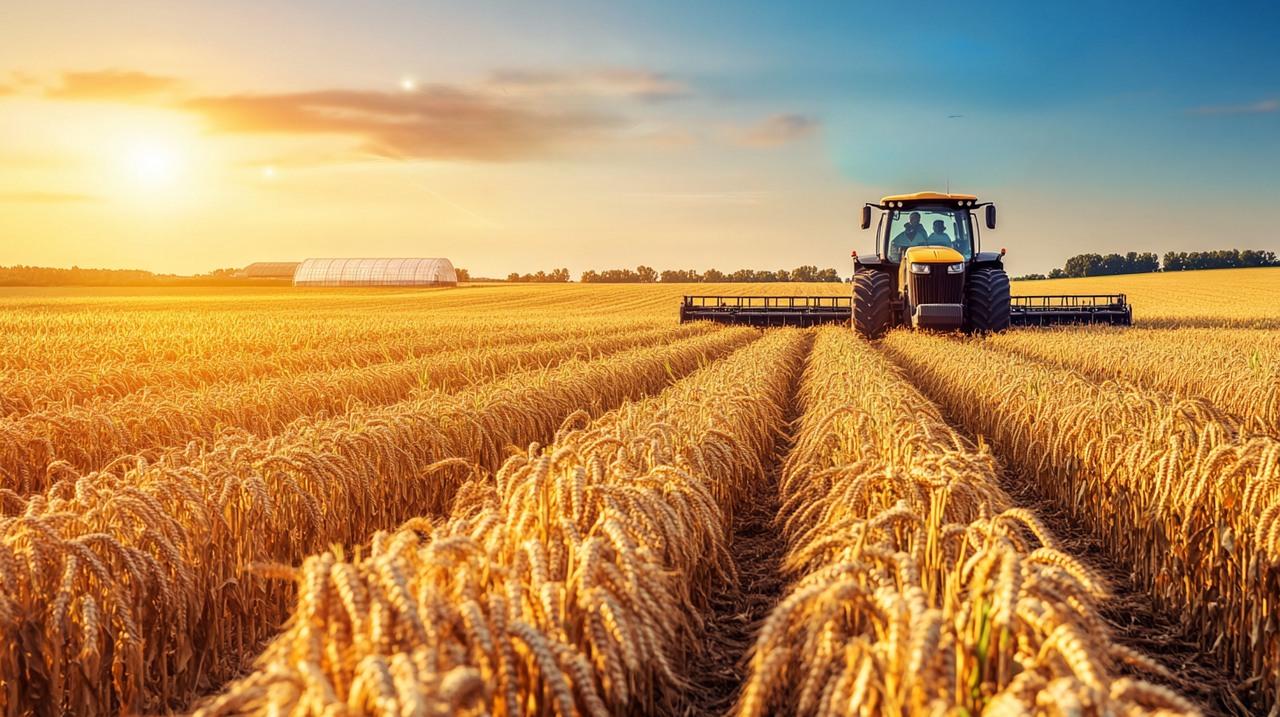
In the sprawling wheat fields of Kansas, autonomous tractors navigate precisely plotted routes without a human hand on the wheel. In the Netherlands, AI systems monitor thousands of greenhouse tomato plants, adjusting water, nutrients, and light with algorithmic precision. Across India's fragmented smallholder farms, machine learning models analyse satellite imagery to predict crop yields months before harvest. The promise is seductive: artificial intelligence will solve agriculture's thorniest problems, from feeding 9.7 billion people by 2050 to adapting crops to climate chaos. But what happens when the most fundamental human activity (growing food) becomes mediated by algorithms most farmers can't see, understand, or control?
This is not some distant sci-fi scenario. It's happening now, and it's accelerating. According to FAO data, digital agriculture tools have been deployed across every continent, with the organisation's Digital Services Portfolio now serving millions of smallholder farmers through cloud-based platforms. AgFunder's 2025 Global AgriFoodTech Investment Report documented $16 billion in agrifoodtech funding in 2024, with AI-driven farm technologies attracting significant investor interest despite a broader venture capital downturn. The World Bank estimates that agriculture employs roughly 80% of the world's poor, making the sector critical to global poverty reduction. When algorithmic systems start making decisions about what to plant, when to harvest, and how to price crops, the implications cascade far beyond Silicon Valley's latest disruption narrative.
The fundamental tension is this: AI in agriculture promises unprecedented efficiency and productivity gains that could genuinely improve food security. But it also threatens to concentrate power in the hands of platform owners, erode farmer autonomy, and create new vulnerabilities in food systems already strained by climate change and geopolitical instability. Understanding this duality requires looking beyond the breathless tech boosterism to examine what's actually happening in fields from Iowa to Indonesia.
More Data, Less Dirt
Precision agriculture represents the first wave of algorithmic farming, and its capabilities have become genuinely impressive. Modern agricultural AI systems synthesise data from multiple sources: satellite imagery tracking crop health via multispectral analysis, soil sensors measuring moisture and nutrient levels, weather prediction models, pest identification through computer vision, and historical yield data processed through machine learning algorithms. The result is farming recommendations tailored to specific parcels of land, sometimes down to individual plants.
The technical sophistication is remarkable. Satellites equipped with multispectral cameras can detect plant stress days before it becomes visible to the human eye by analysing subtle shifts in chlorophyll fluorescence and leaf reflectance patterns. Soil sensors network across fields, creating three-dimensional maps of moisture gradients and nutrient distribution that update in real time. Drones equipped with thermal imaging cameras can identify irrigation problems or pest infestations in specific crop rows, triggering automated responses from variable-rate irrigation systems or targeted pesticide application equipment.
Machine learning models tie all this data together, learning patterns from millions of data points across thousands of farms. An AI system might recognise that a particular combination of soil type, weather forecast, and historical pest pressure suggests delaying planting by three days and adjusting seed density by 5%. These recommendations aren't based on generalised farming advice but on hyperlocal conditions specific to that field, that week, that farmer's circumstances.
The economics are compelling. Farmers using precision agriculture tools can reduce fertiliser applications by 20-30% whilst maintaining or improving yields, according to studies cited in agricultural research. Water usage drops dramatically when AI-driven irrigation systems apply moisture only where and when needed. Pesticide use becomes more targeted, reducing both costs and environmental impact. For large-scale commercial operations with the capital to invest in sensors, drones, and data analytics platforms, the return on investment can be substantial.
In practice, this means a 2,000-hectare corn operation in Iowa might save $50,000 annually on fertiliser costs alone whilst increasing yields by 5-10%. The environmental benefits compound: less fertiliser runoff means reduced water pollution, more targeted pesticide application protects beneficial insects, and precision irrigation conserves increasingly scarce water resources. These are meaningful improvements, not marketing hyperbole.
Take John Deere's acquisition of Blue River Technology for $305 million in 2017. Blue River's “See & Spray” technology uses computer vision and machine learning to identify individual plants and weeds, spraying herbicides only on weeds whilst leaving crops untouched. The system can reportedly reduce herbicide use by 90%. Similarly, companies like Climate Corporation (acquired by Monsanto for nearly $1 billion in 2013) offer farmers data-driven planting recommendations based on hyperlocal weather predictions and field-specific soil analysis. These aren't marginal improvements; they represent fundamental shifts in how agricultural decisions get made.
But precision agriculture's benefits are not evenly distributed. The technology requires substantial upfront investment: precision GPS equipment, variable-rate application machinery, sensor networks, and subscription fees for data platforms. Farmers must also possess digital literacy to interpret AI recommendations and integrate them into existing practices. This creates a two-tier system where large industrial farms benefit whilst smallholders get left behind.
The numbers tell the story. According to the World Bank, whilst developed nations see increasing adoption of digital agriculture tools, the majority of the world's 500 million smallholder farms (particularly across Africa and South Asia) lack even basic internet connectivity, much less the capital for AI-driven systems. When the Gates Foundation and World Bank commissioned research on climate adaptation for smallholder farmers (documented in AgFunder's 2024 Climate Capital report), they found that private investment in technologies serving these farmers remains woefully inadequate relative to need.
Who Owns the Farm?
Here's where things get properly complicated. AI agricultural systems don't just need data; they're ravenous for it. Every sensor reading, every drone flyover, every harvest outcome feeds the machine learning models that power farming recommendations. But who owns this data, and who benefits from its aggregation?
The current model resembles Big Tech platforms more than traditional agricultural cooperatives. Farmers generate data through their daily operations, but that data flows to platform providers (John Deere, Climate Corporation, various agtech startups) who aggregate it, analyse it, and monetise it through subscription services sold back to farmers. The farmers get personalised recommendations; the platforms get proprietary datasets that become more valuable as they grow.
This asymmetry has sparked growing unrest amongst farmer organisations. In the United States, the American Farm Bureau Federation has pushed for stronger data ownership rights, arguing that farmers should retain control over their operational data. The European Union has attempted to address this through data portability requirements, but enforcement remains patchy. In developing nations, where formal data protection frameworks are often weak or non-existent, the problem is even more acute.
The concern isn't merely philosophical. Agricultural data has immense strategic value. Aggregated planting data across a region can predict crop yields months in advance, giving commodity traders information asymmetries that can move markets. A hedge fund with access to real-time planting data from thousands of farms could potentially predict corn futures prices with uncanny accuracy, profiting whilst farmers themselves remain in the dark about broader market dynamics.
Pest outbreak patterns captured by AI systems become valuable to agrochemical companies developing targeted products. If a platform company knows that a particular pest is spreading across a region (based on computer vision analysis from thousands of farms), that information could inform pesticide development priorities, marketing strategies, or even commodity speculation. The farmers generating this data through their routine operations receive algorithmic pest management advice, but the strategic market intelligence derived from aggregating their data belongs to the platform.
Even farm-level productivity data can affect land values, credit access, and insurance pricing. An algorithm that knows precisely which farms are most productive (and why) could inform land acquisition strategies for agricultural investors, potentially driving up prices and making it harder for local farmers to expand. Banks considering agricultural loans might demand access to AI system productivity data, effectively requiring farmers to share operational details as a condition of credit. Crop insurance companies could use algorithmic yield predictions to adjust premiums or deny coverage, creating a two-tier system where farmers with AI access get better rates whilst those without face higher costs or reduced coverage.
FAO has recognised these risks, developing guidelines for data governance in digital agriculture through its agro-informatics initiatives. Their Hand-in-Hand Geospatial Platform attempts to provide open-access data resources that level the playing field. But good intentions meet hard economic realities. Platform companies investing billions in AI development argue they need proprietary data advantages to justify their investments. Farmers wanting to benefit from AI tools often have little choice but to accept platform terms of service they may not fully understand.
The result is a creeping loss of farmer autonomy. When an AI system recommends a specific planting date, fertiliser regimen, or pest management strategy, farmers face a dilemma: trust their accumulated knowledge and intuition, or defer to the algorithm's data-driven analysis. Early evidence suggests algorithms often win. Behavioural economics research shows that people tend to over-trust automated systems, particularly when those systems are presented as scientifically rigorous and data-driven.
This has profound implications for agricultural knowledge transfer. For millennia, farming knowledge has passed from generation to generation through direct experience and community networks. If algorithmic recommendations supplant this traditional knowledge, what happens when the platforms fail, change their business models, or simply shut down? Agriculture loses its distributed resilience and becomes dependent on corporate infrastructure.
Climate Chaos and Algorithmic Responses
If there's an area where AI's potential to improve food security seems most promising, it's climate adaptation. Agriculture faces unprecedented challenges from changing weather patterns, shifting pest ranges, and increasing extreme weather events. AI systems can process climate data at scales and speeds impossible for individual farmers, potentially offering crucial early warnings and adaptation strategies.
The World Bank's work on climate-smart agriculture highlights how digital tools can help farmers adapt to climate variability. AI-powered weather prediction models can provide hyperlocal forecasts that help farmers time plantings to avoid droughts or excessive rainfall. Computer vision systems can identify emerging pest infestations before they become catastrophic, enabling targeted interventions. Crop modelling algorithms can suggest climate-resilient varieties suited to changing local conditions.
FAO's Climate Risk ToolBox exemplifies this approach. The platform allows users to conduct climate risk screenings for agricultural areas, providing comprehensive reports that include climate-resilient measures and tailored recommendations. This kind of accessible climate intelligence could genuinely help farmers (particularly smallholders in vulnerable regions) adapt to climate change.
But climate adaptation through AI also introduces new risks. Algorithmic crop recommendations optimised for short-term yield maximisation might not account for long-term soil health or ecological resilience. Monoculture systems (where single crops dominate vast areas) are inherently fragile, yet they're often what precision agriculture optimises for. If AI systems recommend the same high-yielding varieties to farmers across a region, genetic diversity decreases, making the entire system vulnerable to new pests or diseases that can overcome those varieties.
The Financial Times has reported on how climate-driven agricultural disruptions are already affecting food security globally. In 2024, extreme weather events devastated crops across multiple continents simultaneously, something climate models had predicted would become more common. AI systems are excellent at optimising within known parameters, but climate change is fundamentally about moving into unknown territory. Can algorithms trained on historical data cope with genuinely novel climate conditions?
Research from developing markets highlights another concern. AgFunder's 2025 Developing Markets AgriFoodTech Investment Report noted that whilst funding for agricultural technology in developing nations grew 63% between 2023 and 2024 (bucking the global trend), most investment flowed to urban-focused delivery platforms rather than climate adaptation tools for smallholder farmers. The market incentives push innovation towards profitable commercial applications, not necessarily towards the most pressing climate resilience needs.
Food Security in the Age of Algorithms
Food security rests on four pillars: availability (enough food produced), access (people can obtain it), utilisation (proper nutrition and food safety), and stability (reliable supply over time). AI impacts all four, sometimes in contradictory ways.
On availability, the case for AI seems straightforward. Productivity improvements from precision agriculture mean more food from less land, water, and inputs. The World Bank notes that agriculture sector growth is two to four times more effective at raising incomes amongst the poorest than growth in other sectors, suggesting that AI-driven productivity gains could reduce poverty whilst improving food availability.
But access is more complicated. If AI-driven farming primarily benefits large commercial operations whilst squeezing out smallholders who can't afford the technology, rural livelihoods suffer. The International Labour Organization has raised concerns about automation displacing agricultural workers, particularly in developing nations where farming employs vast numbers of people. When algorithms optimise for efficiency, human labour often gets optimised away.
India provides a revealing case study. AgFunder's 2024 India AgriFoodTech Investment Report documented $940 million in agritech investment in 2023, with significant focus on digital platforms connecting farmers to markets and providing advisory services. These platforms promise better price transparency and reduced middleman exploitation. Yet they also introduce new dependencies. Farmers accessing markets through apps become subject to platform commission structures and algorithmic pricing that they don't control. If the platform decides to adjust its fee structure or prioritise certain farmers over others, individual smallholders have little recourse.
The stability pillar faces perhaps the gravest algorithmic risks. Concentrated platforms create single points of failure. When farmers across a region rely on the same AI system for planting decisions, a bug in the algorithm or a cyberattack on the platform could trigger coordinated failures. This is not hypothetical. In 2024, ransomware attacks on agricultural supply chain software disrupted food distribution across multiple countries, demonstrating the vulnerability of increasingly digitalised food systems.
Moreover, algorithmic food systems are opaque. Traditional agricultural knowledge is observable and verifiable through community networks. If a farming technique works, neighbours can see the results and adopt it themselves. Algorithmic recommendations, by contrast, emerge from black-box machine learning models. Farmers can't easily verify why an AI system suggests a particular action or assess whether it aligns with their values and circumstances.
The Smallholder Squeeze
The greatest tension in AI agriculture is its impact on the world's roughly 500 million smallholder farms. These operations (typically less than two hectares) produce about 35% of global food supply whilst supporting livelihoods for 2 billion people. They're also disproportionately vulnerable to climate change and economic pressures.
AI-driven agriculture creates a productivity trap for smallholders. As large commercial farms adopt precision agriculture and achieve greater efficiency, they can produce crops at lower costs, pressuring market prices downward. Smallholders without access to the same technologies face a choice: invest in AI systems they may not be able to afford or effectively use, or accept declining competitiveness and potentially lose their farms.
The World Bank's research on smallholder farmers emphasises that these operations are already economically marginal in many regions. Adding technology costs (even if subsidised or provided through microfinance) can push farmers into unsustainable debt. Yet without technology adoption, they risk being pushed out of markets entirely by more efficient competitors.
Some initiatives attempt to bridge this gap. FAO's Digital Services Portfolio aims to provide cloud-based agricultural services specifically designed for smallholders, with mobile-accessible interfaces and affordable pricing. The platform offers advisory services, market information, and climate data tailored to small-scale farming contexts. AgFunder's Climate Capital research (conducted with the Gates Foundation) identified opportunities for private investment in climate adaptation technologies for smallholders, though actual funding remains limited.
Mobile technology offers a potential pathway. Whilst smallholders may lack computers or broadband internet, mobile phone penetration has reached even remote rural areas in many developing nations. AI-driven advisory services accessible via basic smartphones could theoretically democratise access to agricultural intelligence. Companies like Plantix (which uses computer vision for crop disease identification) have reached millions of farmers through mobile apps, demonstrating that AI doesn't require expensive infrastructure to deliver value.
The mobile model has genuine promise. A farmer in rural Kenya with a basic Android phone can photograph a diseased maize plant, upload it to a cloud-based AI system, receive a diagnosis within minutes, and get treatment recommendations specific to local conditions and available resources. The same platform might provide weather alerts, market price information, and connections to input suppliers or buyers. For farmers who previously relied on memory, local knowledge, and occasional visits from agricultural extension officers, this represents a genuine information revolution.
But mobile-first agricultural AI faces its own challenges. As WIRED's reporting on Plantix revealed, venture capital pressures can shift platform business models in ways that undermine original missions. Plantix started as a tool to help farmers reduce pesticide use through better disease identification but later pivoted towards pesticide sales to generate revenue, creating conflicts of interest in the advice provided. This illustrates how platform economics can distort agricultural AI deployment, prioritising monetisation over farmer welfare.
The pattern repeats across multiple mobile agricultural platforms. An app funded by impact investors or development agencies might start with farmer-centric features: free crop advice, market information, weather alerts. But as funding pressures mount or the platform seeks commercial sustainability, features shift. Suddenly farmers receive sponsored recommendations for specific fertiliser brands, market information becomes gated behind subscription paywalls, or the platform starts taking commissions on input purchases or crop sales. The farmer's relationship to the platform transforms from beneficiary to product.
Language and literacy barriers further complicate smallholder AI adoption. Many precision agriculture platforms assume users have significant digital literacy and technical knowledge. Whilst some platforms offer multi-language support (FAO's tools support numerous languages), they often require literacy levels that exclude many smallholder farmers, particularly women farmers who face additional educational disadvantages in many regions.
Voice interfaces and visual recognition systems could help bridge these gaps. An illiterate farmer could potentially interact with an AI agricultural adviser through spoken questions in their local dialect, receiving audio responses with visual demonstrations. But developing these interfaces requires investment in languages and contexts that may not offer commercial returns, creating another barrier to equitable access. The platforms that could most benefit smallholder farmers are often the hardest to monetise, whilst commercially successful platforms tend to serve farmers who already have resources and education.
The Geopolitics of Algorithmic Agriculture
Food security is ultimately a geopolitical concern, and AI agriculture is reshaping the strategic landscape. Countries and corporations controlling advanced agricultural AI systems gain influence over global food production in ways that transcend traditional agricultural trade relationships.
China has invested heavily in agricultural AI as part of its food security strategy. The country's agritech sector raised significant funding in 2020-2021 (according to AgFunder's China reports), with government support for digital agriculture infrastructure across everything from vertical farms in urban centres to precision agriculture systems in rural provinces. The Chinese government views agricultural AI as essential to feeding 1.4 billion people from limited arable land whilst reducing dependence on food imports that could be disrupted by geopolitical tensions.
Chinese companies are exporting agricultural technology platforms to developing nations through Belt and Road initiatives, potentially giving China insights into agricultural production patterns across multiple countries. A Chinese-developed farm management system deployed across Southeast Asian rice-growing regions generates data that flows back to servers in China, creating information asymmetries that could inform everything from commodity trading to strategic food security planning. For recipient countries, these platforms offer cheap or free access to sophisticated agricultural technology, but at the cost of data sovereignty and potential long-term dependence on Chinese infrastructure.
The United States maintains technological leadership through companies like John Deere, Climate Corporation, and numerous agtech startups, but faces its own challenges. As the Financial Times has reported, American farmers have raised concerns about dependence on foreign-owned platforms and data security. When agricultural data flows across borders, it creates potential vulnerabilities. A hostile nation could potentially manipulate agricultural AI systems to recommend suboptimal practices, gradually undermining food production capacity.
The scenario isn't far-fetched. If a foreign-controlled AI system recommended planting dates that were consistently sub-optimal (say, five days late on average), the yield impacts might be subtle enough to escape immediate notice but significant enough to reduce national food production by several percentage points over multiple seasons. Agricultural sabotage through algorithmic manipulation would be difficult to detect and nearly impossible to prove, making it an attractive vector for states engaged in grey-zone competition below the threshold of open conflict.
The European Union has taken a regulatory approach, attempting to set standards for agricultural data governance and AI system transparency through its broader digital regulation framework. But regulation struggles to keep pace with technological change, and enforcement across diverse agricultural contexts remains challenging.
For developing nations, agricultural AI represents both opportunity and risk. The technology could help address food security challenges and improve farmer livelihoods, but dependence on foreign platforms creates vulnerabilities. If agricultural AI systems become essential infrastructure (like electricity or telecommunications), countries that don't develop domestic capabilities may find themselves in positions of technological dependency that limit sovereignty over food systems.
The World Bank and FAO have attempted to promote more equitable agricultural technology development through initiatives like the Global Agriculture and Food Security Program, which finances investments in developing countries. But private sector investment (which dwarfs public funding) follows market logic, concentrating in areas with the best financial returns rather than the greatest development need.
Algorithmic Monoculture and Systemic Risk
Perhaps the most subtle risk of AI-driven agriculture is what we might call algorithmic monoculture (not just planting the same crops, but farming in the same ways based on the same algorithmic recommendations). When AI systems optimise for efficiency and productivity, they tend to converge on similar solutions. If farmers across a region adopt the same AI platform, they may receive similar recommendations, leading to coordinated behaviour that reduces overall system diversity and resilience.
Traditional agricultural systems maintain diversity through their decentralisation. Different farmers try different approaches based on their circumstances, knowledge, and risk tolerance. This creates a portfolio effect where failures in one approach can be balanced by successes in others. Algorithmic centralisation threatens this beneficial diversity.
Financial markets provide a cautionary parallel. High-frequency trading algorithms, optimised for similar objectives and trained on similar data, have contributed to flash crashes where coordinated automated trading creates systemic instability. In May 2010, the “Flash Crash” saw the Dow Jones Industrial Average plunge nearly 1,000 points in minutes, largely due to algorithmic trading systems responding to each other's actions in a feedback loop. Agricultural systems could face analogous risks. If AI systems across a region recommend the same planting schedule and unusual weather disrupts it, crops fail coordinately rather than in the distributed pattern that allows food systems to absorb localised shocks.
Imagine a scenario where precision agriculture platforms serving 70% of Iowa corn farmers recommend the same optimal planting window based on similar weather models and soil data. If an unexpected late frost hits during that window, the majority of the state's corn crop gets damaged simultaneously. In a traditional agricultural system with diverse planting strategies spread across several weeks, such an event would damage some farms whilst sparing others. With algorithmic coordination, the damage becomes systemic.
Cybersecurity adds another layer of systemic risk. Agricultural AI systems are networked and potentially vulnerable to attack. A sophisticated adversary could potentially manipulate agricultural algorithms to gradually degrade food production capacity, create artificial scarcities, or trigger coordinated failures during critical planting or harvest periods. Food systems are already recognised as critical infrastructure, and their increasing digitalisation expands the attack surface.
The attack vectors are numerous and troubling. Ransomware could lock farmers out of their precision agriculture systems during critical planting windows, forcing hurried decisions without algorithmic guidance. Data poisoning attacks could corrupt the training data for agricultural AI models, causing them to make subtly flawed recommendations that degrade performance over time. Supply chain attacks could compromise agricultural software updates, inserting malicious code into systems deployed across thousands of farms. The 2024 ransomware attacks on agricultural supply chain software demonstrated these vulnerabilities are not theoretical but active threats that have already disrupted food systems.
Research on AI alignment (ensuring AI systems behave in ways consistent with human values and intentions) has focused primarily on artificial general intelligence scenarios, but agricultural AI presents more immediate alignment challenges. Are the objective functions programmed into agricultural algorithms actually aligned with long-term food security, farmer welfare, and ecological sustainability? Or are they optimised for narrower metrics like short-term yield maximisation or platform profitability that might conflict with broader societal goals?
Governing Agricultural AI
So where does this leave us? AI in agriculture is neither saviour nor villain, but a powerful tool whose impacts depend critically on how it's governed, deployed, and who controls it.
Several principles might guide more equitable and resilient agricultural AI development:
Data sovereignty and farmer rights: Farmers should retain ownership and control over data generated by their operations. Platforms should be required to provide data portability and transparent terms of service. Regulatory frameworks need to protect farmer data rights whilst allowing beneficial data aggregation for research and public good purposes. The EU's agricultural data governance initiatives provide a starting point, but need strengthening and broader adoption.
Open-source alternatives: Agricultural AI doesn't have to be proprietary. Open-source platforms developed by research institutions, farmer cooperatives, or public agencies could provide alternatives to corporate platforms. FAO's open-access geospatial tools demonstrate this model. Whilst open-source systems may lack some advanced features of proprietary platforms, they offer greater transparency, community governance, and freedom from commercial pressures that distort recommendations.
Algorithmic transparency and explainability: Farmers deserve to understand why AI systems make specific recommendations. Black-box algorithms that provide suggestions without explanation undermine farmer autonomy and prevent learning. Agricultural AI should incorporate explainable AI techniques that clarify the reasoning behind recommendations, allowing farmers to assess whether algorithmic advice aligns with their circumstances and values.
Targeted support for smallholders: Market forces alone will not ensure AI benefits reach smallholder farmers. Public investment, subsidies, and development programmes need to specifically support smallholder access to agricultural AI whilst ensuring these systems are designed for smallholder contexts rather than simply scaled-down versions of commercial tools. AgFunder's climate adaptation research highlights the funding gap that needs filling.
Diversity by design: Agricultural AI systems should be designed to maintain rather than reduce system diversity. Instead of converging on single optimal solutions, platforms could present farmers with multiple viable approaches, explicitly highlighting the value of diversity for resilience. Algorithms could be designed to encourage rather than suppress experimental variation in farming practices.
Public oversight and governance: As agricultural AI becomes critical infrastructure for food security, it requires public governance beyond market mechanisms alone. This might include regulatory frameworks for agricultural algorithms (similar to how other critical infrastructure faces public oversight), public investment in agricultural AI research to balance private sector development, and international cooperation on agricultural AI governance to address the global nature of food security.
Resilience testing: Financial systems now undergo stress tests to assess resilience to shocks. Agricultural AI systems should face similar scrutiny. How do the algorithms perform under novel climate conditions? What happens if key data sources become unavailable? How vulnerable are the platforms to cyber attacks? Building and testing backup systems and fallback procedures should be standard practice.
Living with Algorithmic Agriculture
The relationship between AI and agriculture is not something to be resolved but rather an ongoing negotiation that will shape food security and farmer livelihoods for decades to come. The technology offers genuine benefits (improved productivity, climate adaptation support, reduced environmental impacts) but also poses real risks (farmer autonomy erosion, data exploitation, systemic vulnerabilities, unequal access).
The outcome depends on choices made now about how agricultural AI develops and deploys. If market forces alone drive development, we're likely to see continued concentration of power in platform companies, widening gaps between large commercial operations and smallholders, and agricultural systems optimised for short-term efficiency rather than long-term resilience. If, however, agricultural AI development is shaped by strong farmer rights, public oversight, and explicit goals of equitable access and systemic resilience, the technology could genuinely contribute to food security whilst supporting farmer livelihoods.
The farmers in Kansas whose autonomous tractors plot their own courses, the Dutch greenhouse operators whose climate systems respond to algorithmic analysis, and the Indian smallholders receiving satellite-based crop advisories are all navigating this transition. Their experiences (and those of millions of other farmers encountering agricultural AI) will determine whether we build food systems that are more secure and equitable, or merely more efficient for those who can afford access whilst leaving others behind.
The algorithm may be ready to feed us, but we need to ensure it feeds everyone, not just those who own the code.
Sources and References
Food and Agriculture Organization of the United Nations. (2025). “Digital Agriculture and Agro-informatics.” Retrieved from https://www.fao.org/digital-agriculture/en/ and https://www.fao.org/agroinformatics/en/
AgFunder. (2025). “AgFunder Global AgriFoodTech Investment Report 2025.” Retrieved from https://agfunder.com/research/
AgFunder. (2025). “Developing Markets AgriFoodTech Investment Report 2025.” Retrieved from https://agfunder.com/research/
AgFunder. (2024). “Asia-Pacific AgriFoodTech Investment Report 2024.” Retrieved from https://agfunder.com/research/
AgFunder. (2024). “India 2024 AgriFoodTech Investment Report.” Retrieved from https://agfunder.com/research/
AgFunder. (2024). “Climate Capital: Financing Adaptation Pathways for Smallholder Farmers.” Retrieved from https://agfunder.com/research/
The World Bank. (2025). “Agriculture and Food.” Retrieved from https://www.worldbank.org/en/topic/agriculture
WIRED. (2024-2025). “Agriculture Coverage.” Retrieved from https://www.wired.com/tag/agriculture/
Financial Times. (2025). “Agriculture Coverage.” Retrieved from https://www.ft.com/agriculture

Tim Green UK-based Systems Theorist & Independent Technology Writer
Tim explores the intersections of artificial intelligence, decentralised cognition, and posthuman ethics. His work, published at smarterarticles.co.uk, challenges dominant narratives of technological progress while proposing interdisciplinary frameworks for collective intelligence and digital stewardship.
His writing has been featured on Ground News and shared by independent researchers across both academic and technological communities.
ORCID: 0009-0002-0156-9795 Email: tim@smarterarticles.co.uk
#HumanInTheLoop #AgriculturalAI #FoodSecurity #SystemicRisks
