Watts Before Chips: The Energy Scramble Reshaping Global AI Power
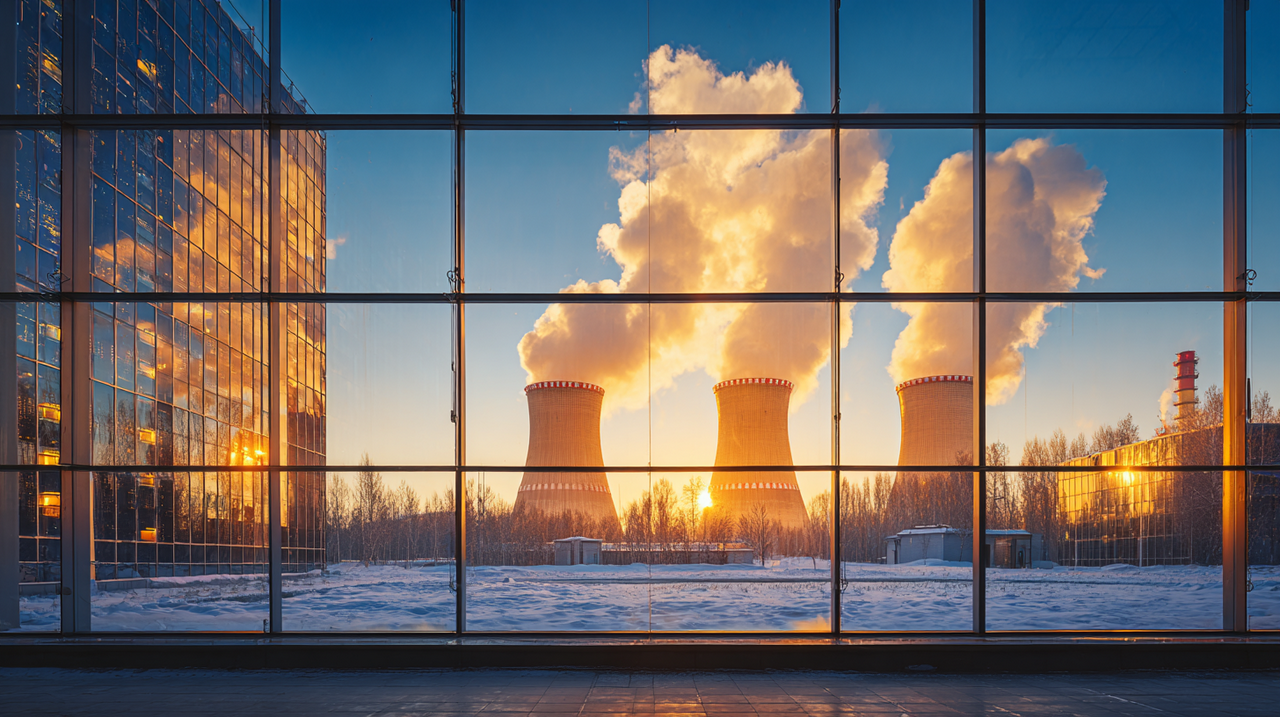
The race to build the most powerful artificial intelligence on Earth was supposed to be about algorithms, data, and talent. It was supposed to be about which company could attract the sharpest researchers, assemble the largest training datasets, and engineer the cleverest architectures. But something funny happened on the way to artificial general intelligence. The bottleneck shifted. The thing that now separates the winners from the also-rans is not code. It is electricity.
In boardrooms from San Francisco to Riyadh, a new calculus has taken hold. The question is no longer “Can we build a better model?” but rather “Can we power it?” Grid connection delays for new data centre projects now stretch to five years in many markets. Companies that secured reliable power capacity two years ago find themselves sitting on what amounts to a strategic mineral deposit; those that did not are scrambling to cut deals with nuclear plant operators, natural gas providers, and sovereign wealth funds. The AI industry, it turns out, runs not on silicon but on watts.
This is not a minor adjustment in the competitive landscape. It is a wholesale rewriting of the rules governing technological supremacy, environmental policy, and geopolitical influence. And it is happening faster than almost anyone predicted.
The Hunger That Cannot Be Sated
The numbers are staggering, and they keep getting revised upward. The International Energy Agency (IEA) estimated global data centre electricity consumption at around 415 terawatt-hours (TWh) in 2024, representing approximately 1.5 per cent of total global electricity use. By 2030, the IEA projects that figure will roughly double to 945 TWh in its base case scenario. From 2024 to 2030, data centre electricity consumption is growing at around 15 per cent per year, more than four times faster than the growth of total electricity consumption from all other sectors combined.
In the United States, the picture is especially acute. The Lawrence Berkeley National Laboratory predicts that data centre demand will grow from 176 TWh in 2023 (about 4.4 per cent of total US electricity consumption) to between 325 and 580 TWh by 2028, potentially representing 12 per cent of national electricity use. The US Energy Information Administration has forecast overall power demand rising to 4,283 billion kWh in 2026, with the commercial electricity sector (where data centres sit) growing by 5 per cent that year alone.
These are not abstract projections. In Virginia, which houses the largest cluster of data centres in the world, the facilities already consume 26 per cent of all electricity. In Ireland, a European tech hub, data centres account for 21 per cent of the nation's electricity, and the IEA estimates that share could rise to 32 per cent by the end of 2026. If global data centre electricity consumption reaches the higher estimates of 1,050 TWh, it would place the sector fifth in the world rankings of electricity consumers, sitting between Japan and Russia.
And it is the hardware driving this surge that explains why the trajectory is so steep. Nvidia's latest Blackwell GB200 chips require 120 kilowatts per unit; the newer GB300s demand 140 kilowatts, representing a twofold increase from the previous generation H200s. Over the next two years, Nvidia is expected to ship rack-scale systems requiring 300 to 600 kilowatts, a fivefold increase from what was needed in early 2025. Every leap in AI capability translates directly into a leap in power consumption. The AI power bottleneck is not temporary. As AI workloads scale and new architectures emerge, the constraint remains constant: every processor needs electricity and cooling.
When Big Tech Goes Nuclear
Faced with an electricity crisis of their own making, the largest technology companies have embarked on an energy acquisition spree that would have seemed fantastical a decade ago. The most headline-grabbing move belongs to Microsoft and Constellation Energy, which signed a 20-year power purchase agreement to restart Three Mile Island Unit 1 in Pennsylvania. Constellation will invest $1.6 billion to bring the 837-megawatt reactor back online. The plant was retired for economic reasons in 2019, entirely separate from the reactor that partially melted down in 1979. In its last year of operation, the plant was producing electricity at maximum capacity 96.3 per cent of the time. The Trump administration backed the restart project with a $1 billion federal loan in November 2025. The plant, renamed the Crane Clean Energy Centre in honour of the late Constellation CEO Chris Crane, who passed away in April 2024, is now expected to return to service in 2027, about a year ahead of its original schedule. Analysts at Jefferies estimated Microsoft might be paying approximately $110 to $115 per megawatt-hour over the 20-year life of the deal.
Google, meanwhile, signed what appears to be the first corporate agreement to develop a fleet of small modular reactors (SMRs) in the United States, backing Kairos Power with a 500-megawatt development agreement. Kairos is developing a molten fluoride salt-cooled SMR, with the first reactor targeted for 2030 and additional units coming online through 2035. In May 2025, the NuScale US 460, a 462-megawatt SMR, received a Standard Design Approval from the Nuclear Regulatory Commission two months ahead of schedule, signalling regulatory momentum behind the technology.
Amazon led a $500 million financing round for X-energy, which is developing a gas-cooled SMR, with plans to build multiple units producing at least 5 gigawatts total by 2039. Amazon is also co-locating a data centre at the Susquehanna nuclear site. Meta announced a request for proposals targeting 1 to 4 gigawatts of new nuclear generation, seeking both SMRs and larger reactors starting in the early 2030s. Oracle announced plans for a gigawatt-scale data centre powered by three small modular reactors.
The scale of capital expenditure is breathtaking. In 2025, the biggest US technology companies invested more than $320 billion collectively on AI development, computer hardware, and new data centres. Amazon alone projected $200 billion in 2026 spending, while Google estimated between $175 and $185 billion, and Meta estimated $115 to $135 billion. All told, hyperscalers are planning to spend nearly $700 billion on data centre projects in 2026 alone. President Trump issued four executive orders addressing nuclear energy in May 2025, focused on speeding deployment of new nuclear technologies, including SMRs, with Executive Order 14300 setting aggressive new licensing deadlines.
As Jacopo Buongiorno, professor of nuclear science and engineering at the Massachusetts Institute of Technology, has observed, nuclear reactors are “almost like an ideal energy source” for data centres due to their ability to provide constant, carbon-free baseload power. A Deloitte analysis suggests nuclear energy could meet up to 10 per cent of data centre electricity demand by 2035.
The Bills That Land on Kitchen Tables
The AI energy boom might sound like a problem confined to corporate balance sheets and international summits. It is not. It is arriving in the letterboxes of ordinary households.
In the PJM electricity market, which stretches from Illinois to North Carolina and serves roughly 65 million people, data centres accounted for an estimated $9.3 billion price increase in the 2025-2026 capacity market. PJM's independent market monitor, Monitoring Analytics, estimated that data centres were responsible for 63 per cent of the price increase. The clearing price of the 2025-2026 capacity auction jumped by 833 per cent from the previous year, leaping from $28.92 per megawatt-day to $269.92 per megawatt-day. The 2026-2027 delivery year then hit $329.17 per megawatt-day in all zones, a figure that would have been even higher had PJM not imposed a price cap.
What does that translate to for a family paying an electricity bill? In Washington D.C., Pepco residential customers saw their bills increase by an average of $21 per month starting in June 2025. In western Maryland, the average residential bill rose by $18 per month; in Ohio, by $16. Looking further ahead, the Natural Resources Defense Council estimates that costs could translate to a $70-per-month increase for the average PJM household. Dominion Energy projects residential bill increases reaching $255 per month by 2035. Electricity rates for residents in PJM states have already risen 23 to 40 per cent over the past five years.
A July 2025 study by researchers at Carnegie Mellon University and North Carolina State University found that the average US electricity bill could increase by 8 per cent nationally by 2030 due to data centres and cryptocurrency mining. In central and northern Virginia, the increase could exceed 25 per cent, the highest in the country. The study also found that rapid data centre demand growth is delaying the retirement of ageing, expensive coal-fired power plants, with more than 25 gigawatts of coal capacity projected to continue operating largely to meet data centre demand.
The political backlash has been swift. Virginia's State Corporation Commission approved a new electricity rate class for large-scale customers, notably AI data centres, starting in January 2027. Virginia Senator L. Louise Lucas introduced an amendment to Senate Bill 253 that would shift billions in grid upgrade and capacity costs from residential ratepayers to data centres, cutting average household bills by $5.52 per month while raising data centre rates roughly 15.8 per cent. At least eight other US states have introduced similar measures in 2026. The Trump administration also reached an agreement with a bipartisan group of governors to direct PJM to hold an emergency electricity auction to ensure the rapid expansion of AI data centres does not increase costs for residential customers.
The Carbon Contradiction
Here is the uncomfortable paradox at the heart of the AI energy boom. The same companies pouring hundreds of billions into data centres have, in recent years, made sweeping commitments to sustainability and carbon neutrality. Those commitments are now colliding with reality at speed.
Microsoft's carbon emissions surged 23.4 per cent compared to its 2020 baseline during fiscal year 2024. Although the company managed to reduce its direct emissions (Scope 1 and 2) by 30 per cent compared to 2020 levels, its overall carbon footprint, including the vast category of indirect emissions (Scope 3, which represents more than 97 per cent of Microsoft's total carbon impact), climbed 26 per cent across the five-year period. Microsoft's electricity consumption almost tripled between 2020 and 2024, from 10.8 million megawatt-hours to 29.8 million. Its location-based Scope 2 emissions more than doubled in four years, rising from 4.3 million metric tonnes of CO2 in 2020 to nearly 10 million in 2024.
Google's trajectory is similarly troubling. The company reported that its emissions grew nearly 50 per cent over the previous five years, with data centre energy consumption playing a significant role. Google's energy usage more than doubled in the same timeframe, from 15.2 million MWh in 2020 to 32.2 million MWh in 2024, with data centre electricity use increasing by 27 per cent between 2023 and 2024 alone.
The language from these companies has shifted accordingly. Microsoft's Chief Sustainability Officer acknowledged that “in 2020, Microsoft leaders referred to our sustainability goals as a 'moonshot,' and nearly five years later, we have had to acknowledge that the moon has gotten further away.” Google went further, stating it is “no longer maintaining operational carbon neutrality,” and is instead “focusing on accelerating an array of carbon solutions and partnerships.”
Goldman Sachs maintains that new data centre power capacity will be split roughly 60/40 between natural gas and renewables, projecting that this will increase global carbon emissions by 215 to 220 million tonnes through 2030. Overall, fossil fuels currently provide nearly 60 per cent of power to data centres worldwide, while renewables meet 27 per cent and nuclear another 15 per cent.
The problem is structural. Renewables face operational limitations that make them difficult to rely upon as the sole power source for facilities that must run continuously. Utility-scale solar operates around six hours daily on average; wind facilities run about nine hours. Data centres need power around the clock, pushing operators toward hybrid setups that blend renewables with battery storage and backup natural gas capacity. The promise of “100 per cent renewable energy” often relies on annual matching, a practice whereby companies purchase renewable energy certificates to offset fossil fuel use at other times. It is a form of accounting that, while common, does not mean the electrons flowing into a data centre at midnight came from a wind farm.
Analysis by the Guardian indicated that actual emissions from facilities owned by Google, Microsoft, Meta, and Apple were around 7.62 times higher than officially reported between 2020 and 2022, when location-based emissions are substituted for market-based figures. The Carnegie Mellon/NC State study estimated that, under current policies, electricity demand from data centres and cryptocurrency mining is projected to increase power sector emissions by 30 per cent in 2030 compared to a scenario with no data centre demand growth, reaching approximately 275 million metric tonnes of CO2 annually.
The Thirst Beneath the Power Drain
Electricity is not the only resource being consumed at an alarming rate. Data centres are also extraordinarily thirsty. A medium-sized data centre can consume up to roughly 110 million gallons of water per year for cooling purposes, equivalent to the annual water usage of approximately 1,000 households. Larger facilities can each consume up to 5 million gallons per day, usage equivalent to a town of 10,000 to 50,000 people.
Research by scientists at the University of California, Riverside found that each 100-word AI prompt is estimated to use roughly one bottle of water, or 519 millilitres. Training the GPT-3 language model in Microsoft's US data centres directly evaporated 700,000 litres of clean freshwater, according to the same research. A study published in 2025 estimated that AI's total water use footprint could range between 312.5 and 764.6 billion litres in 2025 alone, equivalent to the range of global annual consumption of bottled water.
Google's water consumption has more than tripled since 2016, with 87 to 89 per cent of water withdrawals in 2022 and 2023 going to data centres. Roughly two-thirds of data centres built since 2022 have been located in water-stressed regions, according to Bloomberg News analysis. By the 2050s, about 45 per cent of data centres analysed by MSCI are projected to have high exposure to water stress. Cooling typically accounts for 20 to 40 per cent of total energy use in data centres, and water-based cooling, while more energy efficient, increases water consumption. Southern Nevada's local building codes have already banned the use of evaporative cooling in all new developments due to high water stress. China is the only country that has incorporated Water Usage Effectiveness performance standards into its data centre building code, according to the IEA.
Petrostates Pivot to Compute
Perhaps the most fascinating geopolitical dimension of the AI energy shift is the emergence of Gulf states as major players. The three major petrostates of Saudi Arabia, the UAE, and Qatar have together committed roughly $2.5 trillion to major technology investments, clearly intent on establishing the region as a third AI power centre distinct from the United States and China.
The UAE's ambitions are anchored by the Stargate UAE project, a plan to build a 5-gigawatt data centre campus in Abu Dhabi with American technology. The Stargate Project is a $500 billion private sector AI-focused investment vehicle announced by OpenAI in partnership with Abu Dhabi investment firm MGX and Japan's SoftBank, and will be built with the help of Oracle, Nvidia, and Cisco Systems. UAE live data centre capacity surpassed 376 megawatts in 2025, with operators racing to lock in power, land, and government workloads ahead of 2026 expansions.
Saudi Arabia launched the $2.7 billion Hexagon Data Centre initiative at the start of 2026, a 480-megawatt, Tier-IV facility that will be the world's largest government data centre once complete. The kingdom also established HUMAIN, a government-backed AI company owned by the Public Investment Fund, which serves as a central vehicle for domestic AI infrastructure development. HUMAIN's CEO Tareq Amin has stated plainly: “We want to be the third-largest AI provider in the world, behind the United States and China.” The company has plans to build up to 1.9 gigawatts of data centre capacity by 2030 and has signed deals worth $23 billion with global tech suppliers including Nvidia, AMD, Cisco, Qualcomm, and AWS. Under a key partnership resulting from President Trump's visit to the Gulf in May 2025, Nvidia will supply 18,000 of its GB300 Blackwell chips to Saudi Arabia, with the first shipment arriving in December 2025.
The Gulf nations possess a structural advantage. Electricity tariffs in Saudi Arabia and the UAE range from $0.05 to $0.06 per kilowatt-hour, well below the US average of $0.09 to $0.15 per kWh. These countries also have vast tracts of undeveloped land, minimal planning restrictions, and the financial firepower to build at scale. The Emirates Nuclear Energy Company recently signed a memorandum of understanding with GE Vernova Hitachi Nuclear Technology to evaluate deploying small nuclear technology, while Saudi Arabia has plans for its first nuclear power plant.
The irony is thick. Nations that built their wealth on extracting and selling fossil fuels are now positioning themselves to profit from the insatiable energy demands of artificial intelligence, which many had hoped would be powered primarily by clean energy.
Geopolitical Swing States and the New Digital Divide
The AI energy nexus is not merely a story about wealthy nations and trillion-dollar companies. It is reshaping the global order in ways that extend far beyond Silicon Valley and the Gulf.
At the centre of this transformation lies the rivalry between the United States and China. The United States has imposed export controls limiting China's access to high-end AI chips, potentially slowing China's AI advancement. China, however, holds advantages through its lead in open-source AI models and its focus on applied AI. This contest over technological supremacy is increasingly fought on energy terrain: nations with abundant, diverse energy supplies and advanced grid infrastructure are better positioned to capitalise on AI advancements and enhance their geopolitical influence.
Beyond the US-China competition, a group of “geopolitical swing states” is becoming increasingly vital. India, Vietnam, Turkey, and other emerging economies are essential players in the AI supply chain and are being courted by both major powers. India, in particular, is witnessing one of the strongest economic expansions among major nations, powered by its digital economy, youthful population, and large-scale foreign investments. The choices these nations make about energy infrastructure, data sovereignty, and technological partnerships will significantly influence the shape of the global AI economy.
The RAND Corporation's Michael J. Mazarr, in his January 2026 report “A New Age of Nations: Power and Advantage in the AI Era,” noted that at least 75 countries had published national AI strategies. His core thesis is that the competitive challenge of AI is primarily social, not technological. Countries that lead the new era will not merely have the best AI models; they will have taken the necessary steps to make their societies more competitive. Yet there is a catch: not every country can, or should, try to build every part of the AI stack independently. Attempting to recreate everything from data centres to foundation models is expensive, redundant, and impractical for most nations.
This creates a new form of digital divide. Countries with reliable, abundant electricity and the capital to invest in data centre infrastructure will attract AI companies, talent, and investment. Those without adequate energy capacity risk being relegated to the role of consumers rather than producers of AI technology, dependent on foreign cloud providers and vulnerable to the terms those providers set. Countries in sub-Saharan Africa, South Asia, and parts of Latin America, where electricity access remains unreliable and grid infrastructure is underdeveloped, face the prospect of being excluded from the AI revolution entirely. This is not merely a matter of technological disadvantage; it is a question of economic development, educational opportunity, and political agency in a world increasingly shaped by artificial intelligence.
Governance Gaps and Regulatory Scrambles
The tension between AI's energy hunger and environmental commitments has exposed a profound gap in global governance. At the Paris AI Action Summit in February 2025, 61 countries, including China, India, Japan, Australia, and Canada, signed the Statement on Inclusive and Sustainable Artificial Intelligence. But the United States and the United Kingdom, two of the world's most important AI powers, refused to sign.
Their reasons diverged sharply. US Vice President JD Vance warned that excessive regulation of AI “could kill a transformative industry just as it's taking off,” and objected to the declaration's focus on multilateralism, inclusivity, and environmental challenges. The UK, by contrast, supported much of the declaration's content but felt the pact “didn't provide enough practical clarity on global governance and didn't sufficiently address harder questions around national security.” Dario Amodei, CEO of Anthropic, wrote in a statement that “at the next international summit, we should not repeat this missed opportunity.”
The absence of the two largest English-speaking AI powers from the governance framework leaves a vacuum that is being filled, unevenly, by regional and national regulation. The European Commission plans to adopt a “Data Centre Energy Efficiency Package” in April 2026 that will introduce a rating scheme and begin work on minimum performance standards. In the United States, the Department of Energy directed the Federal Energy Regulatory Commission (FERC) to issue a rulemaking to ensure efficient and non-discriminatory load interconnections for large electrical loads, with a final rule expected by April 2026.
In the United Kingdom, the stakes are particularly stark. According to a report covered by the Institution of Engineering and Technology, 140 proposed data centre schemes in the UK could require 50 gigawatts of electricity, 5 gigawatts more than the country's current peak demand. This poses what experts have described as a “serious threat to efforts to decarbonise the electricity grid.”
Without coordinated international standards, companies are left to self-regulate, a practice that has not inspired confidence given the trajectory of their emissions. Climate-related shareholder proposals were filed at Amazon, Meta, and Alphabet in 2025, asking how these companies plan to reconcile their ambitious climate commitments with growing AI electricity demand and whether their renewable energy procurement strategies remain credible.
Sam Altman's Uncomfortable Truth
OpenAI CEO Sam Altman has been characteristically blunt about the situation. At an AMD AI conference, he stated: “Theoretically, at some points, you can see that a significant fraction of the power on Earth should be spent running AI compute. And maybe we're going to get there.” He has acknowledged it is “fair” to be concerned about AI's total energy consumption, arguing that the world needs to “move towards nuclear or wind and solar very quickly.”
Altman has also pushed back against what he considers misleading framings of AI's resource use, arguing that comparisons of AI energy efficiency against human cognition are “unfair.” He contended that it “takes like 20 years of life and all of the food you eat during that time before you get smart,” and suggested AI has “already caught up on an energy efficiency basis” when considered on a per-query comparison. Not everyone found this persuasive. Creative Strategies analyst Max Weinback wrote that Altman's framing was “trying to break down people and models into cost for output and ignoring the value of humanity itself.”
The debate has taken stranger turns. Elon Musk and Jeff Bezos have floated the idea of placing AI data centres in orbit to tap into unlimited solar power and fewer physical constraints. Altman dismissed the notion: “I honestly think the idea with the current landscape of putting data centres in space is ridiculous.” He cited practical concerns including launch costs, the difficulty of repairing broken GPUs in space (“they do break a lot still, unfortunately”), and the simple economics of terrestrial power generation.
What Altman's candour reveals, however uncomfortable, is that the AI industry's leadership has already internalised a future in which artificial intelligence consumes a transformative share of global electricity. The question is not whether this will happen but how the energy will be sourced, who will control it, and what the environmental consequences will be.
A Fractured Energy Future
The emerging picture is one of radical fragmentation. Different regions are pursuing wildly different energy strategies to feed their AI ambitions, and the choices they make will reverberate for decades.
In the United States, natural gas remains the near-term workhorse, supplemented by a nuclear renaissance driven by tech company investment. The restart of the Crane Clean Energy Centre, the SMR agreements with Kairos Power and X-energy, and Trump's May 2025 executive orders aimed at speeding deployment of new nuclear technologies all point toward a hybrid approach that prioritises speed and reliability over emissions reduction.
In Europe, the emphasis is shifting toward regulatory frameworks and efficiency standards. The European Commission's forthcoming Data Centre Energy Efficiency Package represents an attempt to impose order on an industry that has so far grown largely unchecked. Ireland, where data centres could consume nearly a third of national electricity by late 2026, is a test case for whether a small, grid-constrained nation can accommodate the AI industry without compromising its broader energy transition.
In the Gulf, the strategy is unambiguous: build massive capacity quickly, leveraging cheap energy, abundant land, and sovereign wealth fund capital. Whether these facilities run on renewables (the Al Dhafra Solar Project in the UAE is one of the world's largest) or fossil fuels will be determined by economics and speed rather than environmental ambition.
In China, the approach blends state-directed investment in both AI and energy infrastructure, with an emphasis on energy self-sufficiency and technological autonomy that is inseparable from broader strategic competition with the United States.
The environmental implications are sobering. The IEA estimates that data centre emissions will reach 1 per cent of global CO2 emissions by 2030 in its central scenario, or 1.4 per cent in a faster-growth scenario. Goldman Sachs projects that data centre power demand will surge 165 to 175 per cent by 2030 compared to 2023 levels, the equivalent of adding another top-ten power-consuming country to the planet.
Yet there is a counterargument that deserves serious consideration. AI could enable Southeast Asian nations alone to reduce power sector costs by $45 to $67 billion through 2035, with potential efficiency gains cutting emissions by 290 to 386 million tonnes of CO2. Smart grids, predictive maintenance, and optimised energy distribution are all areas where AI can accelerate the energy transition rather than impede it. In the IEA's central scenario, the data centre electricity mix shifts from approximately 60 per cent fossil fuels and 40 per cent clean power today to 60 per cent clean power and 40 per cent fossil fuels by 2035.
The question is whether the net effect will be positive or negative. If the AI industry drives sufficient investment in clean energy infrastructure, it could paradoxically become one of the most powerful forces for decarbonisation. If, on the other hand, it simply layers enormous new electricity demand on top of existing fossil fuel systems, it will accelerate climate change at precisely the moment when emissions need to be falling.
The answer will depend not on technology alone but on policy, governance, and political will. It will depend on whether governments treat AI energy consumption as a matter for the market or as a strategic priority requiring active management. It will depend on whether the global community can agree on standards for data centre emissions, energy efficiency, and grid interconnection, or whether the regulatory vacuum that currently exists persists.
For now, the companies with the most megawatts are winning. The rest are watching, waiting, and hoping the grid connection arrives before their competitors pull too far ahead. In the new AI economy, the currency is not data, and it is not compute. It is energy. And like every scarce resource before it, it is already reshaping who holds power and who does not.
References and Sources
International Energy Agency (IEA), “Energy Demand from AI,” Energy and AI Analysis, 2025. Available at: https://www.iea.org/reports/energy-and-ai/energy-demand-from-ai
International Energy Agency (IEA), Electricity 2026: Analysis and Forecast, January 2026. Available at: https://www.iea.org/reports/electricity-2026
Lawrence Berkeley National Laboratory, US Data Centre Energy Consumption Projections, referenced via Pew Research Center, “What we know about energy use at U.S. data centers amid the AI boom,” October 2025. Available at: https://www.pewresearch.org/short-reads/2025/10/24/what-we-know-about-energy-use-at-us-data-centers-amid-the-ai-boom/
US Energy Information Administration (EIA), Data Centre Power Demand Forecasts, 2025-2026, referenced via Data Center Dynamics. Available at: https://www.datacenterdynamics.com/en/news/eia-projects-record-us-data-center-power-use-amid-ai-and-crypto-boom/
Goldman Sachs Research, “GS SUSTAIN: AI/data centers' global power surge: The push for the 'Green' data center,” 2025. Available at: https://www.goldmansachs.com/insights/goldman-sachs-research/the-push-for-the-green-data-center
Constellation Energy, “Constellation to Launch Crane Clean Energy Center,” press release, September 2024. Available at: https://www.constellationenergy.com/news/2024/Constellation-to-Launch-Crane-Clean-Energy-Center-Restoring-Jobs-and-Carbon-Free-Power-to-The-Grid.html
CNBC, “Trump administration backs Three Mile Island nuclear restart with $1 billion loan to Constellation,” November 2025. Available at: https://www.cnbc.com/2025/11/18/trump-nuclear-three-mile-island-crane-loan-constellation-ceg.html
IEEE Spectrum, “Big Tech Embraces Nuclear Power to Fuel AI and Data Centers,” 2025. Available at: https://spectrum.ieee.org/nuclear-powered-data-center
IAEA, “Data Centres, Artificial Intelligence and Cryptocurrencies Eye Advanced Nuclear to Meet Growing Power Needs,” IAEA Bulletin, 2025. Available at: https://www.iaea.org/bulletin/data-centres-artificial-intelligence-and-cryptocurrencies-eye-advanced-nuclear-to-meet-growing-power-needs
NPR, “AI brings soaring emissions for Google and Microsoft, a major contributor to climate change,” July 2024. Available at: https://www.npr.org/2024/07/12/g-s1-9545/ai-brings-soaring-emissions-for-google-and-microsoft-a-major-contributor-to-climate-change
Al Jazeera, “Paris AI summit: Why won't US, UK sign global artificial intelligence pact?” February 2025. Available at: https://www.aljazeera.com/news/2025/2/12/paris-ai-summit-why-wont-us-uk-sign-global-artificial-intelligence-pact
Middle East Institute, “From Crude to Compute: Building the GCC AI Stack,” 2025. Available at: https://www.mei.edu/publications/crude-compute-building-gcc-ai-stack
CNBC, “Saudi AI firm Humain is pouring billions into data centers. Will it pay off?” August 2025. Available at: https://www.cnbc.com/2025/08/27/saudi-arabia-wants-to-be-worlds-third-largest-ai-provider-humain.html
Michael J. Mazarr, “A New Age of Nations: Power and Advantage in the AI Era,” RAND Corporation Perspective PE-A3691-14, January 2026. Available at: https://www.rand.org/pubs/perspectives/PEA3691-14.html
Carbon Brief, “AI: Five charts that put data-centre energy use and emissions into context,” 2025. Available at: https://www.carbonbrief.org/ai-five-charts-that-put-data-centre-energy-use-and-emissions-into-context/
FP Analytics (Foreign Policy), “Powering the AI Era,” May 2025. Available at: https://fpanalytics.foreignpolicy.com/2025/05/20/artificial-intelligence-electricity-demand/
TechCrunch, “Sam Altman would like to remind you that humans use a lot of energy, too,” February 2026. Available at: https://techcrunch.com/2026/02/21/sam-altman-would-like-remind-you-that-humans-use-a-lot-of-energy-too/
Engineering and Technology Magazine (IET), “AI data centre boom could push up UK electricity demand and carbon emissions,” March 2026. Available at: https://eandt.theiet.org/2026/03/02/climate-impact-ai-data-centre-growth-under-scrutiny
Bloomberg, “How AI Data Centers Are Sending Your Power Bill Soaring,” 2025. Available at: https://www.bloomberg.com/graphics/2025-ai-data-centers-electricity-prices/
Carnegie Mellon University, “Data Center Growth Could Increase Electricity Bills 8% Nationally and as Much as 25% in Some Regional Markets,” July 2025. Available at: https://www.cmu.edu/work-that-matters/energy-innovation/data-center-growth-could-increase-electricity-bills
IEEFA, “Projected data center growth spurs PJM capacity prices by factor of 10,” 2025. Available at: https://ieefa.org/resources/projected-data-center-growth-spurs-pjm-capacity-prices-factor-10
NRDC, “Rising Demand from Data Centers Driving Reliability, Cost Concerns,” 2025. Available at: https://www.nrdc.org/press-releases/rising-demand-data-centers-driving-reliability-cost-concerns
Brookings Institution, “AI, data centers, and water,” 2025. Available at: https://www.brookings.edu/articles/ai-data-centers-and-water/
EESI, “Data Centers and Water Consumption,” 2025. Available at: https://www.eesi.org/articles/view/data-centers-and-water-consumption
MSCI, “When AI Meets Water Scarcity: Data Centers in a Thirsty World,” 2025. Available at: https://www.msci.com/research-and-insights/blog-post/when-ai-meets-water-scarcity-data-centers-in-a-thirsty-world

Tim Green UK-based Systems Theorist & Independent Technology Writer
Tim explores the intersections of artificial intelligence, decentralised cognition, and posthuman ethics. His work, published at smarterarticles.co.uk, challenges dominant narratives of technological progress while proposing interdisciplinary frameworks for collective intelligence and digital stewardship.
His writing has been featured on Ground News and shared by independent researchers across both academic and technological communities.
ORCID: 0009-0002-0156-9795 Email: tim@smarterarticles.co.uk