When Data Centres Move In: Rising Bills, Falling Water Tables
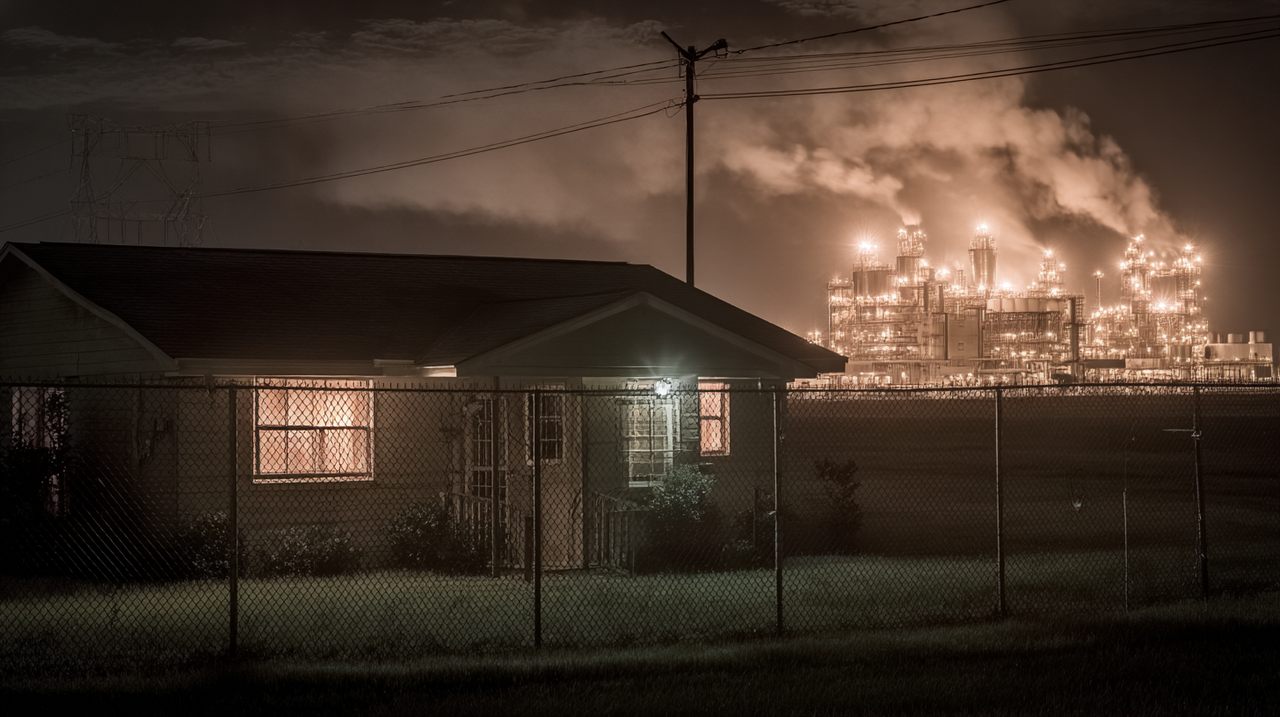
John Steinbach opened the envelope at his kitchen table in Manassas, Virginia, and stared at a number that did not make sense. His January 2026 electricity bill came in at $281. The month before, he had paid something close to $100, the sort of bill he had been paying for years. He checked the decimal point. He read the meter reading twice. He was not running a grow-op in his garage. He had not left the heater jammed on. He was, as far as he could tell, living the same quiet suburban life he had always lived, in a house some twenty miles from the centre of what the industry calls Data Center Alley, the densest cluster of server farms on planet Earth.
“It's just so far beyond any bill that I've ever had,” he told Consumer Reports, in an investigation published in March 2026 that has become, in the months since, something close to a Rosetta Stone for understanding the strange new arithmetic of American household utilities. His bill had not tripled because he was using triple the electricity. It had tripled because of the vast silicon and concrete apparatus humming away in warehouses up the highway, the apparatus that now draws roughly 40 per cent of Virginia's electricity, the apparatus that is training and running the artificial intelligence models the rest of the world uses to summarise emails and generate images of astronauts on horseback.
The bill arrived, in other words, because somewhere in the invisible plumbing of the grid, a decision had been made about whose electricity this was, who would pay for the transmission upgrades required to keep the GPUs cool and the data centres fed, and who would absorb the shock when demand outstripped supply. That decision was not made by John Steinbach. It was not made by his neighbours. It was not made by anyone on his street, his block, or his county council. And that, more than the $181 increase, is the story.
A Gold Rush With Someone Else's Gold
The United States is currently in the middle of the largest private infrastructure build-out since the interstate highway system, and almost nobody who lives in its path has been asked to approve any part of it. According to Fortune, data centres now account for half of all new American electricity demand. According to Consumer Reports, residential electricity prices rose 7.1 per cent in 2025 alone, and in the Mid-Atlantic corridor served by the PJM grid, the wholesale auction that sets capacity prices reached record highs, resulting in average bill increases of more than $17 a month for Baltimore customers of Exelon's BGE utility, a figure that makes Steinbach's triple-digit leap look almost modest by comparison.
Behind these averages sits a deceptively simple question: when a hyperscaler, say, Amazon or Microsoft or Google or Meta, builds a two-gigawatt campus in a rural county, who pays for the substations, the transmission lines, the combined-cycle gas plants and the grid upgrades required to keep it running? Traditionally, utilities answered that question by spreading the cost across their entire rate base, which is to say, across every household and small business in the service territory. This is the legal framework that built America's electricity system, and it is also the legal framework that is now quietly transferring billions of dollars a year from retirees and single parents and small restaurants to the balance sheets of the richest corporations in history.
Ari Peskoe, director of the Electricity Law Initiative at Harvard Law School, has spent years documenting how this mechanism works in practice, and his conclusion is as blunt as it is unflattering: ratepayers, not shareholders, are funding the build-out. Kasia Tarczynska, a researcher at Good Jobs First, has traced the subsidy flows state by state and estimates that data centres are extracting roughly a billion dollars a year in tax breaks in Virginia and Texas alone, a figure that does not even include the uncosted externalities of rate shifting. The subsidies are public. The profits are private. The bills, when they arrive, arrive at the addresses of people like John Steinbach, who did not know there was a deal, let alone that he was on the hook for it.
The Mechanism, in Plain English
The mechanism is worth understanding, because it is the pivot on which the entire community-cost argument turns, and because utility regulators have for years hidden it behind a thicket of acronyms and rate-case filings that discourage lay scrutiny.
When a hyperscaler signs a contract with a utility for, say, a one-gigawatt data centre, that utility must deliver one gigawatt of firm, twenty-four-hour-a-day power. A gigawatt is roughly the annual consumption of 750,000 American homes. To deliver it, the utility must build or expand generation capacity (gas turbines, in most cases, because renewables are intermittent and nuclear is too slow), string new transmission lines, and upgrade substations. These are enormous capital projects, and utilities recoup their costs by applying to a state public service commission to raise rates.
The key word in that last sentence is “rates,” plural. American utility regulation does not typically require the cost of infrastructure built for a specific customer to be charged to that specific customer. Instead, it is socialised across the rate base on the grounds that everyone benefits from a robust grid. This assumption, reasonable in an era when new load came from population growth and air conditioning, becomes surreal when the new load is a single fenced-in campus drawing more power than a medium-sized city and producing no goods, no services and no jobs beyond a few dozen technicians.
In September 2025, Dominion Energy, Virginia's largest utility, formally acknowledged the problem by proposing a new rate class specifically for data centres. It was a partial concession, and critics including the Piedmont Environmental Council argued it did not go nearly far enough. In the 2026 legislative session that followed, Delegate John McAuliff pitched HB 503, a bill that would prevent utilities from putting the cost of transmission lines and generation serving data centres onto residential ratepayers. Governor Glenn Youngkin's subsequent amendments to related legislation instructed the State Corporation Commission to “take all measures to reasonably ensure” that data-centre costs “are not being subsidized by other customers of the utility.”
These are real legislative interventions, and they represent the first serious attempt in any American state to restore the polluter-pays principle to grid economics. They are also, so far, largely reactive. Nearly 600 data centres are already operational in Virginia. More than 100 are under construction or proposed. The horse is not so much bolting as already over the horizon, trailed by a slow-moving legislature and a furious electorate.
The Water Question, and the Silence That Follows It
In January 2026, Al Jazeera published a column by the Egyptian-British commentator Omar Shabana with the understated headline “AI's growing thirst for water is becoming a public health risk.” The column set out a case that, while partially familiar to climate reporters, had not quite been assembled with such clarity before. AI data centres, Shabana noted, are projected to increase global water usage from 1.1 billion to 6.6 billion cubic metres by 2027. Microsoft's own 2023 environmental report acknowledged that 41 per cent of its water withdrawals came from areas under water stress. Google's figure was 15 per cent from high-scarcity regions. And those were the self-reported numbers.
The public health argument ran as follows. Only 0.5 per cent of the water on Earth is fresh. When data centres siphon millions of gallons a day from municipal or aquifer sources in drought-prone regions, households are pushed to ration. Rationing means prioritising drinking and cooking over washing hands, food and bodies. The World Health Organization has long documented the correlation between reduced hygiene and the spread of cholera and diarrhoeal disease, conditions that disproportionately kill children under five, who bear 84 per cent of the global burden. “Although it is too early to draw direct causal links between AI data centres and water-related diseases,” Shabana wrote, “the known facts make this a significant concern.” It was, in WIRED's parlance, the softest possible framing of the hardest possible claim.
The specifics are where the argument gets teeth. In Newton County, Georgia, residents near a Meta facility reported discoloured, sediment-filled water in their taps. In Fayette County, similar complaints surfaced. In Phoenix, Arizona, Consumer Reports documented a facility consuming 385 million gallons a year for evaporative cooling, with projections rising to 3.7 billion gallons annually, in a desert city whose principal water source, the Colorado River, has been in declared shortage since 2021. A 2023 academic study led by researchers at the University of California, Riverside, estimated that a single ChatGPT conversation of 10 to 50 queries can consume roughly half a litre of water once electricity generation is factored in, a figure that sounds trivial until you multiply by a billion users.
The intellectual scandal, such as it is, concerns the asymmetry of visibility. The hyperscalers know precisely how much water their cooling towers consume; they metre it. The communities whose aquifers are being drawn down typically do not. In 25 of 31 Virginia communities surveyed by journalists in 2025, data-centre operators had insisted on non-disclosure agreements with local governments before revealing the details of their water or energy needs. These NDAs, enforceable under state commercial-confidentiality statutes, have meant that residents have often learned of a pending project's footprint only after construction began.
The Noise, the Heat, the Light
If the grid-rate and water stories are the invisible costs of the data-centre boom, the sensory costs are the ones that have, perhaps predictably, driven the fiercest backlash. Data centres, despite a reputation for clean-room minimalism, are loud. They are warm. They are often lit like small airports, twenty-four hours a day, on land that was once farm or forest.
In Southaven, Mississippi, Jason Haley stopped being able to sleep with the windows open in August 2025. The noise came from the direction of the old power-plant site half a mile from his house, where Elon Musk's xAI had begun erecting a cluster of natural-gas turbines to supply its Colossus supercomputer across the state line in Memphis. The turbines, as Haley described them to Mississippi Today, sounded like “a leaf blower” that ran for days at a stretch, all night, every night. Eighteen of them are currently operating. Fifty-nine are planned. xAI is awaiting state permits for the remainder. Whatever those permits say, the noise does not stop for them.
In Chandler, Arizona, a city of 280,000 just outside Phoenix, the battle over data-centre noise began as far back as 2014, when a million-square-foot facility produced a steady drone that drove residents to the council chambers. The city eventually adopted an ordinance targeting data-centre noise specifically. In December 2025, the Chandler City Council unanimously voted down the rezoning application for a proposed AI data centre, the kind of decisive “no” that, a few years ago, would have been almost unimaginable for a facility that promised capital investment and a handful of jobs.
Diana Dietz, who lives several miles from a QTS data-centre campus in Fayetteville, Georgia, told Consumer Reports she was not especially opposed to technology. What she objected to was the parade of earth-moving machinery through her neighbourhood at all hours. “You've got these giant excavation-style dump trucks two minutes from my house,” she said. The trucks, like the turbines, like the substation transformers and the chiller plants, are the visible evidence of a fact that AI boosterism tends to obscure: intelligence in a cloud is, in the physical world, heavy machinery.
The Regulatory Vacuum
The reason these stories keep happening in such similar shapes, in Manassas and Memphis and Chandler and Fayetteville, is that the United States has no coherent federal framework for siting AI infrastructure, and most states have not yet caught up. Zoning law is largely a matter of county and municipal jurisdiction. Utility regulation is a state matter, usually delegated to a public service commission whose commissioners are appointed, not elected, and whose rate-case proceedings are structured for expert testimony rather than public comment. Environmental permitting is split between the Environmental Protection Agency, state environmental agencies, and, in the case of water, a byzantine patchwork of river compacts, aquifer management districts and groundwater statutes that vary wildly from one jurisdiction to the next.
Into this regulatory swiss cheese rolls the hyperscaler, armed with non-disclosure agreements, a pre-negotiated economic-development package, and a timeline that counts in months rather than years. Local officials, often in rural counties with shrinking tax bases, see a multibillion-dollar investment and a handful of permanent jobs, and they sign. By the time the trucks arrive and the neighbours notice, the horse is out of the barn and several hundred megawatts of load have been added to a grid that was not designed for it.
Data Center Watch, a tracking group that has been cataloguing community responses since 2023, reported in early 2026 that roughly $64 billion worth of data-centre developments had been blocked or delayed by grassroots opposition across the United States. There are now 142 activist groups organised in 24 states. Twenty-five major projects were cancelled in 2025 alone. Twenty-one of those cancellations came in the second half of the year. In Wisconsin, sustained local opposition caused Microsoft to abandon plans for a 244-acre campus. In Brandy Station, Virginia, the Culpeper County Planning Commission unanimously denied rezoning for a $12 billion project in June 2024, a rare and galvanising rebuke. In King George County, Virginia, a newly elected board of supervisors reopened negotiations on Amazon's $6 billion campus.
These are not fringe events. They are becoming a pattern. And the pattern is, increasingly, that the hyperscalers are discovering the hard way that the social contract around infrastructure cannot be replaced with a press release.
Enter the Investors
In April 2026, Reuters reporters Simon Jessop, Valerie Volcovici and Supantha Mukherjee published a piece that marks, in retrospect, a turning point in the story. Amazon, Microsoft and Google had each, the article noted, recently abandoned multibillion-dollar data-centre projects in the face of community opposition. Now, shareholders were asking why. More than a dozen investors, ahead of spring annual meetings, were filing resolutions demanding disclosure of water consumption, power usage and community engagement strategies.
Trillium Asset Management, a Boston-based firm managing more than $4 billion, filed a resolution with Alphabet in December 2025 seeking clarity on how the company would meet its existing climate goals given the surging electricity needs of its data centres. Andrea Ranger at Trillium said the company had left investors “in the dark.” Jason Qi, lead technology analyst at Calvert Research and Management, offered the kind of restrained corporate-stewardship rebuke that reads as devastating only when you remember that Calvert sits on hundreds of billions in institutional assets: “We haven't seen them disclosing enough about their water consumption (and the) impact on the local community.” Green Century Capital Management joined the chorus.
The hyperscalers' responses were, on the whole, not reassuring. Microsoft said sustainability was “a core value” and that it was “proactively addressing sustainability challenges.” Google declined to comment. Meta did not return the Reuters reporters' request. Dan Diorio, vice-president of the Data Center Coalition, the industry's lobbying arm, offered what is probably the clearest articulation of where this argument is actually headed: “Being upfront with them regarding energy and water use, and so that residents can understand that this project will not stress their resources... and will protect them as rate payers is crucial.”
That is not the language of a confident industry. That is the language of an industry that has just realised its permits depend on the people whose aquifers it is draining and whose electricity bills it is inflating. The pressure, importantly, is now coming from two directions at once: from below, in the form of local activism and abandoned projects; and from above, in the form of fiduciary-duty shareholder resolutions from firms that can no longer pretend community opposition is an idiosyncratic, one-off risk.
The Social Licence to Operate
In March 2026, the World Economic Forum published a piece in its Agenda section with the title “Why AI and data-centre growth risks stalling without a social licence to operate.” The phrase “social licence to operate” originates in the mining industry, where it was coined in the 1990s to describe the informal consent that host communities grant (or withhold) from extractive projects, regardless of what formal permits say. In mining, the social licence is the difference between a functioning copper mine and a blockaded access road.
The WEF piece argued, in language calibrated for an audience of Davos attendees rather than Virginia ratepayers, that the AI industry was now facing precisely this kind of legitimacy test. “Understanding the importance of a social licence to operate is becoming critical as AI infrastructure, especially data centres, outpaces governance,” the piece observed. “Growing opposition across regulators, politicians and communities is already driving permit blocks and constraining scale.” Communities were not, it argued, “passive hosts” but “stakeholders with leverage.”
The piece then laid out what the industry needed to do to earn this licence: transparency about energy and water use; stable electricity prices; responsible water management; meaningful job pathways; enhanced local infrastructure. It was, in effect, an industry trade body admitting in print what the activists in Chandler and Brandy Station and Culpeper had been saying for years. If you do not earn consent, you do not get to build. If you get to build anyway, you will not get to build the next one. And the next one is where the money is.
The framing is useful because it reorients the ethical conversation away from the hypothetical harms of AI, the rogue superintelligences of science-fiction discourse, and towards the concrete, present, measurable harms of AI infrastructure. It is much easier to argue about whether GPT-7 will end civilisation than to explain to a state legislature why a Microsoft substation should or should not be socialised across the residential rate base. The social-licence framing does the explaining for us: it names the transaction, names the parties, and names the consent that was or was not given.
What Meaningful Consent Would Actually Look Like
If the social-licence argument is to be more than a rhetorical flourish, it has to be translated into institutional mechanisms with actual enforcement teeth. The literature on community consent in infrastructure, drawn from mining, pipelines, wind farms and landfill siting, suggests at least five such mechanisms, each of which is already being tested somewhere in the American data-centre debate.
The first is rate segregation, the Virginia HB 503 model, in which the cost of new generation and transmission built for a specific class of customer is recovered only from that class, rather than socialised across all ratepayers. This is the narrowest but most important reform, because it removes the hidden subsidy that currently makes data centres appear cheaper to host than they actually are. If hyperscalers had to pay the full incremental cost of the grid infrastructure they require, fewer speculative projects would pencil out, and the ones that did would bring with them a more defensible economic case.
The second is mandatory impact disclosure. HB 496 in Virginia, which would require localities to consider annual water-consumption estimates in rezoning decisions, is a modest but meaningful example. A more muscular version would require an environmental and infrastructure impact statement, subject to public hearing, for any data-centre project above a threshold size, modelled on the National Environmental Policy Act but administered at state level with specific provisions for aquifer drawdown, peak-load demand, noise contours and light pollution.
The third is community benefit agreements, the legal instrument used widely in urban development to bind a developer to specific commitments to the host community. In the data-centre context, a CBA might include funded local-grid upgrades, guaranteed rate stability for residential customers, water conservation investments, noise mitigation standards, a public education levy and a seat for community representatives on an ongoing oversight body. These agreements are enforceable contracts, not voluntary promises. The Chandler ordinance targeting data-centre noise is, in effect, a unilateral CBA imposed by a city after losing patience with the developer's assurances.
The fourth is meaningful public hearings with teeth, which sounds anodyne until one realises how often current hearings function as information sessions at which decisions already made are announced to residents. A hearing with teeth is one where the decision can actually be reversed, where the developer is obliged to answer questions under oath, and where non-disclosure agreements signed in advance by local officials are voided as a matter of public policy. The Culpeper County Planning Commission's unanimous denial in Brandy Station is a model of what this looks like when it works.
The fifth is water impact assessment with a veto right for water authorities, a mechanism borrowed from arid-region agricultural law. In several Western American states, irrigation districts already hold something close to this power over new industrial users. Applying it to data centres would mean that a project proposed in, say, the Phoenix metropolitan area would not simply need a permit from the city; it would need affirmative sign-off from the regional water management district, based on a fifty-year draw projection and a public-health impact assessment of the kind Omar Shabana described in Al Jazeera. This is how water scarcity is managed in places that take water scarcity seriously.
None of these mechanisms individually constitute “consent.” Together, they describe the shape of a regulatory regime in which a data-centre project could not be built until the people whose lives it would change had been informed, consulted, and given the ability to shape or stop it. That is not an anti-AI position. It is the position American infrastructure regulation already holds towards pipelines, landfills and nuclear plants. The hyperscalers have been exempt from it essentially by default, because no legislator anticipated that the data centre would become the dominant form of new industrial development in the country.
The Ratepayer Protection Pledge, and Why It Is Not Enough
In early March 2026, executives from Amazon, Microsoft, Google, Meta and Anthropic travelled to the White House to sign a document called the Ratepayer Protection Pledge. It was non-binding. It committed signatories to “principles” around transparency and responsible siting. Anthropic additionally pledged to cover electricity-price increases related to its own data-centre development, a gesture that impressed some observers and struck others as the kind of one-off public relations flourish that is easy to make when your data-centre footprint is a small fraction of Microsoft's.
The pledge is worth noting because it is, in effect, the industry's first serious attempt at self-regulation, and because self-regulation is almost always what an industry proposes when it fears the alternative. It is also worth noting because it is inadequate in ways that illustrate why the social-licence framing matters. A pledge without enforcement is an aspiration. A pledge that can be reinterpreted by its signatories is a negotiating document. The mechanisms that would actually protect John Steinbach in Manassas, or Jason Haley in Southaven, or Diana Dietz in Fayetteville, are statutory, not voluntary. They live in utility tariffs, zoning ordinances and environmental statutes, not in White House photo opportunities.
The Question of Who Pays
Return, finally, to John Steinbach's kitchen table, and to the $281 bill that started this story. The question the bill poses is not really about kilowatt-hours. It is about a much older political question: who pays for the infrastructure that powers the new economy? The answer the current system gives, by default, by inertia, by the absence of legislative attention, is that everyone does, apportioned by their share of the residential rate base. The answer the activists in Wisconsin and Virginia and Arizona are demanding is that the beneficiaries of the infrastructure should pay for the infrastructure, which is a principle so uncontroversial it appears in first-year economics textbooks. The reason it does not currently apply to data centres is that the law has not been updated to reflect a world in which a single industrial customer can consume more power than an entire American city.
The hyperscalers have, to their credit, begun to notice. The Reuters report on investor pressure, the WEF piece on social licence, the White House pledge, and the scattered community-benefit agreements now being negotiated in individual counties all suggest an industry that has belatedly realised it cannot continue to build its physical substrate in places that do not want it. What is still missing is a coherent legislative framework that gives communities the tools to say no, or to say yes on specific terms, before the earth-movers arrive.
That framework will arrive, eventually, the way such frameworks always arrive in the American system: through a patchwork of state reforms that eventually force federal harmonisation, driven by the accumulation of lawsuits, news stories, bills like Steinbach's and places like Brandy Station where the planners drew the wrong parcel on the map and the locals remembered they were allowed to vote. Until then, the story will continue to be written in envelopes opened at kitchen tables in towns most of the industry's customers have never heard of, by people whose consent was presumed rather than sought, for a build-out whose bill is still only beginning to come due.
The Cost Is Not Abstract
One of the oddities of covering this beat is how persistently the language used to describe AI infrastructure collapses the physical world into metaphor. We speak of “the cloud,” as though data did not live on spinning disks in concrete boxes. We speak of “compute,” as though it were an abstract quantity rather than a thermodynamic process that converts electricity into heat. We speak of “scaling,” as though the industrial footprint of a two-gigawatt campus were a matter of typography.
The activists in Chandler and the ratepayers in Manassas have done the rest of us a small service by refusing this language. The cost is not abstract. It is $281. It is a leaf-blower noise that does not stop. It is discoloured water in Newton County, Georgia, and a parade of dump trucks outside Fayetteville. It is a Microsoft cooling tower pulling from an aquifer that was already in decline, and an electricity bill that arrived in a January envelope and could not be explained by the weather.
What the AI industry has built is, on any honest accounting, extraordinary. What it has failed to build, so far, is the social architecture of consent that every previous heavy-industrial sector in American history eventually had to build: the permitting regimes, the environmental impact statements, the community benefit agreements, the ratepayer protections, the statutes that ensure the people who host the factory are not also the people who pay for it.
The absence of that architecture is not a technicality. It is the entire argument. Meaningful consent does not mean asking permission after the foundation has been poured. It means building a system in which the permission must be asked, granted, and periodically renewed, by the people whose land, water, electricity and night-time quiet are on the line. Anything short of that is not a social licence. It is an imposition with a press release.
John Steinbach will pay his bill. He does not have an option. The question is whether, by the time the next bill arrives, he will have been given any real say in what that bill is for. The answer to that question will determine, in ways the AI industry is only beginning to understand, whether the next gigawatt of data-centre capacity gets built at all.
References
- Shah, Kaveh. “AI Data Centers: Big Tech's Impact on Electric Bills, Water, and More.” Consumer Reports, 20 March 2026. https://www.consumerreports.org/data-centers/ai-data-centers-impact-on-electric-bills-water-and-more-a1040338678/
- Jessop, Simon; Volcovici, Valerie; Mukherjee, Supantha. “Investors press Amazon, Microsoft and Google on water, power use in US data centers.” Reuters, 6 April 2026. https://www.investing.com/news/stock-market-news/analysisinvestors-press-amazon-microsoft-and-google-on-water-power-use-in-us-data-centers-4598459
- Shabana, Omar. “AI's growing thirst for water is becoming a public health risk.” Al Jazeera Opinion, 21 January 2026. https://www.aljazeera.com/opinions/2026/1/21/ais-growing-thirst-for-water-is-becoming-a-public-health-risk
- World Economic Forum. “Why AI and data-centre growth risks stalling without a social licence to operate.” WEF Agenda, March 2026. https://www.weforum.org/stories/2026/03/ai-community-social-licence/
- Fortune Editorial. “Data centers now account for half of all new U.S. electricity use, just as Americans start to sour on AI.” Fortune, 20 April 2026. https://fortune.com/2026/04/20/us-data-center-electricity-demand-public-opinion/
- CNBC. “Who is really footing the AI energy bill? Inside the debate about data center electricity costs.” CNBC, 13 March 2026. https://www.cnbc.com/2026/03/13/ai-data-centers-electricity-prices-backlash-ratepayer-protection.html
- NPR. “AI data centers use a lot of electricity. How it could affect your power bill.” NPR, 2 January 2026. https://www.npr.org/2026/01/02/nx-s1-5638587/ai-data-centers-use-a-lot-of-electricity-how-it-could-affect-your-power-bill
- Virginia Mercury. “These bills aim to regulate Virginia data center siting, generator use and SCC oversight.” Virginia Mercury, 19 January 2026. https://virginiamercury.com/2026/01/19/these-bills-aim-to-regulate-virginia-data-center-siting-generator-use-and-scc-oversight/
- Virginia Mercury. “The governor's amendments to energy and data center legislation will save money for customers.” Virginia Mercury, 22 April 2026. https://virginiamercury.com/2026/04/22/the-governors-amendments-to-energy-and-data-center-legislation-will-save-money-for-customers/
- Piedmont Environmental Council. “2026 Data Center Reform Legislation.” PEC, 2026. https://www.pecva.org/region/regional-state-national-region/2026-data-center-reform-legislation/
- Data Center Watch. “$64 billion of data center projects have been blocked or delayed amid local opposition.” Data Center Watch Report, 2026. https://www.datacenterwatch.org/report
- Mississippi Today. “Southaven residents fear pollution, complain of noise, from Elon Musk's xAI data-center turbines.” Mississippi Today, 24 November 2025. https://mississippitoday.org/2025/11/24/southaven-residents-fear-pollution-complain-of-noise-from-elon-musks-xai-data-center-turbines/
- AZ Family. “Chandler unanimously votes against proposed AI data center.” AZ Family, 12 December 2025. https://www.azfamily.com/2025/12/12/chandler-unanimously-votes-against-proposed-ai-data-center/
- Environmental and Energy Study Institute. “Communities Are Raising Noise Pollution Concerns About Data Centers.” EESI. https://www.eesi.org/articles/view/communities-are-raising-noise-pollution-concernsabout-data-centers
- ARLnow. “Winter electric bill spikes spark scrutiny of Va. data centers' power usage.” ARLnow, 27 February 2026. https://www.arlnow.com/2026/02/27/winter-electric-bill-spikes-spark-scrutiny-of-va-data-centers-power-usage/
- The White House. “Ratepayer Protection Pledge.” The White House, March 2026. https://www.whitehouse.gov/releases/2026/03/ratepayer-protection-pledge/
- Li, Pengfei; Yang, Jianyi; Islam, Mohammad A.; Ren, Shaolei. “Making AI Less Thirsty: Uncovering and Addressing the Secret Water Footprint of AI Models.” arXiv, 2023. https://arxiv.org/pdf/2304.03271
- CalMatters. “AI data centers could hike California electricity bills.” CalMatters, March 2026. https://calmatters.org/environment/2026/03/little-hoover-data-center-electricity/
- Virginia Mercury. “Dominion proposes higher utility rates, new rate class for data centers.” Virginia Mercury, 3 September 2025. https://virginiamercury.com/2025/09/03/dominion-proposes-higher-utility-rates-new-rate-class-for-data-centers/
- Bloomberg. “AI Data Centers Are Sending Power Bills Soaring.” Bloomberg Graphics, 2025. https://www.bloomberg.com/graphics/2025-ai-data-centers-electricity-prices/

Tim Green UK-based Systems Theorist & Independent Technology Writer
Tim explores the intersections of artificial intelligence, decentralised cognition, and posthuman ethics. His work, published at smarterarticles.co.uk, challenges dominant narratives of technological progress while proposing interdisciplinary frameworks for collective intelligence and digital stewardship.
His writing has been featured on Ground News and shared by independent researchers across both academic and technological communities.
ORCID: 0009-0002-0156-9795 Email: tim@smarterarticles.co.uk
Listen to the free weekly SmarterArticles Podcast