No Robo Bosses Act: Why a Human Signature Is Not a Decision
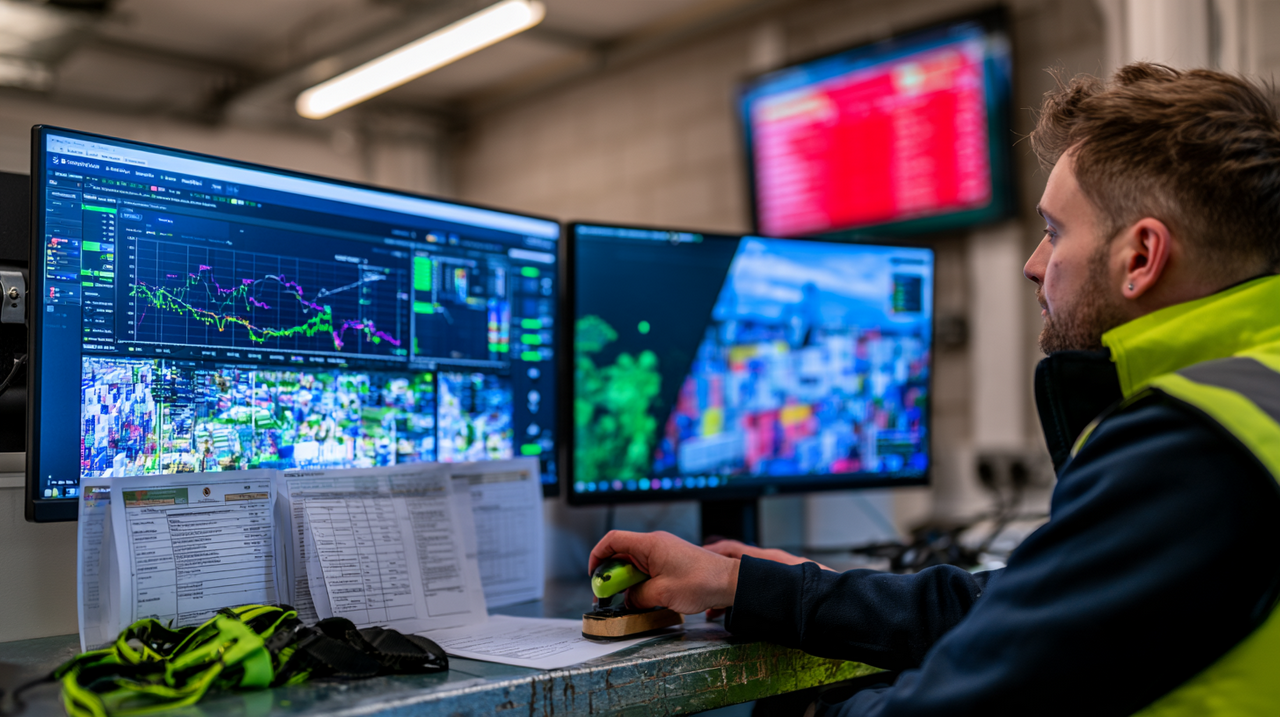
In 2018, a lawyer acting for Amazon wrote to the US National Labor Relations Board about a fired warehouse worker in Baltimore. The letter, published by The Verge in April 2019, contained a sentence that has followed the company ever since: “Amazon's system tracks the rates of each individual associate's productivity,” it said, “and automatically generates any warnings or terminations regarding quality or productivity without input from supervisors.”
Amazon pushed back. “It is absolutely not true that employees are terminated through an automatic system,” a spokesperson said. The Verge summarised the company's position in a parenthetical that turns out to be the most important line in the story: “(Amazon says supervisors are able to override the process.)”
Hold on to that parenthetical, because California has just written it into law.
On 30 September 2026, Governor Gavin Newsom signed SB 947, the No Robo Bosses Act of 2026. From 1 July 2027, California employers may not rely solely on an automated decision system to discipline or fire someone, and where they rely on one primarily, a human must corroborate the machine's output before anyone acts on it. Alongside it, Newsom signed AB 1883, banning AI workplace surveillance tools that infer employees' emotional states or collect their neural data. Unions called it a turning point. Employment lawyers had client alerts out by 1 October.
This is real progress. It also raises a question the bill's title skates over. The scoring, ranking and monitoring systems stay switched on. The rate is still calculated; the idle time is still logged. What changes is that a person must look at the output and agree with it. So what is a human decision, when the human's job is to check a machine's homework using the machine's own numbers?
What California Actually Signed
The details carry the argument, so start with the text.
SB 947, authored by state senator Jerry McNerney and sponsored by the California Federation of Labor Unions, AFL-CIO, covers “automated decision systems”. Law firms reading the bill describe the definition as any computational process derived from machine learning, statistical modelling, data analytics or artificial intelligence that issues a simplified output, “including a score, classification, or recommendation”. That reaches well beyond tools sold with “AI” on the box.
The core obligation is triggered when an employer “primarily relies” on such a system to discipline or terminate a worker. The employer must then direct a human reviewer to corroborate the output with supporting information; analyses by Covington & Burling, CDF Labor Law and Jackson Lewis list managerial evaluations, personnel records, work product, peer reviews and witness interviews. If the reviewer cannot corroborate the output, or judges it inaccurate, incomplete or misleading, the employer may not use it.
Afterwards, the worker receives a written notice stating that the employer relied primarily on an automated system, that a human corroborated it, who to contact, and that the worker may request what Jackson Lewis's summary calls “a meaningful and objective description of the employee data used by the ADS”. Retaliation is banned, as is using these systems to infer protected characteristics or to predict and punish workers exercising legal rights. Penalties run to 500 dollars per violation, enforced by the Labor Commissioner and public prosecutors.
That enforcement model matters. “The bills have no private enforcement,” Robin Feldman, director of the AI Law & Innovation Institute at UC Law San Francisco, told the Guardian's Danielle Abril. “In other words: workers can't sue. Only the government can enforce the laws.”
The road here was bumpy. McNerney's previous attempt, SB 7, was vetoed on 13 October 2025, with Newsom complaining that it “imposes unfocused notification requirements on any business using even the most innocuous tools”. The most significant thing SB 947 gave up in response was advance notice. SB 7 would have told workers beforehand which automated systems were used in decisions about them. SB 947, as Crowell & Moring's analysis notes, requires only post-use notice to those already affected. Remember that, too.
AB 1883, from Assemblymember Isaac Bryan, is narrower and blunter. It bars employers from using AI-powered workplace surveillance tools to recognise or make inferences or predictions about an individual's emotional state, or to collect neural data generated by measuring the nervous system. Fisher Phillips's employer guide, published on 1 October, says it takes effect on 1 January 2027, carries penalties of up to 500 dollars per violation, and exempts tools used “to ensure safety”.
“AI should expand opportunity, not come at the expense of workers and families,” Newsom said. “AI must remain a tool controlled by humans, not the other way around,” said McNerney. The Guardian framed the package as a response to workers' biggest fear about the technology, quoting Annette Bernhardt of the UC Berkeley Labor Center on workers “speaking up about the fear of job loss” and about what she described as the dehumanising experience of being surveilled and controlled by an algorithm. Lorena Gonzalez, the federation's president, put it more simply to KXTV: “That bosses should have souls.”
Employers' lawyers see it differently. Danielle Ochs of Ogletree Deakins told the Guardian the laws “have teeth”, but argued that “having 10 hoops you have to jump through per tool is not reflective of reality”.
The Override Button Was Always There
Return to Amazon's parenthetical. Even in 2019, the company's defence was that a human could step in. The system generated warnings; supervisors could override them. On paper, that is close to what SB 947 now mandates.
The numbers are worth sitting with. A company spokesperson told The Verge that roughly 300 full-time associates at the Baltimore fulfilment centre were terminated for inefficiency between August 2017 and September 2018, at a facility of about 2,500 full-time staff. The system tracked “time off task”, the minutes a worker's scanner sat idle. In June 2021, after sustained criticism, Amazon said it would average time off task over a longer period, in the words of then consumer chief executive Dave Clark, “to ensure that there's more signal and less noise”. The metric survived. Only its smoothing window changed.
The question was never whether a human could intervene. It was whether anyone did, and on what basis.
That question has a name. In 2019 Ben Wagner, then at the Vienna University of Economics and Business, defined “quasi-automation” in the journal Policy & Internet as “inclusion of humans as a basic rubber-stamping mechanism in an otherwise completely automated decision-making system”. Rules written for purely automated decisions, he warned, “do not apply if human beings are (rubber-stamping) automated decisions”. The human turns a machine decision into a human one for legal purposes, without changing much else.
The same year, the researcher Madeleine Clare Elish introduced the “moral crumple zone”. Just as a car's crumple zone absorbs a crash, she wrote, the human in a highly automated system “may become simply a component” that “bears the brunt of the moral and legal responsibilities when the overall system malfunctions”. Unlike a car's, this crumple zone “protects the integrity of the technological system, at the expense of the nearest human operator”.
Put the two ideas together and the risk in SB 947's design comes into focus. The reviewer becomes the legal author of a decision whose substance was set upstream, by a vendor's model, a threshold chosen in operations and a dashboard nobody on the floor can interrogate. If the decision is wrong, the reviewer signed it.
What the Research Says About People Who Check Machines
Is that too cynical? Supervisors argue with spreadsheets all the time.
The evidence is more mixed, and more interesting, than either side admits. The classic review, by Raja Parasuraman and Dietrich Manzey in Human Factors in 2010, found that automation complacency occurs “under conditions of multiple-task load”, appears in “both naive and expert participants”, and that automation bias produces errors of omission and commission when decision aids are imperfect. The line that should trouble anyone drafting a training requirement: automation bias “cannot be prevented by training or instructions”. A shift manager reviewing productivity flags between everything else a shift manager does is close to the textbook case of multiple-task load.
More recent experiments complicate the picture usefully. Saar Alon-Barkat and Madalina Busuioc, writing in the Journal of Public Administration Research and Theory, ran three studies in the Netherlands with 2,854 participants, including civil servants. They did not find automation bias in the simple sense: people did not trust an algorithm more than an equivalent human expert. They found “selective adherence” instead, a stronger tendency to follow advice that aligned with group stereotypes, whether it came from an algorithm or a person. Tellingly, the effect vanished among the civil servants, tested shortly after the Netherlands' childcare benefits scandal over a discriminatory algorithm; the authors suggest heightened awareness of algorithmic bias was the difference.
For a corroboration requirement, that is arguably worse news. The problem is not mystical deference to machines; it is that reviewers accept outputs that confirm what they already believe. A score saying the employee everyone finds difficult is underperforming will be easy to corroborate. A score saying the manager's favourite is slacking will invite scepticism. Review does not neutralise bias there. It filters the machine's output through the reviewer's priors, then certifies the result.
Policy research lands in the same place. In 2022, Ben Green of the University of Michigan surveyed 41 policies prescribing human oversight of government algorithms in Computer Law & Security Review. He concluded that people are largely unable to perform the oversight functions asked of them, so such policies offer a false sense of security and let vendors and agencies shirk accountability. His alternative is institutional oversight: scrutiny of whether an algorithm should be used at all, before deployment, by bodies empowered to say no.
Even the EU's AI Act concedes the problem. Article 14 requires high-risk systems to be built so overseers can “remain aware of the possible tendency of automatically relying or over-relying on the output produced by a high-risk AI system (automation bias)”. It is striking to find a cognitive bias named in a regulation. It is revealing that the remedy is awareness.
Corroboration Is Only as Good as the Evidence Beneath It
The strongest word in SB 947 is “corroborate”. It implies independent evidence, not a second look at the same screen.
But consider what corroborating evidence exists in a modern warehouse, call centre or delivery depot. The manager's evaluation is often built on the same dashboard. The personnel file holds previous automated warnings. The work product is measured by the scanner. CDF partner Warren Hodges reads the bill as letting the reviewer use either the data that produced the output or other supporting information. If that reading holds, the most available corroboration for a rate-based firing will often be the rate data itself. The system says the rate was low; the reviewer confirms it by checking the rate.
That reflects what the law chooses to regulate. SB 947 governs the final step, not the instruments. The quotas, idle-time thresholds and rankings stay, subject to existing rules such as California's 2021 warehouse law, AB 701, which already requires employers to give workers a written description of each quota they must meet.
Europe's experience with Amazon shows how contested those instruments are. In December 2023 France's data protection authority, the CNIL, fined Amazon France Logistique 32 million euros, finding three scanner indicators unlawful, including a “stow machine gun” flag for items scanned less than 1.25 seconds apart and an idle-time indicator. On 23 December 2025 the Conseil d'État overturned the findings on all three indicators and cut the fine to 15 million euros, noting for instance that the idle-time flag only triggered after more than ten consecutive minutes. It upheld the finding that Amazon had not justified keeping every indicator for 31 days.
Whoever is right, the hardest questions in algorithmic management live at the level of the metric: what it measures, what triggers it, how long data is kept and who sees it. A rule about who signs the dismissal letter reaches none of that.
There is also the question of where the decision really happens, and the EU's top court has answered a version of it. In the SCHUFA case in December 2023, the Court of Justice of the European Union considered a German credit agency whose probability scores lenders used to grant or refuse credit. SCHUFA argued that the banks made the decisions. The court disagreed: where a score plays a “determining role” in the outcome, producing it is itself an automated decision under Article 22 of the GDPR.
Apply that logic at work. If a productivity score below a threshold almost always produces a warning, and a run of warnings almost always produces dismissal, the meaningful decision was made when the score was computed. The human at the end is executing it. California's “primarily relies” test gestures at this reality, to its credit, but responds by adding a reviewer at the end of the pipeline rather than scrutinising the scoring at the start.
Europe Has Already Run This Experiment
California is entering territory where the evidence on “human review” is already in, much of it from the gig economy.
Article 22 of the GDPR gives people the right not to be subject to decisions “based solely on automated processing” that significantly affect them. The obvious workaround is to insert a person, and regulators anticipated it. Guidance from the Article 29 Working Party, later endorsed by the European Data Protection Board, says oversight must be “meaningful, rather than just a token gesture”, by someone with “the authority and competence to change the decision”.
Then came the drivers. Worker Info Exchange and the App Drivers & Couriers Union brought test cases against Uber and Ola in Amsterdam. On 4 April 2023, the Amsterdam Court of Appeal largely sided with the drivers. Uber argued that humans had reviewed its automated deactivations; the court found that review was “not… much more than a purely symbolic act” and treated the decisions as solely automated. It also held that Ola's “fraud probability scores” and fraud-based deactivations were automated decisions, and rejected both firms' claims that trade secrets justified withholding how their systems worked.
In October 2023, the Amsterdam District Court ordered Uber to pay 584,000 euros in penalties for failing to comply with that transparency order for two dismissed drivers from the UK and Portugal. Instead of disclosing the decision logic, Uber had offered information about its after-the-fact human review, the very review the appeal court had called symbolic.
Then, on 21 August 2026, the Dutch Data Protection Authority fined Uber 824.99 million euros, as reported by Bloomberg, Quartz and TechCrunch, for using automated systems to suspend and deactivate drivers without adequate human assessment, and without giving them enough information to challenge the decisions, in conduct that ran up to 2022. “Drivers were deactivated without pardon,” said Monique Verdier, the authority's deputy chair. “From one moment to the next, they no longer had any income through Uber. That's forbidden.” Uber called the fine disproportionate, said humans are now involved before deactivations, and said it would appeal.
That response is the whole debate in miniature. The answer to an automated-decision ruling is that a human is now involved. Whether that human is meaningful is what the next case will have to establish.
EU legislators have tried to learn. The Platform Work Directive, adopted in October 2024 and due to be transposed by member states by 2 December 2026, goes beyond SB 947 in three ways. Article 10(5) says any decision to restrict, suspend or terminate a platform worker's account or contract “shall be taken by a human being”. Article 10(2) says overseers need “the competence, training and authority necessary” to override automated decisions and “shall enjoy protection from dismissal or its equivalent, disciplinary measures and other adverse treatment where they exercise their functions”. And Article 11 gives workers a right to an explanation and to a substantiated written reply to a review request within two weeks.
The overseer protection addresses exactly what the research keeps finding. A reviewer who overrides the system too often, slowing throughput or contradicting management, is exposed. One who agrees is safe. Without protection, the rational strategy is to agree. SB 947 has no equivalent clause.
The AI Act adds another layer, classing AI used for termination decisions, task allocation and performance monitoring as high-risk under Annex III. Article 26(7) requires employers to inform workers and their representatives before deploying such systems, and Article 86 grants a right to “clear and meaningful explanations of the role of the AI system in the decision-making procedure”. The catch is timing. The EU's Digital Omnibus on AI, in force since 27 July 2026, pushed the Annex III compliance date from 2 August 2026 to 2 December 2027. Europe's tougher model is, for now, mostly a model.
Reading Feelings Was Never Good Science
AB 1883 targets the instruments rather than the decision, which makes it the more structurally ambitious law, even if it covers a narrower slice of practice.
The Guardian's reporting gave examples of what is at stake: heat maps tracking how long workers spend in the bathroom, and Kaiser Permanente nurses who said automated systems rated their tone of voice with patients. Emotion inference has been sold to call centres, retailers and recruiters on the premise that a face or voice reveals an inner state.
The science does not support that premise in the way vendors imply. In 2019, five researchers led by the psychologist Lisa Feldman Barrett published a 68-page review in Psychological Science in the Public Interest. People do sometimes smile when happy or scowl when angry, more than chance predicts, they found. “Yet how people communicate anger, disgust, fear, happiness, sadness, and surprise varies substantially across cultures, situations, and even across people within a single situation.” A scowl “often communicates something other than an emotional state”.
Europe acted on similar reasoning. Article 5(1)(f) of the AI Act has prohibited AI systems inferring emotions in the workplace since 2 February 2025, with medical and safety exceptions, and the Platform Work Directive bans platforms from processing data on workers' “emotional or psychological state”.
California's version leaves gaps. Proskauer's lawyers note that the bill does not say whether a “violation” accrues per worker, per incident or per pay period, and that the safety exception could cover tools assessing fatigue or burnout. The European Commission's AI Act guidelines treat fatigue as a physical state rather than an emotion, so detecting a driver's drowsiness is not emotion recognition. Ochs told the Guardian that opponents feared the rules could prohibit helpful AI that keeps truckers from falling asleep at the wheel. Expect the line between monitoring for safety and monitoring for mood to be litigated.
The Workers the Law Leaves Out
One group is conspicuously absent from SB 947, and it is the group whose cases built Europe's law on robo-firing.
“Rideshare drivers have been living with AI and algorithmic management long before most workers ever heard those terms,” Nicole Moore of Rideshare Drivers United told KQED. The new protections do not reach them, because California classifies rideshare drivers as independent contractors under Proposition 22, the 2020 ballot measure, and SB 947 protects employees.
The irony is hard to miss. The Amsterdam judgments, the 584,000-euro penalty and the 825-million-euro fine all concern drivers deactivated by software. In the state where Uber and Lyft are headquartered, those are precisely the workers the No Robo Bosses Act does not cover.
What Workers Should Be Told Before the Machine Scores Them
What should workers be told about the systems that evaluate them? California's answer, for now, is: after the fact, and on request. A worker learns an automated system was primarily relied upon only once disciplined or fired, and can then ask for a description of the data used. Gonzalez told the Guardian that the federation plans to revive a requirement for employers to disclose workplace AI use, after a disclosure bill died in the Assembly appropriations committee this year.
Post-use notice has value. It creates a paper trail and a named person to ask. But it arrives when the worker has least leverage. You cannot change behaviour you did not know was measured, contest a threshold you never saw, or organise around a system you discover through your own dismissal letter.
The tools for something better already exist. AB 701 shows California can require written, advance disclosure of quotas and the consequences of missing them. In its February 2025 Dun & Bradstreet Austria judgment, the EU's Court of Justice held that people subject to automated decisions are owed an explanation enabling them to understand and challenge it, which a complex formula or an exhaustive list of processing steps does not satisfy. The UC Berkeley Labor Center's 2021 report “Data and Algorithms at Work”, by Bernhardt, Lisa Kresge and Reem Suleiman, argued that workers should be told what data-driven technologies are in use and have rights to access and correct their data.
Drawing those threads together, and this is an argument rather than a description of any statute, workers should be told before any system is used on them:
- which systems score, rank or monitor them, and who supplies them;
- what each system measures, what data it collects and how long it is kept;
- the thresholds that trigger a flag, warning or review, in plain numbers;
- how an output travels from flag to manager to decision;
- who reviews it, what independent evidence they must consult, and whether they can be penalised for overriding the system;
- how often reviewers actually disagree with the machine.
That last item is the one most likely to separate oversight from theatre, and the one employers are least likely to volunteer. An override rate near zero does not prove rubber-stamping; the system might simply be accurate. But from the outside, a reviewer who never disagrees is indistinguishable from one who cannot. As Green argues, the useful evidence about whether humans are checking machines is aggregate, and it has to be collected deliberately.
A Signature Is Not a Decision
So how much of an automated decision's power does a human sign-off actually check?
Some, honestly. SB 947 ends the crudest version of robo-firing, where a termination is generated and dispatched with nobody looking. It forces employers to assemble something like a case file. It gives a dismissed worker a document, a contact and a right to ask what data was used. It voids outputs a reviewer judges inaccurate, incomplete or misleading. And it puts California on record, as the first US state to do so, that the final word on a livelihood belongs to a person.
But an automated management system's power was never concentrated in the dismissal letter. It lives in the targets that set the pace of the day, the metrics that decide who gets flagged, the rankings that shape whom a manager watches, and the thresholds that turn a slow afternoon into a disciplinary record. None of that is touched by a duty to corroborate. The reviewer inherits a frame someone else built, evidence the same system generated and, in California, no statutory protection for disagreeing.
Europe's record suggests what it takes to make the human matter: a decision reserved to a person in law, overseers protected when they override, explanations that let workers contest the logic rather than merely receive the outcome, and regulators willing to ask whether the human changed anything. Even then, Uber's response to an 825-million-euro fine was to point out that humans are now in the loop.
Amazon said much the same in 2019. Supervisors are able to override the process. California has made that sentence a legal obligation. The work that remains is making sure it is also true.
References
- Colin Lecher, “How Amazon automatically tracks and fires warehouse workers for 'productivity',” The Verge, 25 April 2019. https://www.theverge.com/2019/4/25/18516004/amazon-warehouse-fulfillment-centers-productivity-firing-terminations
- Carolyn Adolph, “Amazon denies report that it fires workers by robot,” KUOW, 26 April 2019. https://www.kuow.org/business/2019-04-26/amazon-denies-report-that-it-fires-workers-by-robot
- Office of Senator Jerry McNerney, “Newsom Signs McNerney's No Robo Bosses Act of 2026,” California State Senate, 30 September 2026. https://sd05.senate.ca.gov/news/newsom-signs-mcnerneys-no-robo-bosses-act-2026-requiring-human-oversight-ai-workplace
- Rachael Myrow, “Newsom Signs Slate of AI Workplace Laws, Barring 'Robo Bosses' and Surveillance,” KQED, 1 October 2026. https://www.kqed.org/news/12102337/newsom-signs-slate-of-ai-workplace-laws-barring-robo-bosses-and-surveillance
- Danielle Abril, “California's new laws target workers' biggest fear of AI taking their jobs,” The Guardian, 3 October 2026. https://www.theguardian.com/technology/2026/oct/03/california-ai-laws-worker-protection
- Usama Kahf and Chelsea Viola, “California Bans AI Tools That Read Employees' Emotions or Nervous System Data: FAQs for Employers,” Fisher Phillips, 1 October 2026. https://www.fisherphillips.com/en/insights/insights/california-bans-ai-tools-that-read-employees-emotions-or-nervous-system-data
- Eric J. Felsberg and Scott P. Jang, “California Passes No Robo Bosses Act,” Jackson Lewis, 1 October 2026. https://www.californiaworkplacelawblog.com/2026/10/articles/california/california-passes-no-robo-bosses-act/
- Emilie Shumway, “Newsom vetoes 'No Robo Bosses Act,' calling it 'unfocused' and 'overly broad',” HR Dive, 14 October 2025. https://www.hrdive.com/news/gov-newsom-vetoes-no-robo-bosses-act/802758/
- Ben Wagner, “Liable, but Not in Control? Ensuring Meaningful Human Agency in Automated Decision-Making Systems,” Policy & Internet, 11(1), 2019. https://doi.org/10.1002/poi3.198
- Madeleine Clare Elish, “Moral Crumple Zones: Cautionary Tales in Human-Robot Interaction,” Engaging Science, Technology, and Society, 5, 2019. https://doi.org/10.17351/ests2019.260
- Raja Parasuraman and Dietrich H. Manzey, “Complacency and Bias in Human Use of Automation: An Attentional Integration,” Human Factors, 52(3), 2010. https://doi.org/10.1177/0018720810376055
- Saar Alon-Barkat and Madalina Busuioc, “Human-AI Interactions in Public Sector Decision Making: 'Automation Bias' and 'Selective Adherence' to Algorithmic Advice,” Journal of Public Administration Research and Theory, 33(1), 2023. https://doi.org/10.1093/jopart/muac007
- Ben Green, “The flaws of policies requiring human oversight of government algorithms,” Computer Law & Security Review, 45, 2022. https://doi.org/10.1016/j.clsr.2022.105681
- Regulation (EU) 2024/1689 (Artificial Intelligence Act), Articles 5, 14, 26 and 86 and Annex III, Official Journal of the European Union, 12 July 2024. https://artificialintelligenceact.eu/article/14/
- Regulation (EU) 2026/1744 of the European Parliament and of the Council of 8 July 2026 amending Regulations (EU) 2024/1689, (EU) 2018/1139 and (EU) 2023/1230 as regards the simplification of the implementation of harmonised rules on artificial intelligence (Digital Omnibus on AI), Official Journal of the European Union, OJ L 2026/1744, 24 July 2026. https://eur-lex.europa.eu/eli/reg/2026/1744/oj
- Cloisters, “CJEU's first ruling on Article 22 GDPR: 'credit scoring' is an automated decision,” on Case C-634/21 SCHUFA, 7 December 2023. https://www.cloisters.com/latest/cjeus-first-ruling-on-article-22-gdpr-credit-scoring-is-an-automated-decision
- Article 29 Data Protection Working Party, “Guidelines on Automated individual decision-making and Profiling,” WP251rev.01, 6 February 2018. https://service.betterregulation.com/document/306193
- Fountain Court Chambers, “Amsterdam Court Upholds Appeal in Algorithmic Decision-Making Test Case: Drivers v Uber and Ola,” April 2023. https://fountaincourt.uk/2023/04/amsterdam-court-upholds-appeal-in-algorithmic-decision-making-test-case-drivers-v-uber-and-ola/
- Worker Info Exchange, “Uber ordered to pay €584,000 for failure to comply with court order in robo-firing case,” October 2023. https://www.workerinfoexchange.org/post/uber-ordered-to-pay-584-000-for-failure-to-comply-with-court-order-in-robo-firing-case
- Bloomberg, “Uber Faces €825 Million Dutch Fine Over Driver Suspensions,” 21 August 2026. https://www.bloomberg.com/news/articles/2026-08-21/uber-faces-825-million-dutch-fine-over-driver-data-breach
- Directive (EU) 2024/2831 on improving working conditions in platform work, Official Journal of the European Union, 11 November 2024. https://eur-lex.europa.eu/legal-content/EN/TXT/HTML/?uri=CELEX:32024L2831
- Conseil d'État, Décision n° 492830, Amazon France Logistique, 23 December 2025. https://www.conseil-etat.fr/fr/arianeweb/CE/decision/2025-12-23/492830
- SHRM, “California Regulates Use of Production Quotas in Warehouse Distribution Centers,” 2021. https://www.shrm.org/topics-tools/employment-law-compliance/california-regulates-use-production-quotas-warehouse-distribution-centers
- Lisa Feldman Barrett, Ralph Adolphs, Stacy Marsella, Aleix M. Martinez and Seth D. Pollak, “Emotional Expressions Reconsidered: Challenges to Inferring Emotion From Human Facial Movements,” Psychological Science in the Public Interest, 20(1), 2019. https://doi.org/10.1177/1529100619832930
- Annette Bernhardt, Lisa Kresge and Reem Suleiman, “Data and Algorithms at Work: The Case for Worker Technology Rights,” UC Berkeley Labor Center, 3 November 2021. https://laborcenter.berkeley.edu/release-data-and-algorithms-at-work

Tim Green UK-based Systems Theorist & Independent Technology Writer
Tim explores the intersections of artificial intelligence, decentralised cognition, and posthuman ethics. His work, published at smarterarticles.co.uk, challenges dominant narratives of technological progress while proposing interdisciplinary frameworks for collective intelligence and digital stewardship.
His writing has been featured on Ground News and shared by independent researchers across both academic and technological communities.
ORCID: 0009-0002-0156-9795 Email: tim@smarterarticles.co.uk
Listen to the free weekly SmarterArticles Podcast