The Price of Dread Collapsed: How a Cartoon Cat Locked Down Schools
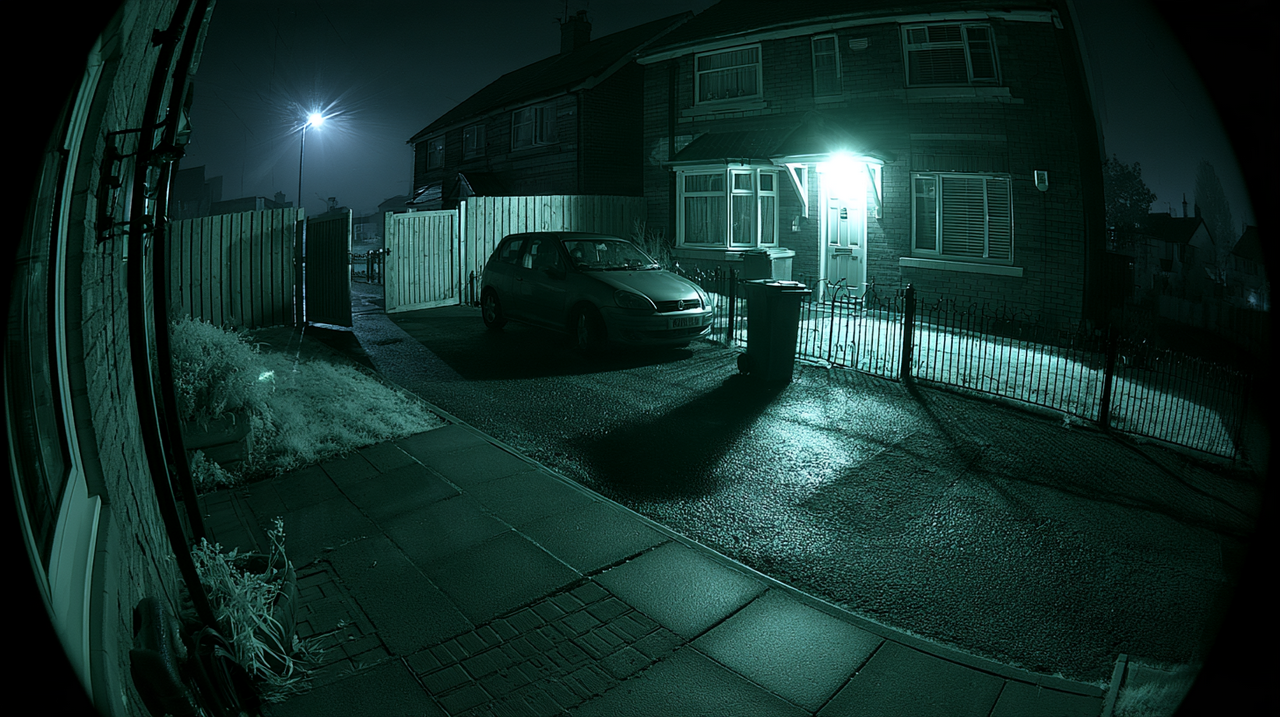
On 20 August 2026, the Garda station in Wexford published one of the strangest sentences ever to appear on an official Irish policing account. It concerned a suspect roughly seven feet tall, wearing a red and white striped hat, and it read: the Cat in the Hat was not in your driveway while you were out, and he is not currently hiding out in Curracloe.
The Gardaí were not being whimsical for its own sake. They were doing triage. For several days, residents across County Wexford had been seeing videos of a hollow-eyed, life-sized version of the Dr Seuss character standing in driveways, peering through windows and loitering at the edges of doorbell camera footage that looked exactly like their own doorbell camera footage. Some of them had rung the emergency line. The Gardaí explained the mechanism plainly. It is, they said, essentially an AI prompt that places the character into images and videos of familiar places.
That is the whole story in one sentence, and it is worth reading twice. Not a hoax about a crime. Not a rumour about a stranger. A prompt. A machine instruction, executed in seconds, that inserts a fictional menace into a landscape the viewer recognises as home.
Within five weeks, that prompt had produced school lockdowns in Michigan, extra officers at middle schools in Colorado, felony charges in Ohio, four arrested girls in Louisiana aged between thirteen and fifteen, and a Royal Canadian Mounted Police investigation in British Columbia. It had produced a real teenage girl, in West Kelowna, being followed through her own neighbourhood at nine o'clock at night by someone in a costume.
The obvious way to write about this is as a story about fakes getting better. That framing is wrong, or at least it is the least interesting thing that is true. The Cat in the Hat is not a convincing fake. Nobody who looks closely believes a nine-foot cartoon cat is standing on the lawn. What collapsed in 2026 was not the cost of deception. It was the cost of dread: shareable, localised, ambiguous, atmospheric dread, manufactured on demand and aimed at a postcode.
And the institutions built to answer this have spent thirty years learning to ask one question. Is the threat credible? That question has quietly stopped being the operative one. The operative question now is whether the fear is consequential. Those are not the same question, and almost nothing in the machinery of schools and policing is designed to tell them apart.
How a 2003 Box Office Failure Became a Found Footage Monster
The origin is disconcertingly banal. On 30 June 2026, a TikTok account posted a clip lifted from the 2003 live action adaptation starring Mike Myers, set to unsettling music and captioned with something bleak about prom and overdoses. The film has always had a slightly wrong quality about it, an uncanny prosthetic face that reads as menacing the instant you strip away the score and the gags. The clip took 4.4 million views in a week before it was deleted.
Momentum came from an ordinary piece of entertainment news. Propstore announced that the original Myers suit was going to auction, with estimates in the tens of thousands of dollars. A physical artefact, photographed under gallery lighting, hollow at the eyes. One post showing the costume was viewed more than fourteen million times in three weeks.
Then the aesthetic mutated. Users stopped posting film clips and started posting evidence. Grainy night footage. Shaky handheld. Ring camera framing with the timestamp in the corner. The character appeared in driveways in Limerick and Cork, on streets in Dublin, Manchester and Leeds. In some versions it carried something that looked like a knife. The generative step is what made this different from a decade of creepypasta: the background was not a generic suburb, it was a suburb that looked like yours, because a person in your town could feed the model a photograph of an actual road and get back a clip of the thing standing on it.
British forces caught up around 25 August. South Yorkshire Police confirmed they had received no reports concerning the character or, they added, his associated Thing One and Thing Two, and then made a more serious point that has been largely overlooked: fabricated police statements about the Cat were circulating too. If you see posts online providing policing updates and advice, the force said, please check that they are from an official policing account. The hoax had already learned to impersonate its own debunking. Cheshire and Cumbria issued their own clarifications.
None of this was costless. One sixteen-year-old told the BBC she had been totally freaked out after watching the videos in the early hours and had asked her mother to collect her from a sleepover. Multiply that by a country. Then notice that nothing illegal has happened yet.
The Cat Crossed the Atlantic and Acquired a Target List
What arrived in North America in late August was a different object wearing the same hat.
In Ireland and Britain the content was ambient. It threatened nowhere in particular. In the United States, within days, it acquired specificity, and specificity is the thing that converts folklore into a criminal offence. Posts named schools. Then they named towns. Then they named individual students.
In Hutchinson, Kansas, police and high school officials became aware on 31 August of posts under the trend directing ominous threats at students. Investigators identified the account holder as a fifteen-year-old pupil at Hutchinson High School and charged them with two counts of criminal threat. The department's framing of the offence deserves attention, because it is the clearest statement of the new logic anyone has produced: even if the posts were intended as a joke, it is unlawful to cause others to fear for their safety.
In Grand Junction, Colorado, a post suggested that someone dressed as the character would turn up at West Middle School and at random homes. On 28 August police increased their presence at West Middle School and Grand Junction High School. Working with Mesa County Valley School District 51, they established that there was no credible threat to students, staff or the community. On 31 August they arrested a fourteen-year-old Grand Junction High School pupil, charged him with harassment and with interference with staff, faculty or students of educational institutions, and released him to his parents. The posts, the department said, are intended to cause alarm and fear in individuals.
Read those two sentences in sequence. No credible threat. Arrest made. That is not an inconsistency. It is the entire shift, stated in official language, in a single press release.
In Berwick, Louisiana, four girls were arrested after officers traced multiple TikTok accounts to local pupils. Three, aged fifteen, thirteen and fourteen, were charged with terrorising. A fourth, fourteen, was charged with cyberbullying. Police Chief J. P. Henry put the rationale in terms of consequence rather than intent: once you hit post, you do not get to decide how seriously law enforcement takes it.
In Worth County, Georgia, the school district announced on 2 September that two high school pupils had taken part and would face disciplinary action alongside legal consequences. In Pasco County, Florida, a twelve-year-old was accused of making written threats to kill. In Wilmington, Ohio, a juvenile faced a felony terroristic threat charge. In Pawnee, Oklahoma, a post targeting the middle school reportedly included a list of around thirty-five named pupils; police obtained subscriber data from TikTok and made an arrest. In Jessamine County, Kentucky, Nicholasville police charged a juvenile with assistance from the FBI. Constantine High School in Michigan went into a precautionary lockdown.
By early September, more than ten juveniles had been arrested across the United States. By the time The Guardian reported on the trend on 13 September, the pattern had hardened: content that began in Ireland and the United Kingdom in August, spread through Snapchat and TikTok, and in its North American form frequently carried threats aimed at specific schools, specific communities and named individuals.
Law enforcement drew the line about where it should be drawn. FBI Special Agent Nathan Head stated the position exactly: just posting the video itself is not a crime. Greg Mays, a deputy commissioner at Tennessee's Office of Homeland Security, described the addition of a named target as the point where it crosses the line. Baldwin Park Police Department in California warned that any threat directed toward our schools, students, staff, or community will not be dismissed as a joke or prank. Laredo police put the arithmetic bluntly: a few seconds on social media can result in a police investigation, school disciplinary action, and potentially serious criminal consequences.
And then the thing that complicates every comfortable analysis. On 24 August, in West Kelowna, British Columbia, a person in a Cat in the Hat costume allegedly chased a teenage girl through a neighbourhood at around nine in the evening. She got to safety. The individual has not been identified. Corporal Devon Gerrits of the RCMP described it precisely: regardless of whether the individual intended the behaviour as a joke, following a young person and causing them to fear for their safety is extremely concerning.
Folklorists Have a Word for This and It Is Not Deepfake
The most useful vocabulary for understanding the Cat in the Hat comes not from computer science but from a subfield of folklore studies that has been sitting patiently on the shelf for forty years, waiting for exactly this.
The term is ostension. Linda Dégh and Andrew Vázsonyi imported it into folkloristics from semiotics to describe what happens when a legend stops being told and starts being done: when narrative extends into action in the physical world. Bill Ellis, who received the American Folklore Society's lifetime scholarly achievement award, expanded the framework and gave us the two categories that matter here. Pseudo-ostension is when someone fabricates evidence of a legend, staging the artefacts the story predicts. Quasi-ostension is when authorities and observers over-interpret ambiguous evidence, reading ordinary facts through the legend's lens until the legend appears confirmed.
The Cat in the Hat trend is an industrialised pseudo-ostension engine with a quasi-ostension feedback loop bolted to the output. Generative models mass-produce the evidence. Institutions, doing exactly what they are trained to do, treat the evidence as signal. The signal generates a response. The response is filmed, posted, and becomes fresh evidence that the legend is real, because look, the school went into lockdown.
Andrew Peck, whose book on the Slender Man won the Chicago Folklore Prize, spent years documenting how a character invented on an internet forum in 2009 acquired the properties of genuine belief through precisely this circulation. The end point of that case is not academic. On 31 May 2014, two twelve-year-olds in Waukesha, Wisconsin, stabbed a classmate nineteen times in a wooded park, saying they needed to appease the Slender Man. She survived. Both were found not guilty by reason of mental disease.
The precedents keep arriving at the same conclusion. In autumn 2016, creepy clown sightings that began in Greenville, South Carolina produced school lockdowns across Ohio, additional patrols in three southern states, and more than a dozen arrests, the overwhelming majority of reports being hoaxes. In February 2019 the Momo challenge reached peak intensity after the Police Service of Northern Ireland posted a public warning on Facebook and British schools relayed alerts to parents. The Samaritans said at the time that they were not aware of any verified evidence in this country or beyond linking Momo to suicide. Children's charities concluded that the warnings themselves were doing more damage than the thing they warned about, teaching children to fear something that did not exist and, in some cases, prompting them to go looking for it.
Here is what is genuinely new in 2026, and it is not the psychology. The psychology is old. What is new is the supply curve.
The Thing That Actually Changed Is the Price of Dread
To stage a clown panic in 2016 you needed a costume, a location and nerve. To make Slender Man photographs in 2010 you needed Photoshop skills and hours. Both of those are meaningful frictions. They limited the number of people who could contribute evidence, and they limited how localised that evidence could be.
Generative video removed both limits at once. By 2026 the leading systems produce high definition clips with synchronised audio from a text prompt, at per-second costs measured in cents, available through consumer subscriptions priced around twenty dollars a month. The interesting figure is not the realism benchmark. It is the marginal cost of the tenth clip, and the hundredth, each one set on a different street.
This is why the standard deepfake framing misleads. The Cat in the Hat is not trying to pass as a photograph of a real event. It is trying to pass as a plausible artefact of your neighbourhood at night, which is a much lower bar and a much more effective payload. Photorealism is not required. Sufficient ambiguity is. Grain, motion blur, a doorbell camera's fisheye distortion and a two second glimpse do most of the work that fidelity would otherwise have to do. The uncanny quality of the source material, a prosthetic cat face from a commercially unloved film, is a feature. It reads as wrong in a way that a well-rendered human would not.
And crucially, the artefact is cheap enough to be disposable. That changes the economics of participation. A child does not need to believe in the Cat to make one. They need ninety seconds and an idea about which street to use.
Retired Lexington police special operations sergeant Jason Rothermund, who now runs an AI consultancy and was interviewed about the Kentucky charges, offered the assessment most likely to age well. This is just, in my opinion, the tip of the iceberg.
Verification Takes Days and Propagation Takes Seconds
The asymmetry at the centre of this is not mysterious. It is arithmetic.
Establishing that a video is synthetic requires, at minimum, an analyst, a tool, a chain of custody and time. Grand Junction took three days between increasing patrols and making an arrest. Pawnee had to serve a request on TikTok and wait for a phone number and an IP address. Meanwhile the clip itself moves through a school's Snapchat groups in under an hour.
Worse, the people we are implicitly asking to perform the verification cannot do it. A University of Florida study published in February 2026 tested participants against synthetic face images and found their accuracy statistically indistinguishable from a coin flip, while a convolutional neural network on the same images reached ninety-seven per cent. The same research found that people did better than the machines on video, which is a genuinely interesting result and should be reported honestly, but better than a machine on video is not the same as good. A 2025 iProov study of two thousand consumers found that only one in a thousand correctly identified every synthetic and genuine item they were shown.
Children are, if anything, worse positioned than adults, and the specific shape of the problem is confidence rather than gullibility. Ofcom's 2026 report on children and parents found that fifty-six per cent of thirteen to fifteen year olds said they were confident they could spot AI-generated content, and forty-seven per cent of sixteen and seventeen year olds said the same. When those confident children were tested, a quarter could not correctly identify the AI-generated image in front of them. Forty per cent of thirteen to seventeen year olds said they would trust an AI-generated news article as much as, or more than, one written by a human journalist.
Layer developmental psychology on top. Joanne Cantor spent her career at Wisconsin-Madison studying how films and television frighten children, and one of her most robust findings is that the reassurance adults instinctively reach for, the phrase tell yourself it is not real, only becomes an effective coping strategy as children get older. Below roughly seven or eight, telling a frightened child that something is fictional does comparatively little to reduce the fear. Older children fear real and abstract dangers more; younger children fear the thing that looks and sounds scary, regardless of its ontological status.
Which means the primary institutional response to this entire episode, saying clearly and repeatedly that the Cat in the Hat is not real, is a strategy whose effectiveness is inversely correlated with how young and frightened the audience is. The Gardaí were right. It was also, for the youngest children in Wexford, not the intervention they needed.
Credible Threat Is the Wrong Question Now
Every school safety protocol in the English-speaking world is organised around an assessment of credibility. Is this a real threat from a person with intent, means and opportunity? It is a good question. It was designed by serious people to prevent both massacres and the over-punishment of children, and it works.
The problem is that it is now answering a question nobody is asking.
Consider what happened at West Middle School. The threat was not credible. Police said so in writing. And yet a school district deployed additional officers, hundreds of children spent a day under visibly heightened security, a fourteen-year-old was arrested and charged, and parents across Mesa County spent a weekend frightened. Every one of those outcomes occurred on the correct side of the credibility determination. The determination did not prevent a single one of them.
This is the asymmetry that ought to reorganise how we think about the problem. The institutional response is not a defence against the payload. The institutional response is the payload. A lockdown is a spectacle, generated at no cost to the person who triggered it, that converts an ambiguous clip into a community-wide event with photographic evidence. The cheaper it becomes to trigger, the more attractive it becomes to trigger. Any system in which a nine-second video reliably produces a police deployment has, whatever its intentions, published a price list.
None of which means the institutions should stop responding. That is the trap, and it is worth naming, because it is the argument that ends with a school failing to act on the one post in five hundred that mattered. The Pawnee post named thirty-five children. That is not folklore. That is a target list, and the correct response to a target list is a police investigation, regardless of whether the accompanying image was rendered by a diffusion model or drawn in crayon.
The question is not whether to respond. It is whether the response can be made proportionate and quiet enough that it stops functioning as a reward.
Threat Assessment Already Knows How to Do This
There is an unexpectedly hopeful piece of this, and it lives in the least glamorous corner of school safety research.
The Comprehensive School Threat Assessment Guidelines, developed by the forensic clinical psychologist Dewey Cornell and colleagues at the University of Virginia in 2001 and recognised as an evidence-based programme in 2013, were built around a distinction that turns out to be exactly the right tool for 2026. CSTAG asks teams to classify a threat as transient or substantive. A transient threat is an expression of anger, a joke, a piece of bravado with no sustained intent to harm. A substantive threat involves a genuine intent to act. The classification drives the response, and the response for a transient threat is explanation, apology and resolution rather than exclusion.
Controlled studies in Virginia found that schools using the model markedly reduced their use of exclusionary discipline, and, notably, showed little or no racial disparity in outcomes, in a domain where disparities are otherwise routine.
Read that framework against the Cat in the Hat and something clarifies. Threat assessment never actually depended on the authenticity of the artefact. It depended on the intent and capability of the person behind it. A synthetic image does not break the model. It only breaks the shortcut that many schools and departments substituted for the model, which is: scary content equals serious threat equals maximum response.
The trend is, in that sense, a stress test that reveals which institutions were doing threat assessment and which were doing threat reaction.
What the Response Costs the Children It Protects
There is a strong temptation to treat institutional overreaction as costless caution. It is not.
Research conducted by Georgia Tech's Social Dynamics and Wellbeing Lab in partnership with the Everytown for Gun Safety Support Fund analysed nearly twenty-eight million social media posts from communities in the ninety days before and after school active shooter drills, across 114 schools in 33 states. In the aftermath, the analysis found a forty-two per cent increase in language associated with anxiety and stress, a thirty-nine per cent increase in indicators of depression, a twenty-three per cent rise in health concerns and a twenty-two per cent increase in expressions of fear of death. The effects persisted for at least ninety days. Everytown's own recommendation, notably, is to prioritise threat assessment programmes over student-involved simulations.
That study concerns drills rather than lockdowns triggered by hoaxes, and the difference matters: a drill is announced and a lockdown is not, which if anything suggests the hoax case is worse rather than better. But it establishes the principle that the security response has its own psychological cost, borne by the same children it protects.
The resource drain is measurable too. The K-12 School Shooting Database recorded 853 swatting incidents in American schools between January 2023 and June 2024. Researchers working on the costs of hoax threats have estimated the emergency response to a single school incident at upwards of a hundred thousand dollars once policing, investigation and lost instructional time are counted. Those are officers not attending actual emergencies, and hours of teaching that do not come back.
And then the cost that should trouble us most. In this episode, the people arrested were twelve, thirteen, fourteen and fifteen years old. Some of them wrote target lists. Others reposted a scary cat. The charges range from harassment to felony terroristic threats. Criminal records attach to children at the age at which the capacity to anticipate consequence is, developmentally, still under construction. A system that cannot distinguish the child who threatened thirty-five named classmates from the child who shared a clip to a group chat is not a safety system. It is a lottery with a custodial prize.
The Honest Complication Nobody Wants to Write
The clean version of this article says: it was all fake, the institutions panicked, the children were criminalised for a meme. That version is false in an important way.
A costumed figure really did follow a teenage girl in West Kelowna. Posts really did name individual pupils. The Pawnee list really did exist. Whatever share of the trend was ambient folklore, some non-trivial share was targeted intimidation, and a viral aesthetic provided it with both a delivery mechanism and a deniability script. I was only doing the trend is a remarkably efficient defence.
This is the oldest dynamic in moral panic literature working in reverse. Usually the panic manufactures threats that do not exist. Here the panic manufactured cover for threats that did. Any policy proposal that treats the entire phenomenon as harmless will, sooner or later, wave through the post that was not.
It is also worth being honest about the evidential thinness of parts of this story. Much of the reporting on origins traces to a handful of viral accounts and cannot be independently verified. Claims that the character was linked to violent incidents circulated widely and were, as far as any police force has confirmed, baseless. Gardaí in Wexford stated that no reports of a costumed individual had been recorded on their system at all. We do not have a reliable count of how many schools altered operations, how many lockdowns occurred, or what the aggregate cost has been. We have a fortnight of local news reports, which is not a dataset.
What Does Not Work, and What Might
Three responses are already being proposed and are not going to work.
Banning the platform. The content moved between TikTok, Snapchat, Instagram Reels and Facebook within days, and it was generated by tools that are neither hosted nor moderated by any of them. A ban relocates the trend and adds the glamour of prohibition.
Media literacy as a standalone intervention. It is necessary and it is not sufficient, and the Ofcom data explains why with unusual clarity: the children most confident in their ability to detect synthetic content were meaningfully often wrong. Teaching detection to an audience that cannot detect, against generators improving faster than curricula are revised, produces false confidence, which is worse than calibrated uncertainty. Cantor's work adds the developmental caveat: for the youngest children, it is not real does not do the work adults think it does.
Maximum charges as deterrent. Deterrence assumes a calculating actor. The evidence from the clown panic, from Momo and from every school hoax wave since suggests the population involved is mostly children with poor consequence modelling and an audience.
What might work is less satisfying and more boring.
Proportionate and deliberately undramatic response protocols. If the institutional response is the payload, then reducing the spectacle reduces the incentive. Investigating quietly, notifying parents by letter rather than emergency alert, and declining to lock down where a threat assessment team has classified content as transient are all available today and cost nothing. Several departments effectively did this, determining no credible threat while increasing routine patrols.
Decoupling threat assessment from content authenticity. Whether an image was generated should inform the investigation of who made it, not the classification of how dangerous the author is. CSTAG already models this. It needs to be the default rather than the exception.
Provenance infrastructure, with realistic expectations. Article 50 of the EU AI Act, which applies from 2 August 2026, requires that synthetic content be machine-readable as such and that deepfakes be disclosed, with penalties reaching fifteen million euros or three per cent of worldwide turnover. The AI Omnibus agreement, however, gives systems already on the market before 2 August 2026, which is every tool that produced this material, until 2 December 2026 to meet the marking obligation; the disclosure duties are unaffected. The C2PA Content Credentials standard and Google's SynthID watermarking have converged into a dual-layer approach now adopted by OpenAI and others, with more than a hundred billion files watermarked since 2023. The limitations are well documented and should be stated plainly: C2PA metadata is destroyed by a screenshot, SynthID survives compression but carries almost no contextual information, and neither resists a determined adversary. Provenance will not tell a frightened fourteen-year-old at midnight whether the cat outside her window is real. What it can do is shorten the verification loop for the school and the police force from days to minutes, which is the loop that actually matters.
Platform duties with teeth. The UK's Protection of Children Codes came into force on 25 July 2025 under the Online Safety Act, carrying fines of up to eighteen million pounds or ten per cent of global revenue, and require services to assess and mitigate risks to children by age group. A trend that demonstrably frightened children across two jurisdictions is a reasonable early test of whether those duties mean anything operationally.
Graduated legal responses for minors. Ireland's Harassment, Harmful Communications and Related Offences Act 2020, commenced in February 2021, criminalises a single threatening or grossly offensive communication sent with intent to cause harm, with a maximum of two years on indictment. The tools exist on both sides of the Atlantic. The gap is not legislative. It is the absence of a settled institutional practice for the child who shared rather than authored.
The Cat Was Never the Point
Return to the question underneath all of this. What happens to a child's ability to know what is real?
The honest answer is that it degrades in a specific and slightly counter-intuitive way. Children are not becoming credulous. Ofcom's data suggests something odder: they are becoming confidently unreliable, which is the epistemic state most resistant to correction. And they are learning, from direct experience, that the reality of a thing and the consequences of a thing have come apart. The Cat was not real. The lockdown was real. The arrest was real. The fourteen-year-old released to his parents in Grand Junction now has a lived understanding that a fiction produced a police record.
That is the lesson the episode actually teaches, and no media literacy module can unteach it, because it is true.
For institutions, the implication is narrower than the anxiety around it suggests. Schools and police forces cannot adjudicate what is real at the speed the content moves, and they should stop organising their response around the pretence that they can. What they can do is assess persons rather than artefacts, respond in proportion rather than in spectacle, and refuse to treat every child holding a phone as either a victim or a suspect.
The Gardaí in Wexford, in their odd little Facebook post, got closer to this than most of what followed. They did not lock anything down. They named the mechanism, said the cat was not in the driveway, and went back to work. It did not stop the trend. Nothing was going to stop the trend. But it treated the public as people who could be told how the trick worked, which remains, on the evidence, the most durable defence anyone has.
Sources and References
- Alex Cunningham, “'Cat in the Hat' stalking Wexford residents is AI-generated, gardaí say”, Irish Examiner, 20 August 2026. https://www.irishexaminer.com/news/arid-41898904.html
- Amber Louise Bryce, “The Cat in the Hat is terrorising TikTok, but how did this horror trend get so out of hand?”, Euronews Culture, 24 August 2026. https://www.euronews.com/culture/2026/08/24/the-cat-in-the-hat-is-terrorising-tiktok-but-how-did-this-horror-trend-get-so-out-of-hand
- Matt Growcoot, “Photos of 'Cat in the Hat Serial Killer' Are AI-Generated, Police Say”, PetaPixel, 24 August 2026. https://petapixel.com/2026/08/24/photos-of-cat-in-the-hat-serial-killer-are-ai-generated-police-say/
- Areeba Hashmi, “46 million views and a police statement: TikTok turned Dr Seuss into a horror story”, Gulf News, 24 August 2026. https://gulfnews.com/world/46-million-views-and-a-police-statement-tiktok-turned-dr-seuss-into-a-horror-story-1.500650533
- The Guardian, “US schools and police warn about viral 'Cat in the Hat' trend after teens' arrests”, 13 September 2026, syndicated copy accessed via UA.NEWS. https://ua.news/en/world/shkoli-ta-politsiia-ssha-poperedili-pro-trend-kit-u-kapeliusi-pislia-areshtiv-pidlitkiv
- Stepheny Price, “Creepy 'Cat in the Hat' trend targets schools as costumed figure allegedly chases teen girl”, Fox News, 13 September 2026. https://www.foxnews.com/us/creepy-cat-hat-trend-targets-schools-costumed-figure-allegedly-chases-teen-girl
- Sarah Roebuck, “Breaking down the 'Cat in the Hat' trend: AI threats, police responses and juvenile arrests”, Police1, 10 September 2026. https://www.police1.com/social-media/breaking-down-the-cat-in-the-hat-trend-ai-threats-police-responses-and-juvenile-arrests
- KWCH 12, “Hutchinson teenager charged in connection with 'Cat in the Hat' trend”, 1 September 2026. https://www.kwch.com/2026/09/01/hutchinson-teenager-charged-connection-with-cat-hat-trend/
- City of Grand Junction, Colorado, “No Credible Threat Found in Social Media Incident; Arrest Made”, Grand Junction Police Department news release, 31 August 2026. https://www.gjcity.org/m/NewsFlash/home/detail/2244
- WALB News 10, “2 Worth County students facing charges over viral 'Cat in the Hat' social media hoax”, 2 September 2026. https://www.walb.com/2026/09/02/2-worth-county-students-facing-charges-over-viral-cat-hat-social-media-hoax/
- WBRZ, “Four juveniles arrested in Berwick following investigation into Cat in the Hat trend”, 1 September 2026. https://www.wbrz.com/news/four-juveniles-arrested-in-berwick-following-investigation-into-cat-in-the-hat-trend
- Bethany Braun-Silva, “What parents should know about the 'Cat in the Hat' social media trend”, ABC News / Good Morning America, 1 September 2026. https://abcnews.com/GMA/Family/parents-cat-hat-social-media-trend-prompting-school/story?id=136120706
- Joshua Rhett Miller, “How 'Cat in the Hat' Social Media Trend Has Led to School Lockdowns, Arrests”, Newsweek, 1 September 2026. https://www.newsweek.com/schools-issue-warning-about-viral-cat-in-the-hat-trend-as-teen-arrested-12391002
- WKYT, “AI expert says 'Cat in the Hat' school threat trend is 'tip of the iceberg'”, 7 September 2026. https://www.wkyt.com/2026/09/07/ai-expert-says-cat-hat-school-threat-trend-is-tip-iceberg/
- KOKH Fox 25, “Pawnee police arrest juvenile connected to 'Cat in the Hat' threat”, September 2026. https://okcfox.com/news/local/pawnee-police-arrest-juvenile-connected-to-cat-in-the-hat-threat
- Ineqe Safeguarding Group, “Still Not Safe Enough: What Ofcom's Report Tells Us About Growing Up Digital in 2026”, 22 May 2026, summarising Ofcom, “Children and Parents: Media Use and Attitudes Report”, published 21 May 2026. https://ineqe.com/2026/05/22/childrens-online-experiences-ofcom-2026/
- University of Florida Herbert Wertheim College of Engineering, “Machines spot deepfake pictures better than humans, but people outperform AI in detecting deepfake videos”, February 2026. https://www.eng.ufl.edu/news/stories/machines-spot-deepfake-pictures-better-than-humans-but-people-outperform-ai-in-detecting-deepfake-videos/
- Everytown for Gun Safety Support Fund and Georgia Institute of Technology Social Dynamics and Wellbeing Lab, “The Impact of Active Shooter Drills in Schools”, research report, updated February 2023. https://everytownresearch.org/report/the-impact-of-active-shooter-drills-in-schools/
- University of Virginia School of Education and Human Development, “The Comprehensive School Threat Assessment Guidelines”, Youth Violence Project, Dewey G. Cornell and colleagues. https://education.virginia.edu/research-initiatives/research-centers-labs/research-labs/youth-violence-project/school-threat-assessment/comprehensive-school-threat-assessment-guidelines
- Andrew Peck, “Digital Legend and Belief: The Slender Man, Folklore, and the Media”, University of Wisconsin Press, 2023. https://uwpress.wisc.edu/books/5998.htm
- Bill Ellis, “Satanic Ritual Abuse and Legend Ostension”, Journal of Psychology and Theology, volume 20, 1992. https://journals.sagepub.com/doi/10.1177/009164719202000324
- Ben Collins and Brandy Zadrozny, “How 'Momo', a global social media hoax about a paranormal threat to kids, morphed into a U.S. viral phenomenon”, NBC News, 28 February 2019. https://www.nbcnews.com/tech/tech-news/how-momo-global-social-media-hoax-about-paranormal-threat-kids-n977961
- Emma Brown and others, “Scary clown rumors, threats feed hysteria, leading to school lockdowns, arrests”, The Washington Post, 5 October 2016. https://www.washingtonpost.com/local/education/scary-clown-rumors-threats-feed-hysteria-leading-to-school-lockdowns-arrests/2016/10/05/1adf27c4-8b0b-11e6-bff0-d53f592f176e_story.html
- European Commission, “Guidelines on transparency obligations for providers and deployers of certain AI systems”, Shaping Europe's Digital Future, 8 May 2026, concerning Article 50 of Regulation (EU) 2024/1689. https://digital-strategy.ec.europa.eu/en/policies/guidelines-ai-transparency-obligations
- Ofcom, “Statement: Protecting children from harms online”, Protection of Children Codes of Practice, in force 25 July 2025. https://www.ofcom.org.uk/online-safety/illegal-and-harmful-content/statement-protecting-children-from-harms-online

Tim Green UK-based Systems Theorist & Independent Technology Writer
Tim explores the intersections of artificial intelligence, decentralised cognition, and posthuman ethics. His work, published at smarterarticles.co.uk, challenges dominant narratives of technological progress while proposing interdisciplinary frameworks for collective intelligence and digital stewardship.
His writing has been featured on Ground News and shared by independent researchers across both academic and technological communities.
ORCID: 0009-0002-0156-9795 Email: tim@smarterarticles.co.uk
Listen to the free weekly SmarterArticles Podcast